


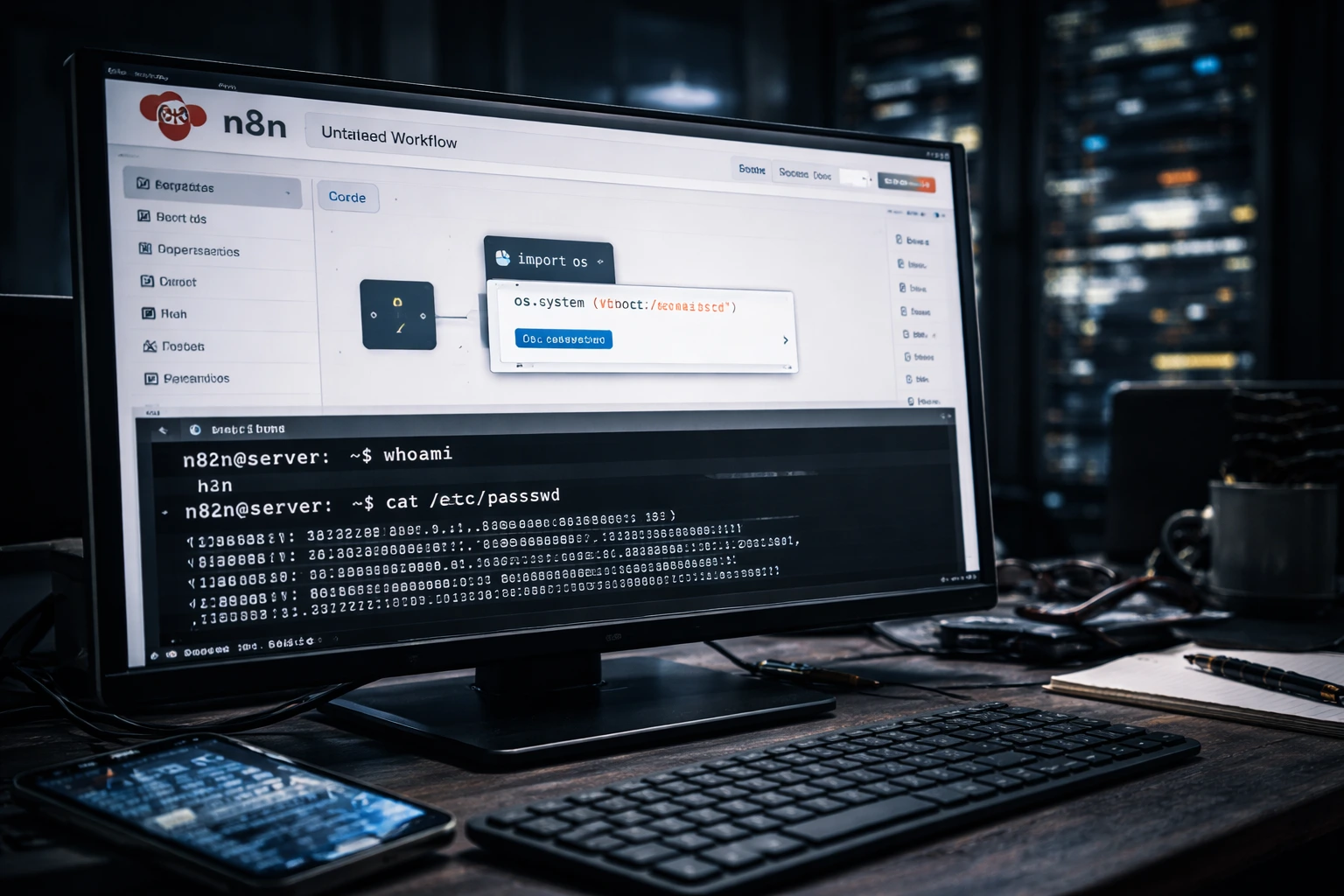
A critical security flaw in a popular workflow automation platform has raised serious concerns for self-hosted and enterprise environments. The n8n vulnerability system commands issue allows authenticated users to escape built-in protections and execute system-level commands on affected servers.
The flaw weakens the isolation model that n8n relies on to safely run user-supplied code inside workflows.
What the n8n Vulnerability System Commands Issue Is
The vulnerability affects n8n’s Python Code Node. This component allows users to run Python code as part of automated workflows.
Due to insufficient sandbox isolation, attackers with workflow access can break out of the restricted environment. Once outside the sandbox, they can execute commands directly on the host operating system.
The issue impacts a wide range of n8n versions used in production environments.
How the Flaw Works
The Python Code Node relies on a sandbox mechanism to separate workflow code from the underlying system. That separation fails under certain conditions.
An attacker can craft Python instructions that bypass restrictions and access system-level execution paths. The platform then runs those commands with the same privileges as the n8n service.
This behavior turns a workflow feature into a full remote command execution vector.
Who Can Exploit the Vulnerability
The attacker does not need full administrative privileges. Any authenticated user who can create or modify workflows can trigger the flaw.
In many deployments, multiple users share workflow permissions. That access model increases the real-world risk of abuse.
Insider threats and compromised accounts pose the highest danger.
Why This Vulnerability Is Dangerous
n8n often connects to internal services, cloud environments, APIs, and databases. Attackers who gain system-level access can move beyond the automation platform.
They may extract credentials, alter workflows, access sensitive data, or pivot deeper into the infrastructure. In enterprise setups, this can lead to widespread compromise.
Automation platforms sit at the center of critical processes, which amplifies the impact of a breach.
Affected Versions and Fix Status
The n8n vulnerability system commands flaw affects versions released before a major security update. The maintainers addressed the issue by redesigning the sandbox model in newer releases.
Systems that remain unpatched continue to face exposure. Delayed updates significantly increase risk in self-hosted environments.
Administrators should treat this issue as high priority.
Temporary Risk Reduction Steps
Organizations unable to update immediately should restrict access to workflow creation. Disabling the Python Code Node reduces exposure.
Limiting network access to the n8n interface also helps contain potential abuse. Strong authentication and role separation further reduce risk.
These measures do not replace patching but can buy time.
Lessons for Automation Security
This issue highlights the risks tied to powerful automation tools. Features that allow script execution require strict isolation and continuous review.
Organizations should audit automation workflows regularly. Monitoring unusual behavior within automation platforms helps detect abuse early.
Security controls must match the level of access automation systems provide.
Conclusion
The n8n vulnerability system commands flaw shows how a sandbox failure can turn a convenience feature into a critical security risk. Authenticated users can escape restrictions and run commands directly on affected servers.
Prompt patching, restricted access, and careful workflow governance remain essential for organizations that rely on automation platforms.
0 responses to “n8n vulnerability system commands allow arbitrary code execution”