


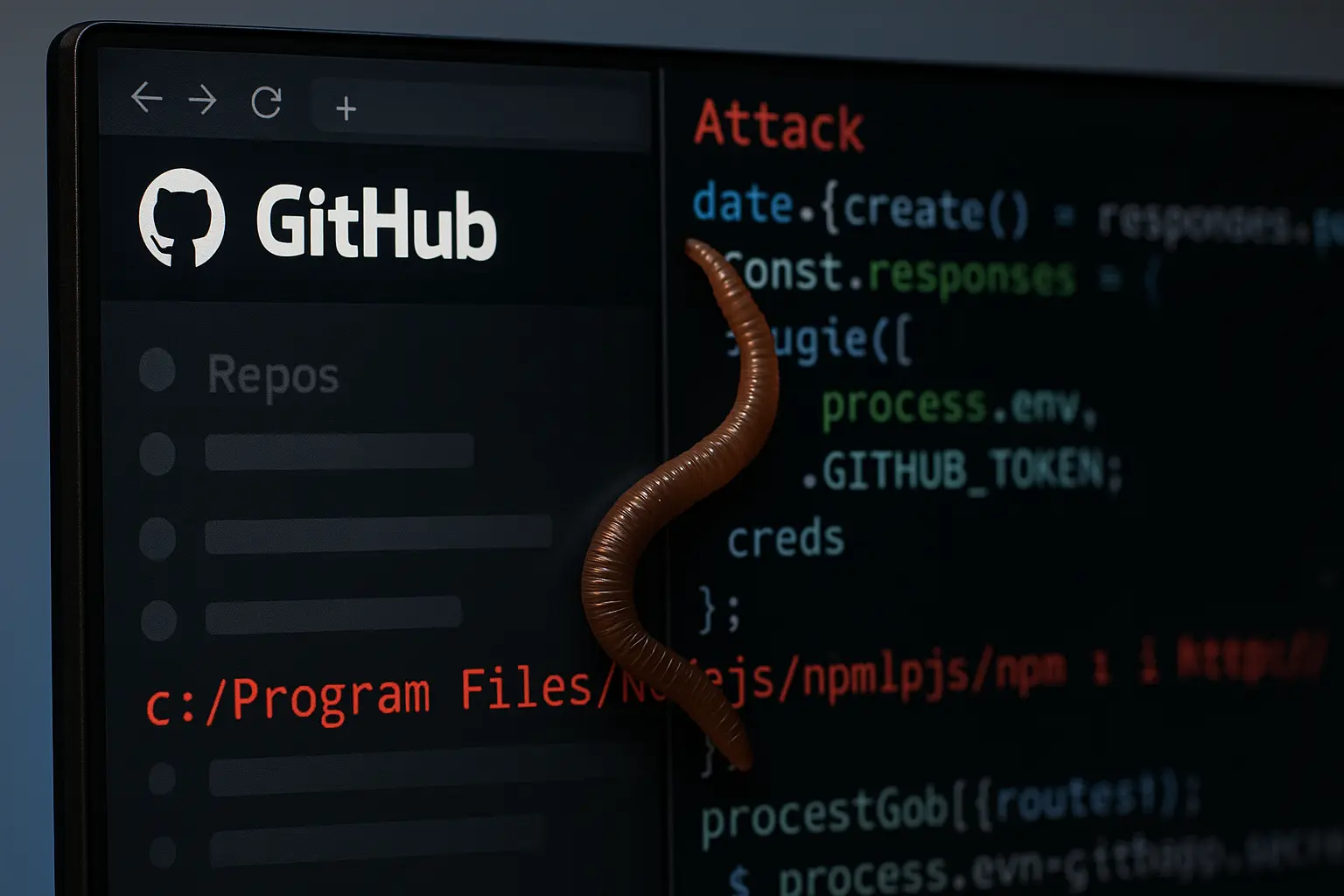
A new supply-chain worm attack has resurfaced, compromising thousands of developer projects and prompting urgent action across software ecosystems. The campaign targets package registries and continuous-integration workflows. This supply-chain worm underlines how attacker tactics now rely on trust chains rather than direct exploitation.
What the attack involves
The worm infects packages within the npm registry and spreads seamlessly to dependent codebases. Attackers compromised hundreds of packages in earlier phases and now expand to impact around 28,000 GitHub repositories. Once installed, the worm searches for credentials, API keys and build-system tokens automatically. The compromised packages download malicious code during installation and execute in developer or cloud environments.
Why build-system exposure matters
Build systems and package ecosystems form critical software infrastructure. When attackers breach a package, they gain access to all projects that rely on it. With the worm embedded in developer workflows, exposure multiplies. The attacker can move laterally into repositories, cloud environments and production systems by leveraging compromised credentials extracted from build logs.
Key targets and techniques
Key targets include development libraries, CLI tools and widely used dependency packages. The worm uses automated scanning to identify GitHub tokens, then escalates by creating repositories or stealing code. Researchers found that over 490 newly infected packages enable the worm to act on up to 100 infected dependencies in one wave. The scale and automation of this supply-chain worm make containment difficult.
How organisations should respond
Organisations must audit dependency trees, revoke exposed tokens and lock down build-system credential access. They should enforce multi-factor authentication on package registries, review post-install scripts and apply package-version pinning. Threat detection should include unusual repository activity, new token issuance and unauthorized package updates. With a supply-chain worm in play, developers and security teams must collaborate.
Broader implications
The attack signals a shift in adversary focus from endpoints to development pipelines. Supply-chain worm campaigns exploit trust relationships within software ecosystems and amplify impact quickly. Industry defenders must evolve from defending individual systems to securing entire ecosystems — including code, builds and dependencies.
Conclusion
The supply-chain worm poses a systemic threat across software development environments. With thousands of GitHub repositories compromised, organisations must act now to audit systems, rotate credentials and strengthen security around build pipelines and dependencies. Only by defending the software supply chain end-to-end can this complex threat be contained.
0 responses to “Supply-chain worm hits 28k GitHub repositories”