


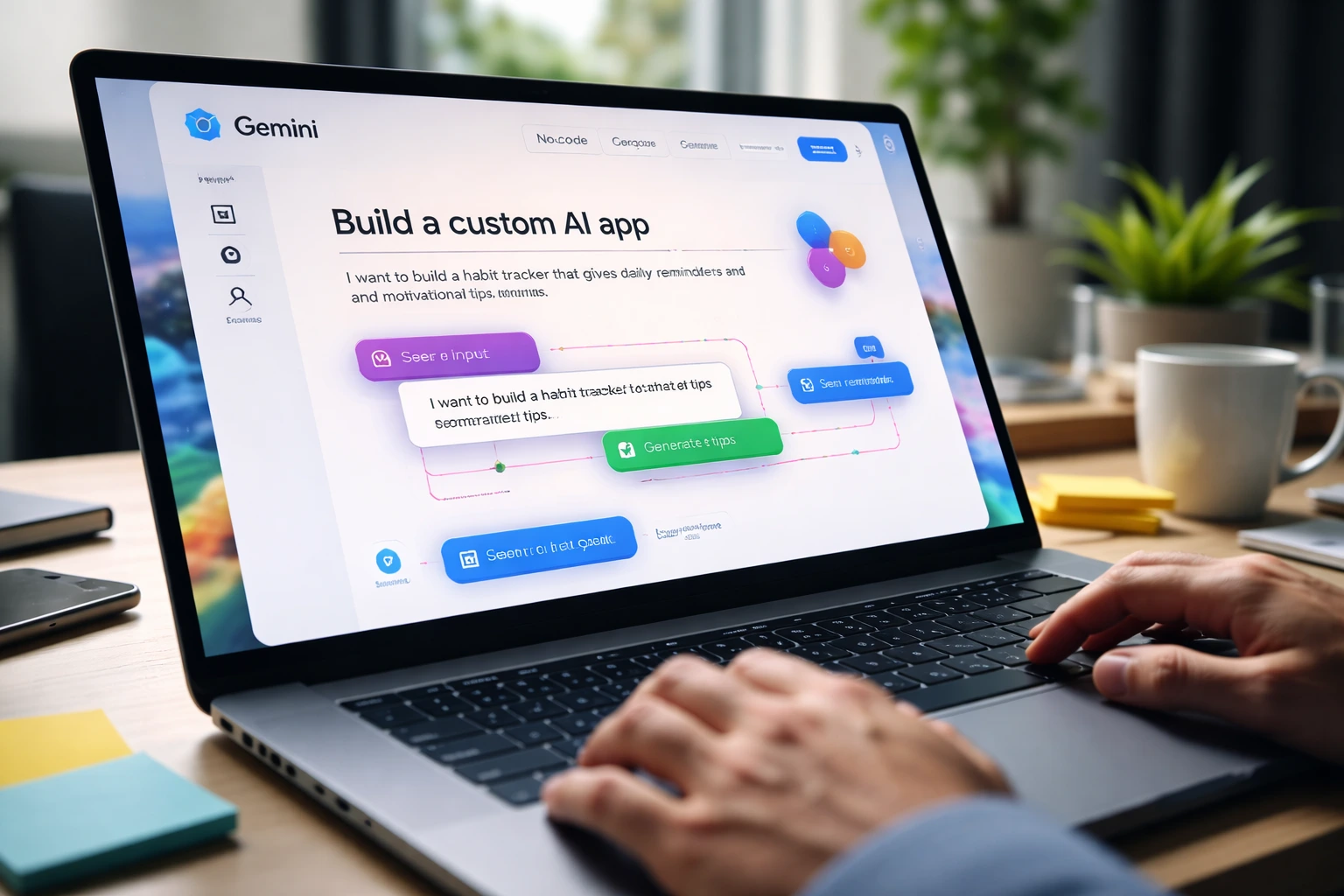
Google Gemini Opal marks Google’s latest step toward making AI app creation accessible to a broader audience. The company has integrated Opal directly into the Gemini web app, allowing users to create custom AI-powered mini applications without writing a single line of code. The update places app-building tools inside Gemini’s existing workflow, reducing friction for users who want tailored AI experiences.
What Gemini Opal does
Opal allows users to build small, task-specific AI apps, known as Gems, using natural language prompts. Instead of coding, users describe what they want the app to do. Gemini then generates a functional mini app based on that description.
Each app follows a structured workflow that users can review and adjust. This approach makes it easier to fine-tune behavior while keeping the process accessible to non-technical users.
How Opal works inside Gemini
With the Opal integration, users can create and manage Gems directly from Gemini’s web interface. The built-in visual editor shows each step of the app’s logic, allowing users to modify prompts, inputs, and outputs as needed.
For users who want more control, Google still offers Opal through its standalone site. That version provides deeper customization options while keeping the same no-code foundation.
From Google Labs to wider access
Google first introduced Opal in July through Google Labs as an experimental project. By bringing it into the Gemini web app, Google signals that Opal has moved beyond early testing and into broader use.
The rollout suggests Google sees long-term value in user-generated AI tools, especially as demand grows for personalized workflows that general-purpose chatbots cannot always deliver.
Why Google is pushing no-code AI tools
No-code AI development has become a competitive focus among major AI providers. Tools from OpenAI and Anthropic also aim to lower the barrier to building AI-powered applications.
With Google Gemini Opal, Google positions itself as a direct competitor in this space. The company targets users who want custom AI behavior without relying on developers or external platforms.
What this means for users
The Opal integration gives Gemini users more control over how they use AI day to day. Instead of repeating prompts or relying on one-size-fits-all responses, users can create reusable tools tailored to specific tasks.
This shift reflects a broader trend in AI design, where platforms move away from single chat interfaces toward modular, user-defined functionality.
Conclusion
Google Gemini Opal expands Gemini from a conversational AI into a customizable platform for building AI-powered tools. By embedding no-code app creation directly into the web interface, Google lowers the barrier to experimentation and personalization. As competition in AI tooling intensifies, Opal positions Gemini as more than just a chatbot, turning it into a workspace for user-built AI solutions.
0 responses to “Google Gemini Opal brings no-code AI app creation to the web”