


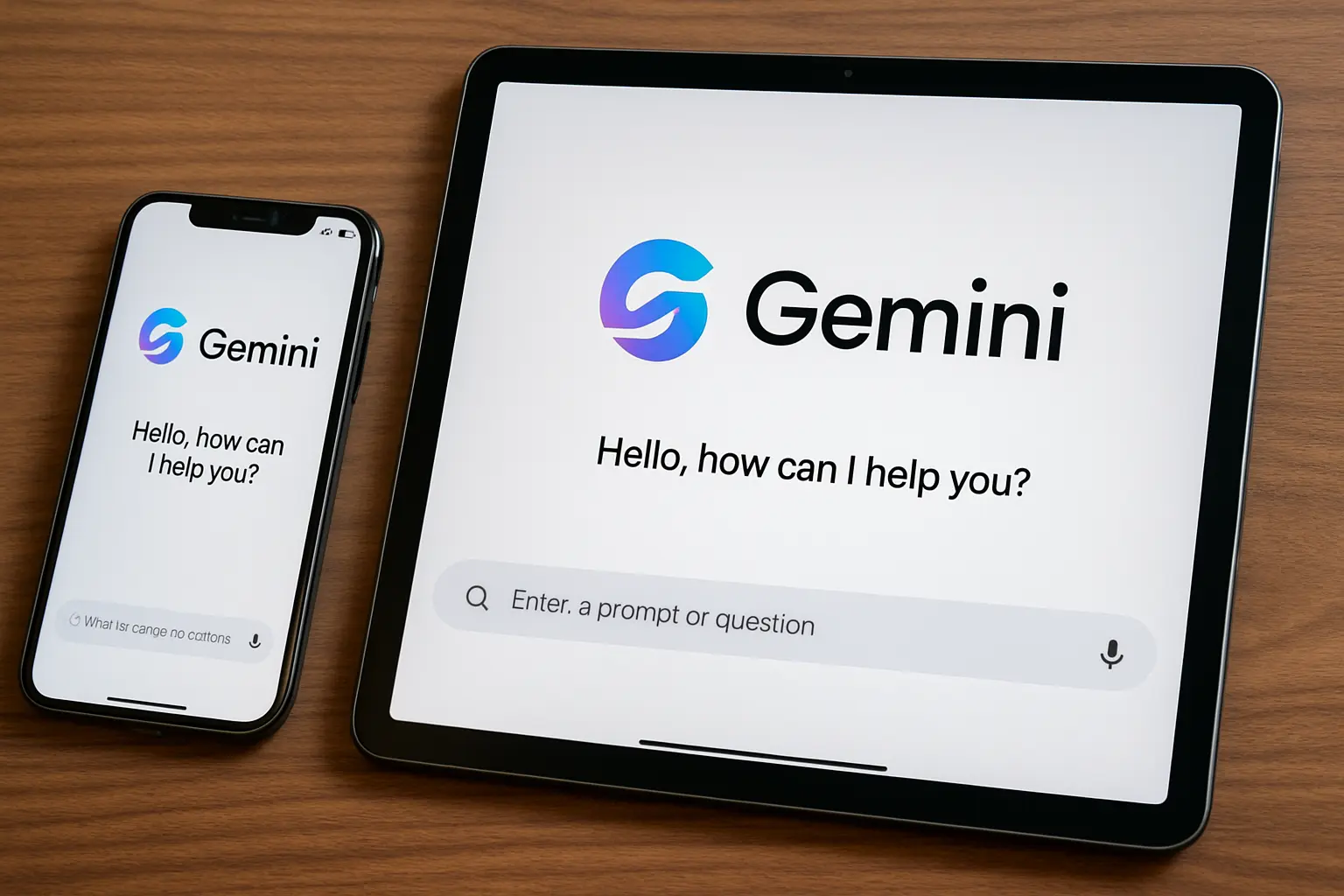
Google is rolling out Gemini AI for iPhone and iPad, expanding access to its generative assistant across Apple’s mobile ecosystem. The move strengthens Google’s position in consumer AI while bringing advanced AI features to users outside the Android platform.
Gemini AI Arrives on Apple Devices
The rollout makes Gemini available as a standalone experience on iOS and iPadOS. Users can now interact with Google’s AI assistant directly on their Apple devices without relying on web-only access.
Gemini supports text-based queries, creative writing, summaries, and contextual assistance, positioning it as a direct alternative to other AI assistants already available on iOS.
How Gemini Works on iPhone and iPad
Gemini on Apple devices is designed for conversational use. Users can ask questions, generate content, brainstorm ideas, or get help with everyday tasks using natural language prompts.
The interface is optimized for touch interaction and larger tablet displays, allowing smoother multitasking on iPads. Google aims to make Gemini feel native to Apple hardware while maintaining its own design language.
Integration With Google’s AI Ecosystem
The iOS rollout connects Gemini more closely with Google’s broader AI services. Users benefit from the same underlying models that power Gemini on Android and the web.
This consistency allows Google to offer feature parity across platforms while refining Gemini’s performance based on device-specific usage patterns.
Competitive Landscape on iOS
Bringing Gemini AI to iPhone and iPad places Google directly into competition with existing AI tools available on Apple devices. AI assistants have become a key battleground as companies race to become the default interface for search, productivity, and creative tasks.
Google’s approach emphasizes flexibility and cross-platform access rather than deep operating system control.
Privacy and User Data Considerations
Google states that Gemini interactions follow the company’s standard privacy and data-handling policies. Users can manage activity settings and control how data is stored or used for model improvement.
The company continues to emphasize transparency as AI assistants handle increasingly personal queries and workflows.
What This Means for Apple Users
For iPhone and iPad users, Gemini adds another powerful AI option alongside existing tools. The rollout gives users more choice in how they interact with AI, especially those already invested in Google’s ecosystem.
The expansion also reflects growing demand for AI assistants that work consistently across devices and operating systems.
Broader Implications for Mobile AI
The release of Gemini AI for iPhone highlights a shift toward platform-agnostic AI assistants. Rather than being tied to a single operating system, leading AI tools are positioning themselves as universal companions.
This trend could reshape how users think about mobile assistants, moving focus away from device brands toward AI capability and usability.
Conclusion
The rollout of Gemini AI for iPhone and iPad marks a significant step in Google’s consumer AI strategy. By bringing its assistant to Apple devices, Google broadens Gemini’s reach and intensifies competition in the mobile AI space. As AI becomes central to daily digital interactions, cross-platform availability may prove just as important as raw model performance.
0 responses to “Gemini AI for iPhone and iPad Rolls Out With Expanded Features”