


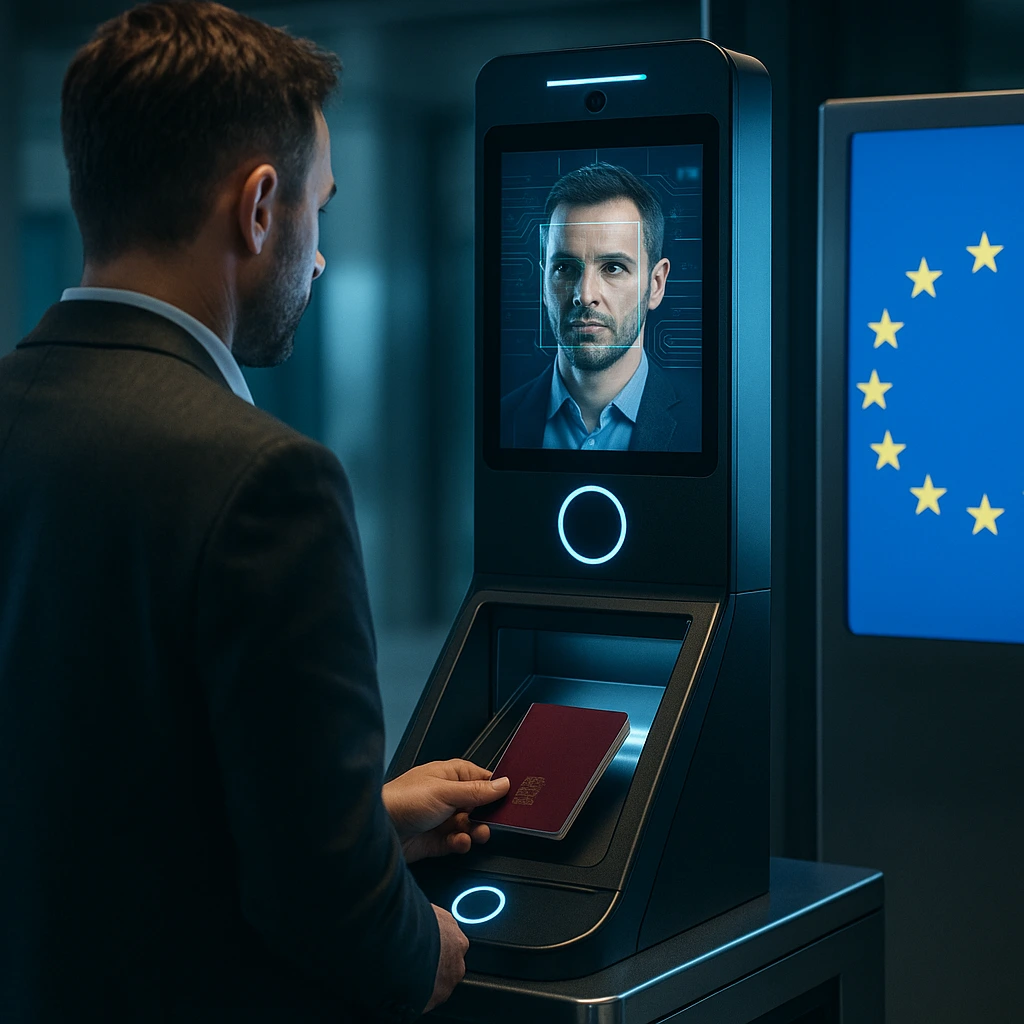
The EU digital border system will change how travelers enter and leave the European Union. Launching in October 2025, the new Entry/Exit System (EES) replaces passport stamps with digital biometric checks. The goal is to modernize border management, reduce identity fraud, and detect overstays more effectively across the Schengen Area.
What the EU Digital Border System Does
The system records entry and exit information for non-EU travelers at external Schengen borders. It uses fingerprints and facial scans to verify identities instead of manual passport stamping.
Each traveler’s biometric record links directly to their digital entry and exit history. Border officials can then confirm whether a visitor left on time or overstayed their permitted 90-day limit.
The European Commission says this modernization will strengthen both border efficiency and internal security, ensuring consistent control standards across all member states.
Who Must Register
The EU digital border system applies to non-EU citizens visiting the Schengen zone for short stays. This includes travelers from visa-exempt countries such as the United Kingdom, the United States, and Canada.
Those with long-term residence permits or EU citizenship remain exempt. Children under 12 will not undergo fingerprint collection. Travelers must provide biometric data at automated kiosks or border checkpoints during their first post-launch entry.
How It Works
When travelers arrive, they scan their passports and register fingerprints and a facial image. The system stores this data for up to three years under strict EU privacy rules.
On future visits, border control officers will verify travelers’ identities using stored biometric data, reducing manual inspection time. If a visitor refuses to provide biometric data, authorities can deny entry.
The EES will gradually phase out traditional passport stamping over the following six months.
Benefits and Objectives
Officials claim the EU digital border system will:
- Detect and prevent overstays automatically.
- Reduce document fraud and identity theft.
- Accelerate processing at busy entry points once the system stabilizes.
- Strengthen Schengen-wide cooperation on border and migration management.
Once fully operational, the system will connect with other EU security databases, forming a unified framework for traveler identification.
Concerns and Privacy Risks
Privacy advocates warn that biometric data collection increases surveillance risks and potential data misuse. Each member state must store and secure collected data in compliance with the EU’s General Data Protection Regulation (GDPR).
Critics also predict long queues and confusion during the transition period, especially at airports and land crossings. Travel industry groups have urged the EU to invest in additional staff and infrastructure to prevent bottlenecks.
Conclusion
The EU digital border system marks a major shift toward biometric security and automation at Europe’s borders. While it promises faster, more reliable traveler verification, it also raises serious questions about data privacy and surveillance. As the rollout begins in October 2025, millions of travelers will experience a new era of digital border control across the Schengen zone.
0 responses to “EU Digital Border System: New Biometric Entry Rules Begin in 2025”