


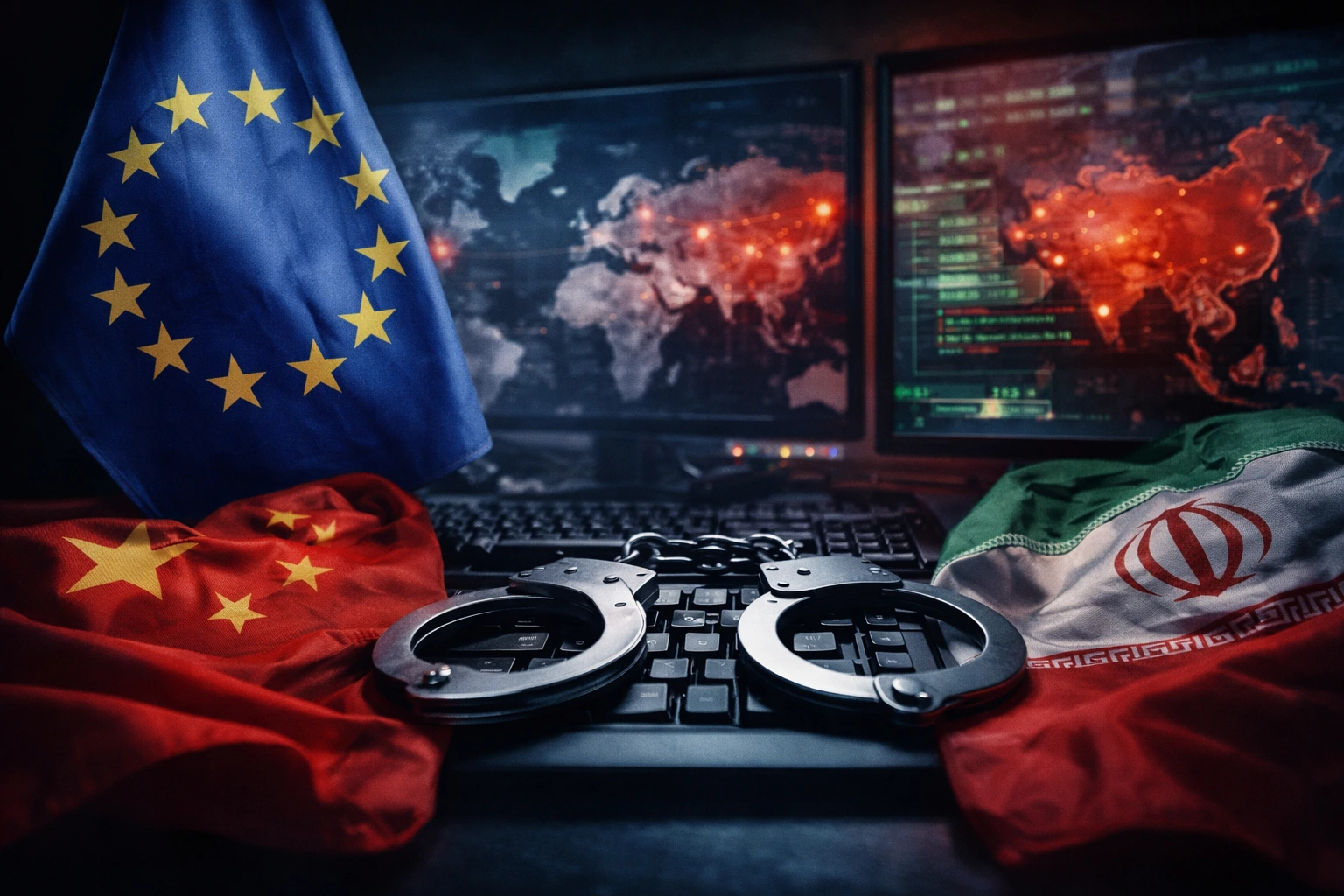
The European Union has expanded its cybersecurity response with a new round of EU cyber sanctions targeting companies linked to international hacking operations. Officials say several organizations based in China and Iran supported cyberattacks that affected European networks and institutions.
The decision reflects growing concern across Europe about state-linked cyber activity. Authorities increasingly treat cyber operations as a national security issue rather than isolated criminal incidents. Sanctions now form part of the EU’s strategy to deter foreign cyber campaigns.
EU Sanctions Chinese and Iranian Companies
European authorities announced sanctions against three companies and two individuals connected to alleged cyber operations. The measures target organizations accused of supporting hacking campaigns against European countries.
Two of the sanctioned companies operate in China. One of them is Integrity Technology Group, which investigators link to large-scale network intrusions. Another targeted organization is Anxun Information Technology, also known as i-Soon.
The EU also sanctioned the Iranian company Emennet Pasargad. Authorities believe the organization participated in malicious cyber activities targeting governments and private organizations.
The sanctions freeze any assets the listed companies hold inside the European Union. The measures also ban the two individuals from entering EU territory.
Investigators Link Companies to Cyber Campaigns
EU officials say the targeted companies helped conduct or support cyber operations affecting European systems. Investigators reported that tools connected to Integrity Technology Group were used during large-scale intrusions.
According to EU assessments, attackers compromised tens of thousands of devices across several European countries during these campaigns. The operations reportedly occurred between 2022 and 2023.
Authorities also accused Anxun Information Technology of providing hacking services targeting government networks and critical infrastructure. Such services often include vulnerability exploitation and remote system access tools.
Security experts warn that these operations rarely operate in isolation. Companies that provide cyber capabilities can enable broader campaigns conducted by state-aligned actors.
EU Strengthens Cybersecurity Deterrence
The new EU cyber sanctions fall under the bloc’s cyber-sanctions framework introduced in 2019. This system allows European authorities to punish individuals or organizations responsible for serious cyberattacks.
The framework enables several enforcement measures. Authorities can freeze financial assets, block travel, and restrict economic cooperation with sanctioned entities.
European officials say the system helps defend the region’s digital infrastructure. The framework also sends a signal that the EU will respond to malicious cyber operations with political and economic consequences.
Cybersecurity analysts expect more sanctions as investigations continue. Governments increasingly use these tools to counter cyber operations linked to geopolitical conflicts.
Conclusion
The latest EU cyber sanctions show how governments now respond more aggressively to international hacking campaigns. Authorities increasingly connect cyber incidents to geopolitical tensions and state-aligned actors.
By targeting companies believed to support cyber operations, the EU hopes to raise the cost of conducting attacks against European systems. Investigations into these campaigns continue as security agencies monitor new threats.
The growing use of sanctions highlights how cyber conflict now sits alongside traditional diplomacy and economic pressure.
0 responses to “EU Cyber Sanctions Target Chinese and Iranian Firms”