


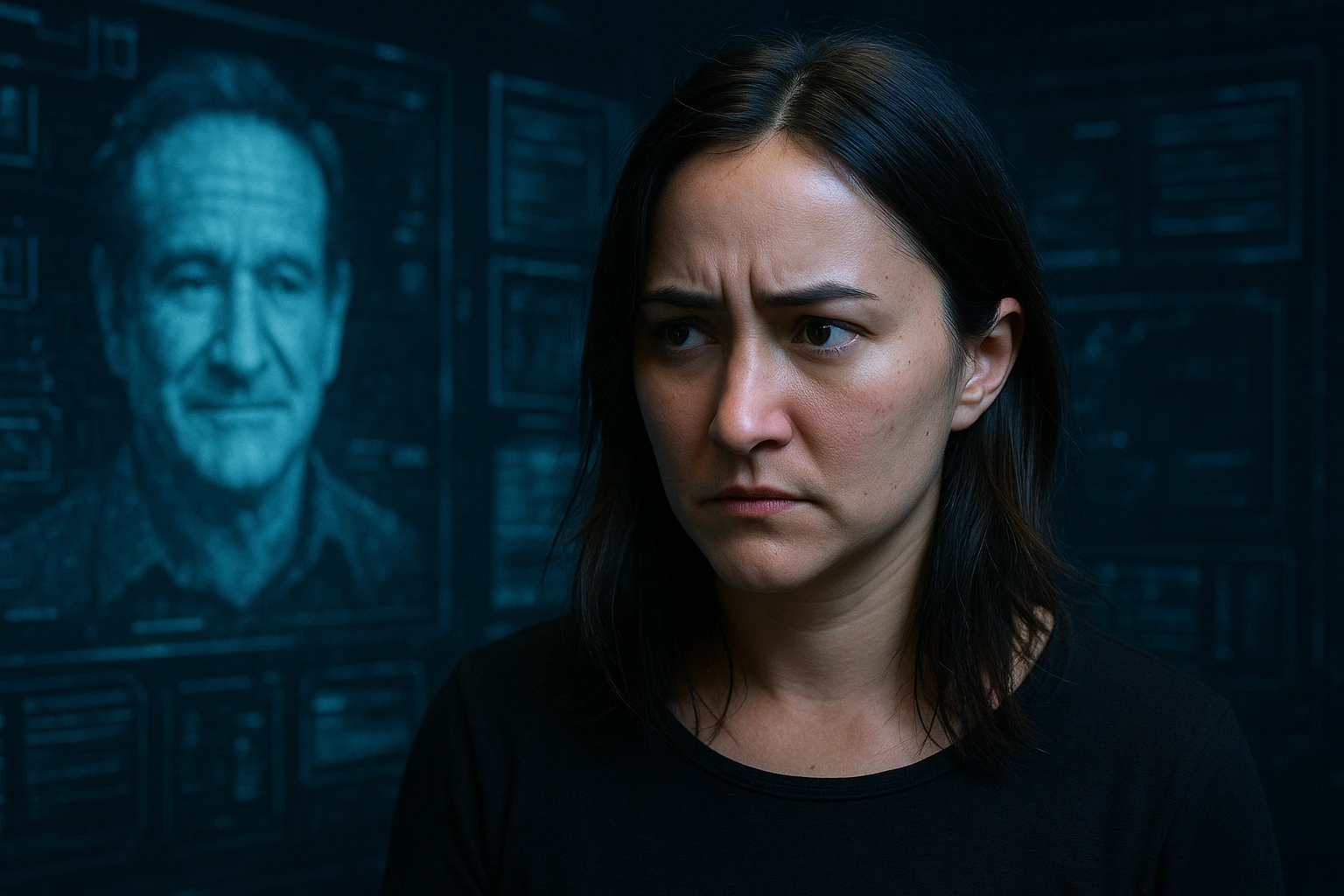
Zelda Williams publicly criticized AI-generated videos that use her father’s likeness.
She said the clips feel “disgusting” and deeply disrespectful.
In her statement, Zelda explained that these digital recreations exploit grief and misrepresent her father’s personality.
“These deepfakes aren’t tributes,” she said. “They’re distortions that erase humanity.”
Her comments followed a surge of synthetic videos circulating online, showing Robin Williams in scenes he never performed.
The AI Tools Behind the Deepfakes
The clips appeared soon after the release of OpenAI’s Sora 2, a new video generator.
The tool allows users to create highly realistic footage from simple text prompts.
Soon after launch, creators began posting fabricated videos of Robin Williams delivering speeches or performing stand-up routines.
The speed and realism of these clips shocked viewers.
Many people struggled to tell the difference between real footage and AI-generated content.
Experts say this shows how quickly synthetic media can blur the line between fact and fiction.
Zelda’s Call for Ethical Limits
Zelda Williams urged AI companies to build strict ethical controls.
She wants families to have the right to block unauthorized recreations before they spread.
She believes these videos strip people of dignity and turn their memories into digital products.
Critics agree that such recreations are harmful.
They warn that AI deepfakes risk turning art into exploitation.
Several experts have called for stronger regulations to protect personal likenesses after death.
OpenAI said it is developing tools to prevent impersonations and handle takedown requests.
The company stressed that Sora should inspire creativity, not misuse.
Public Reaction and Broader Concerns
Fans supported Zelda’s statement.
Many said the videos crossed moral boundaries.
Others demanded new laws defining digital consent and legacy rights.
The Zelda Williams AI deepfake issue highlights a larger question: who controls identity in the age of AI?
Experts believe society must decide how far technology can go before it becomes exploitation.
Conclusion
The Zelda Williams AI deepfake controversy exposes the emotional and ethical cost of recreating human likeness through technology.
Zelda’s response reminds the world that innovation must not come at the expense of dignity and respect.
As AI advances, preserving consent and legacy remains essential to protecting what makes people human.
0 responses to “Zelda Williams Speaks Out Against AI Deepfakes”