


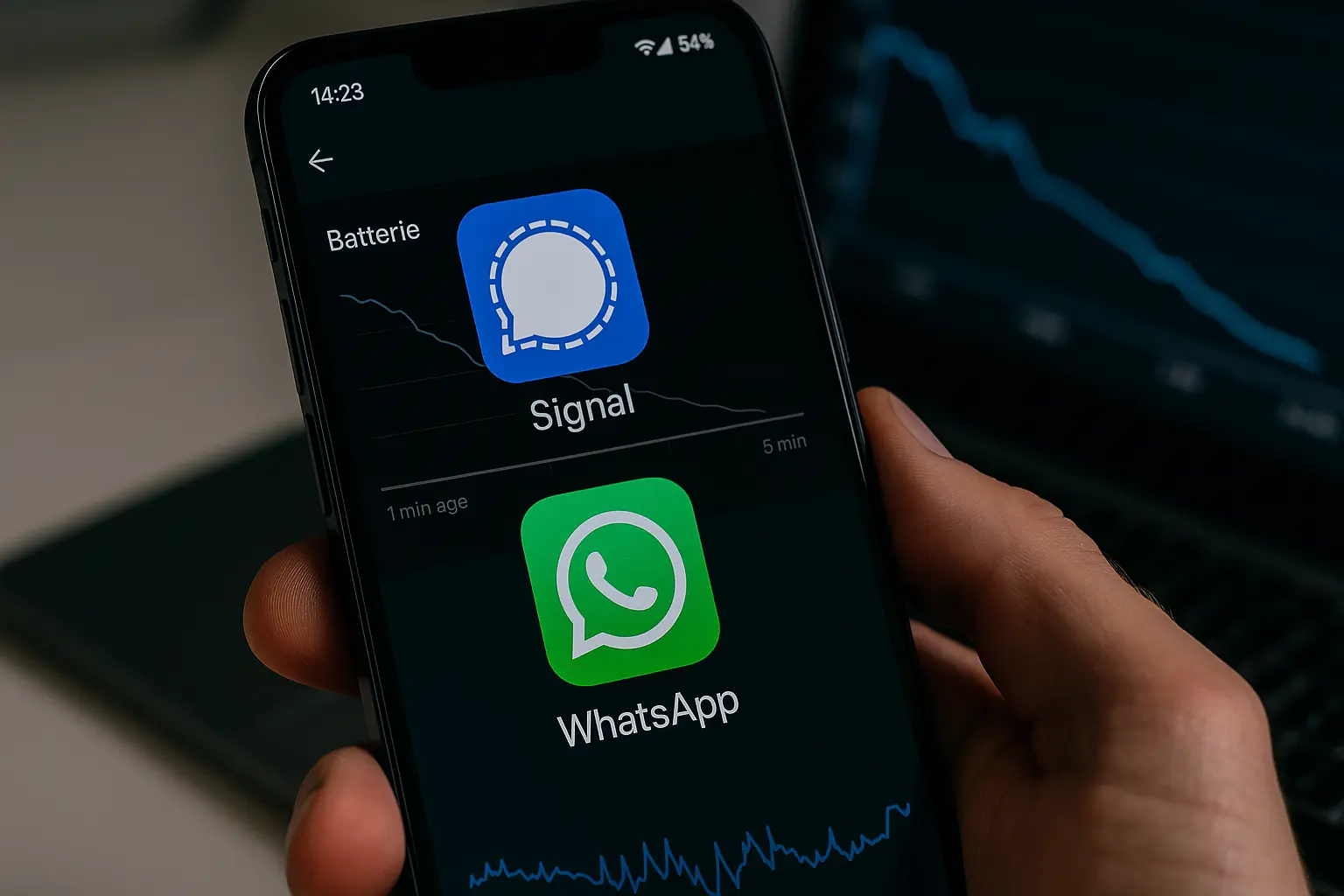
A newly disclosed WhatsApp Signal tracking flaw has raised concerns about how encrypted messaging apps can still leak sensitive behavioral data. Security researchers revealed that attackers can exploit battery usage and message timing patterns to infer when users are active, potentially enabling real-time tracking without breaking encryption.
How the Tracking Flaw Works
The flaw does not rely on reading messages or accessing content. Instead, it exploits how messaging apps handle notifications, background processes, and message delivery.
By repeatedly sending messages or triggering notifications, an attacker can observe changes in battery drain and response timing. These signals can reveal whether a user is online, interacting with their device, or moving between networks.
Why Encryption Does Not Prevent This
WhatsApp and Signal both use strong end-to-end encryption. That protection remains intact. However, encryption does not hide metadata such as timing, power usage, or network behavior.
The tracking flaw operates entirely outside message content. It focuses on side-channel information that leaks through normal app behavior rather than cryptographic weaknesses.
Battery Drain as a Side Channel
Researchers found that sustained messaging activity can force the apps to wake the device repeatedly. This behavior increases battery usage in measurable ways.
An attacker who monitors these effects can correlate battery drain patterns with user activity. Over time, this data allows increasingly accurate predictions about when a user is active or idle.
Real-Time Presence Inference
The flaw enables near real-time presence tracking. If battery usage spikes or message handling accelerates, attackers can infer that a user is actively engaging with their phone.
This creates a privacy risk even when read receipts, online status indicators, and typing notifications are disabled.
Impact on WhatsApp and Signal Users
Both WhatsApp and Signal emphasize privacy and secure communication. While message content remains protected, the tracking flaw highlights limits in defending against metadata-based attacks.
Users who face heightened risk include journalists, activists, and individuals in sensitive environments where activity patterns alone can expose location, routines, or availability.
Platform-Level Challenges
The issue extends beyond individual apps. Mobile operating systems control background activity, power management, and notification handling.
As long as apps must wake devices to deliver messages, attackers can attempt to exploit those signals. This makes full mitigation difficult without broader OS-level changes.
Possible Mitigations
Researchers suggest several defensive measures:
- Limiting background wakeups
- Introducing random delays in message handling
- Smoothing battery usage patterns
- Improving OS-level privacy controls
However, each option involves trade-offs between privacy, responsiveness, and battery life.
Why This Matters
The WhatsApp Signal tracking flaw underscores a broader reality in cybersecurity. Even well-encrypted platforms can leak meaningful information through side channels.
As surveillance techniques evolve, privacy protections must extend beyond encryption to include behavioral and metadata defenses.
Conclusion
The WhatsApp Signal tracking flaw shows how real-time user activity can be inferred without accessing message content. By exploiting battery drain and timing behavior, attackers can monitor presence and routines through encrypted apps. Addressing this risk will require changes not only from app developers but also at the operating system level, as metadata continues to challenge modern privacy guarantees.
0 responses to “WhatsApp Signal Tracking Flaw Exposes Users to Real-Time Monitoring”