


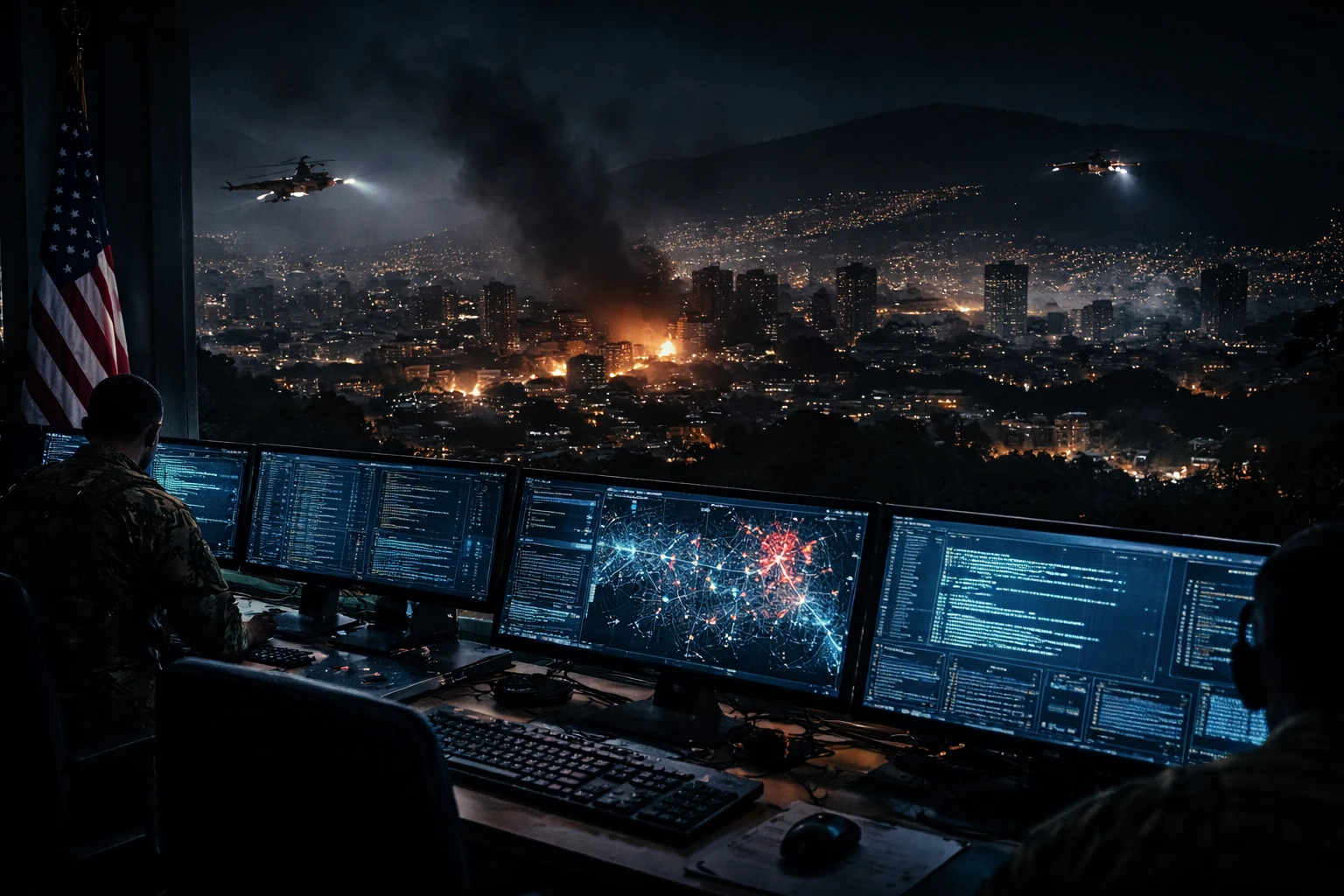
The US cyber role Caracas blackout has now been formally confirmed, marking a rare public admission of offensive cyber activity tied to real-world infrastructure disruption. American officials acknowledged that cyber capabilities contributed to a major power outage in Venezuela’s capital during a high-risk operation targeting the country’s leadership. The confirmation highlights how cyber tools increasingly shape modern military actions.
What Triggered the Caracas Blackout
During a U.S.-led operation aimed at detaining Venezuelan President Nicolás Maduro, large sections of Caracas lost power. The blackout occurred at a critical moment, limiting visibility, communications, and coordination across the city. U.S. officials later confirmed that cyber operations played a supporting role in the disruption.
The government did not disclose specific techniques or targets. Officials emphasized that the cyber activity formed part of a broader operational plan rather than a standalone attack. The blackout aligned closely with the timing of the operation, reinforcing the link between digital actions and physical outcomes.
How Cyber Operations Supported the Mission
The US cyber role Caracas blackout demonstrates how military planners now integrate cyber capabilities alongside traditional forces. By disrupting power and communications, U.S. planners aimed to reduce resistance and confusion during the operation. Cyber effects helped shape conditions on the ground without deploying additional physical force.
This approach reflects a shift in military doctrine. Cyber tools no longer operate in isolation. Commanders now treat them as operational assets capable of producing immediate tactical advantages. The Caracas outage illustrates how cyber actions can directly influence urban environments during sensitive missions.
Why This Admission Matters
Public acknowledgment of offensive cyber involvement remains unusual. Governments typically keep such operations classified to avoid exposing capabilities or escalation risks. The confirmation in this case signals growing confidence in cyber integration and a willingness to acknowledge its impact.
The admission also raises broader questions. Disrupting civilian infrastructure carries legal and ethical implications, especially in densely populated areas. Power outages affect hospitals, transportation, and emergency services. Even short disruptions can carry serious consequences.
By confirming involvement, U.S. officials opened the door to renewed debate about acceptable cyber behavior during international operations.
Broader Implications for Cyber Warfare
The US cyber role Caracas blackout serves as a clear example of multi-domain operations. Cyber actions now complement air, land, and intelligence assets in coordinated missions. This trend blurs the boundary between digital conflict and physical warfare.
Other nations closely monitor these developments. Public acknowledgment may influence how states justify or normalize cyber operations against infrastructure during future conflicts. The Caracas blackout could shape how governments frame cyber actions under international law.
Conclusion
The confirmed US cyber role Caracas blackout marks a significant moment in modern conflict. It shows how cyber capabilities can directly influence real-world events during high-stakes operations. As governments continue to integrate digital tools into military planning, transparency, accountability, and restraint will remain critical challenges in the evolving landscape of cyber warfare.
0 responses to “US cyber role Caracas blackout confirmed during Caracas operation”