


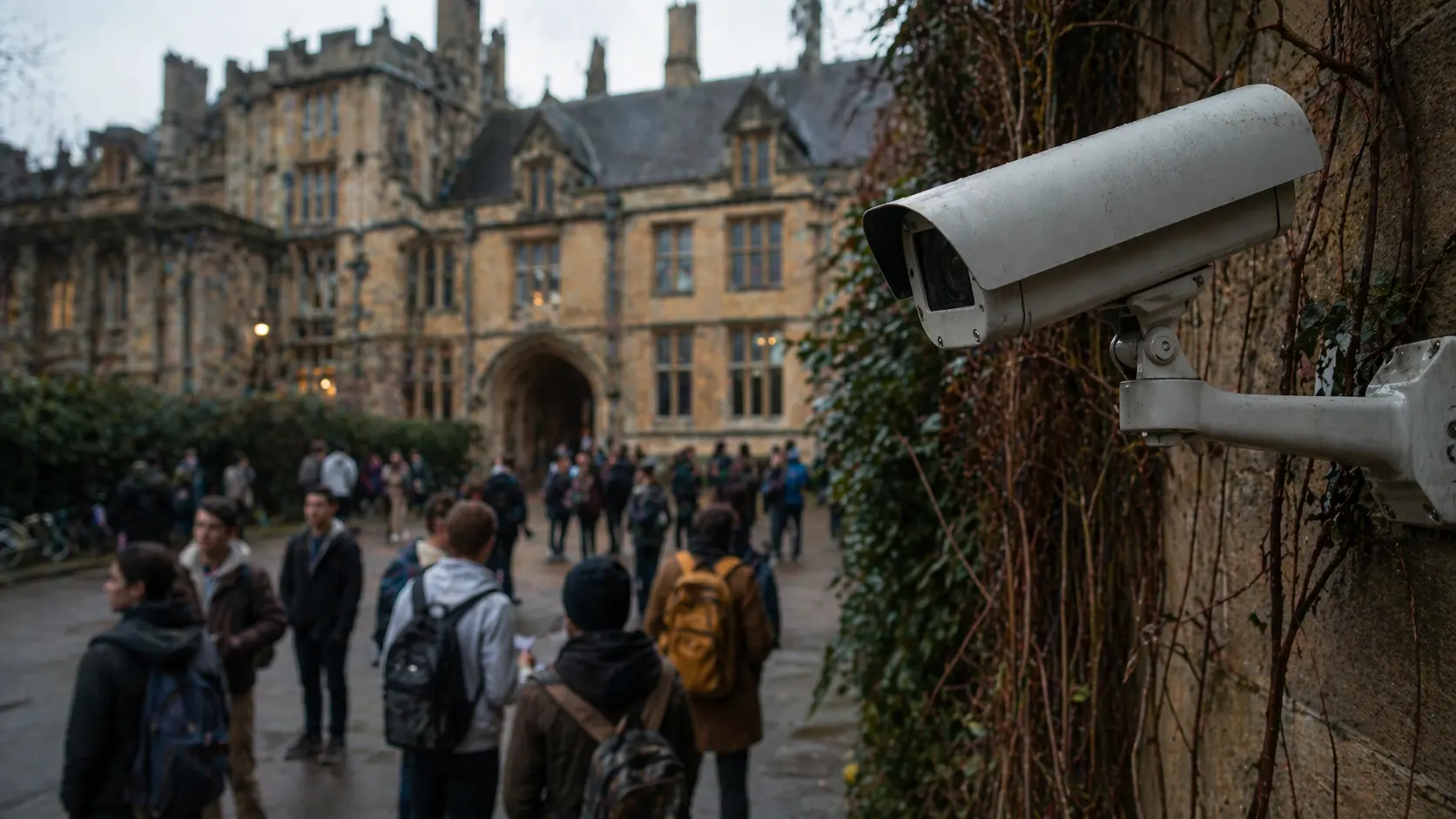
A UK university surveillance scandal has raised serious concerns after reports revealed that leading institutions paid a private firm to monitor student activity. The monitoring focused on protests, activism, and campus events, which has triggered a wider debate about privacy and free speech.
This UK university surveillance case shows how quickly security measures can shift into large-scale monitoring of individuals.
Universities Funded External Monitoring
Several major universities hired a private intelligence firm to collect and analyze online activity. The monitoring covered public content, including social media posts and discussions linked to campus events.
Institutions used these services to track potential risks during protests and high-profile gatherings. While universities described the process as precautionary, the scale of monitoring raised concerns.
The involvement of external contractors also increased scrutiny over how the data was handled and interpreted.
Data Collection Relied on OSINT Techniques
The UK university surveillance operation relied on open-source intelligence methods to gather information. These techniques focus on publicly available data but can still produce detailed profiles when used at scale.
The systems collected information from:
- Social media platforms
- Public forums and discussion boards
- Open online sources linked to events
Even though the data was public, the volume and structure of the collection created a more intrusive form of monitoring.
Students and Academics Identified in Reports
The monitoring did not remain general. Reports included references to specific individuals involved in protests or academic discussions.
This raised concerns because:
- Students were identified in security-related reports
- Guest speakers appeared in monitoring summaries
- Academic activity became part of risk analysis
Critics argue that this type of tracking goes beyond standard safety measures and enters the territory of surveillance.
Universities Defend Their Actions
Universities stated that the monitoring aimed to protect campus safety and manage large events. They emphasized that all collected data came from public sources.
According to their position, the process focused on identifying potential disruptions rather than targeting individuals. However, the presence of detailed reports suggests a more complex reality.
This gap between intent and outcome remains a central issue in the debate.
Privacy and Free Speech Concerns Grow
The UK university surveillance case has triggered strong reactions from privacy advocates and academic groups. Many argue that large-scale monitoring can discourage open discussion and activism.
Key concerns include:
- Reduced willingness to participate in protests
- Lack of transparency in data collection practices
- Risk of misuse of collected information
Even when data is public, structured analysis can amplify its impact in ways that affect individual rights.
Conclusion
The UK university surveillance controversy highlights a growing tension between safety and privacy. Institutions aim to manage risk, but large-scale monitoring can create unintended consequences.
This case shows how modern surveillance methods can reshape academic environments. As universities continue to use advanced data tools, the balance between security and freedom will remain under close scrutiny.
0 responses to “UK University Surveillance Sparks Privacy and Free Speech Concerns”