


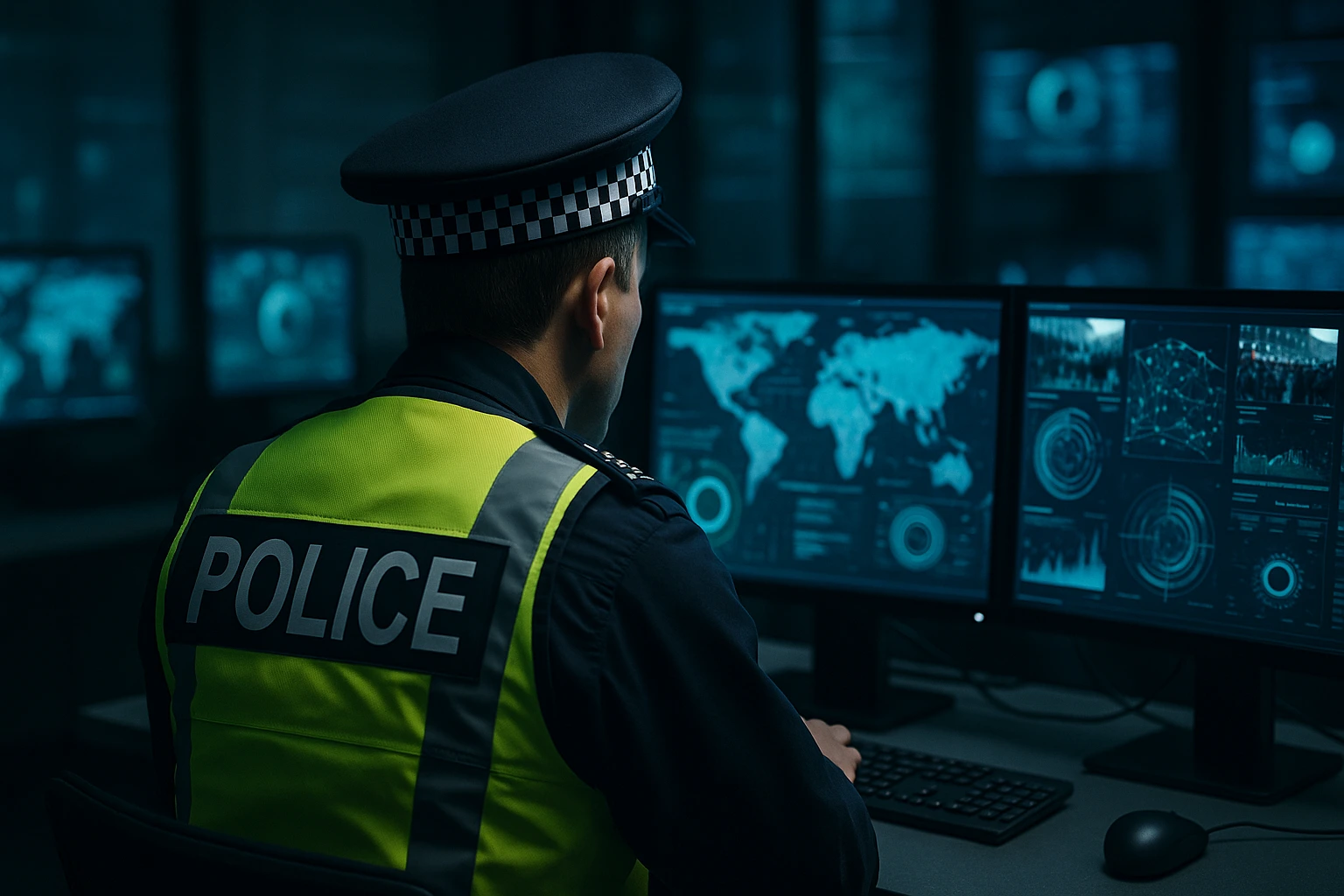
The UK is launching a new police unit to monitor social media for signs of violent protests before they erupt. Housed within the National Police Coordination Centre (NPoCC), the team will scan online platforms to detect and prevent anti-migrant demonstrations and other public unrest.
A Digital Approach to Civil Unrest
The announcement comes after last summer’s riots overwhelmed law enforcement with an avalanche of online chatter. According to Policing Minister Diana Johnson, this new unit will help UK police monitor protests by flagging threatening trends in real time.
In a letter to MPs, Johnson confirmed the Home Office is evaluating the launch of a national internet intelligence investigations team. This team will act as a central hub for analyzing online conversations and advising local police forces across England and Wales.
“This will be a dedicated function at a national level for exploiting internet intelligence,” said Johnson. She added that the goal is to help police “manage public safety threats and risks.”
Protest Flashpoints Driving the Change
Recent protests in Leeds, Norwich, and Nottinghamshire have sparked the government’s renewed urgency. The rallies began after an asylum seeker in Epping, Essex, was charged with attempting to kiss a 14-year-old girl.
While initial demonstrations were peaceful, far-right activists escalated tensions by throwing eggs, rocks, and other objects. Slogans like “Send them home” and “Save our kids” turned into chaotic scenes that caught police off guard.
Authorities also point to the tragic July 2024 murder of three girls at a Taylor Swift-themed club in Southport as another reason for stronger online oversight.
Praise and Pushback
Police leaders welcome the move, citing the need to modernize intelligence tools. His Majesty’s Inspectorate of Constabulary and Fire and Rescue Services (HMICFRS) noted in a recent report that police have “not kept pace” with the speed of online communication.
But not everyone is impressed. Critics argue the UK police monitor protests not just for safety—but to control speech. Reform UK leader Nigel Farage slammed the plan, calling it “sinister” and a threat to free speech.
Conclusion
The UK’s new internet intelligence unit signals a shift in how authorities approach civil unrest. While the goal is to prevent violence, concerns about surveillance and freedom of expression remain. As UK police monitor protests more closely online, the country walks a fine line between public safety and personal liberty.
0 responses to “UK Police Monitor Protests with New Online Unit”