


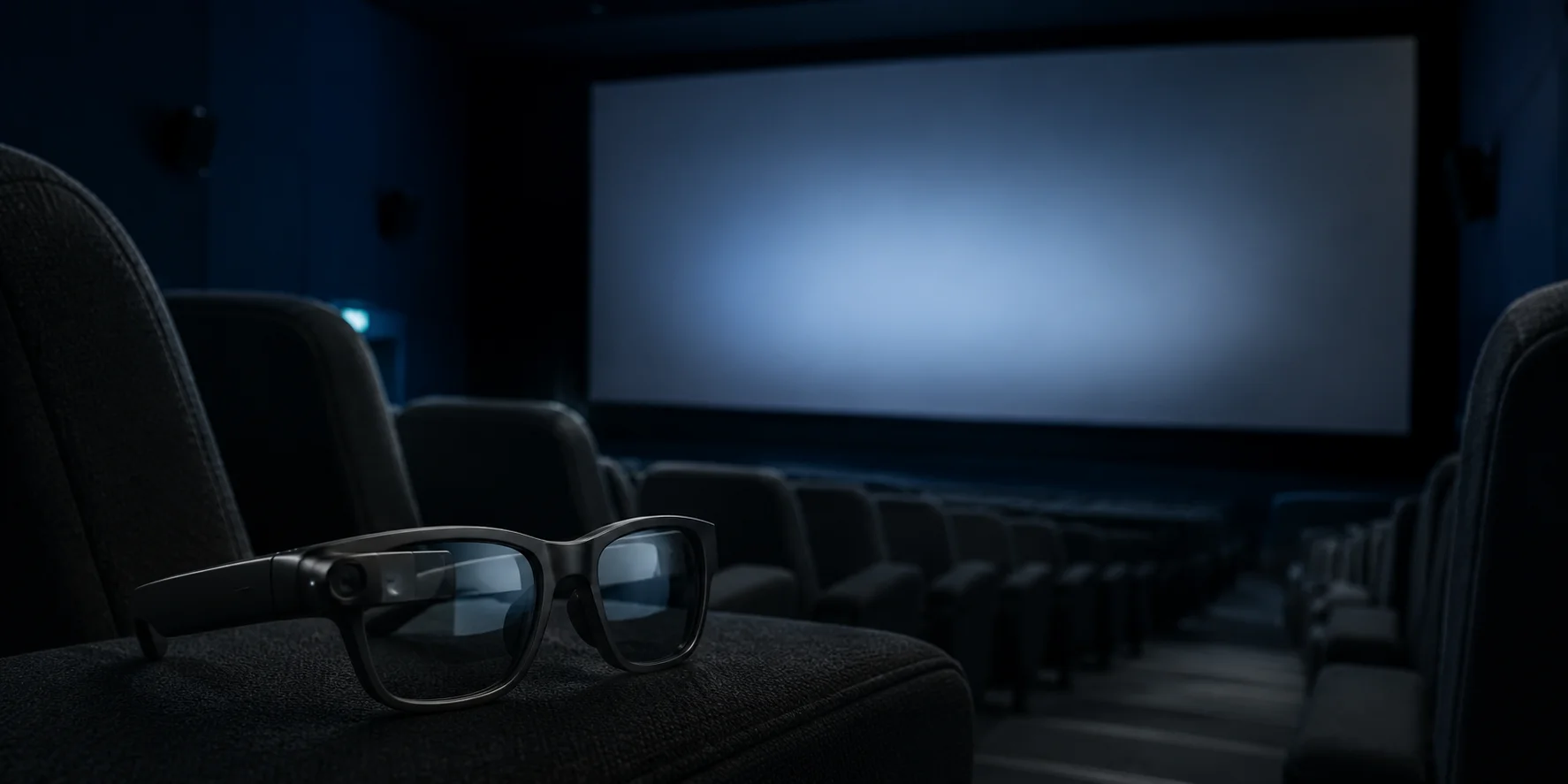
UK cinema smart glasses policies could become stricter as operators consider the privacy and film-piracy risks of camera-enabled wearables. The UK Cinema Association says some venues may introduce restrictions or bans.
No major UK cinema chain has confirmed a blanket ban so far. However, the trade body says operators are increasingly aware of the issues surrounding wearable cameras in screening rooms.
Cinemas weigh privacy and piracy concerns
Camera-equipped smart glasses can record video discreetly from the wearer’s point of view. That creates an obvious piracy concern for cinemas, where an illegal recording can quickly spread online.
The technology also raises privacy questions. Some people have reported being filmed without their knowledge or consent, with footage later appearing on social media.
The UK Cinema Association said venues are considering policies that prohibit or restrict camera-enabled smart glasses. Individual operators will decide how far those rules go.
Recording light aims to deter hidden filming
Meta says its smart glasses activate a visible LED light when the wearer records video or takes photos. The company argues that cinema staff and other visitors should be able to notice the flashing indicator.
The system also reportedly disables the camera if someone covers or blocks the light. Meta does not offer a software setting that turns off the recording indicator.
However, cinema operators may still prefer clear restrictions rather than relying on a technical safeguard. A visible light does not remove every concern about whether someone could record a film or other visitors.
Accessibility remains part of the discussion
UK cinema smart glasses may also provide useful accessibility features. AI-enabled wearables could help some customers access specially created subtitles and other assistance during a screening.
The UK Cinema Association acknowledged that the technology can benefit people with specific access requirements. Cinemas will therefore need to balance those advantages against the need to protect audiences, staff and film rights.
A total ban may not suit every venue. Some cinemas could instead introduce targeted rules, such as restricting camera-enabled glasses during screenings while allowing exceptions where appropriate.
Other UK venues are tightening rules
Privacy concerns over smart glasses extend beyond cinemas. Pubs, cafés, restaurants and private clubs in the UK have also introduced restrictions on camera-enabled wearables.
The growing number of policies reflects a wider concern: smart glasses increasingly function as AI assistants, but they also place an always-available camera on the wearer’s face.
For cinema operators, the immediate issue is whether that convenience creates too much risk inside a dark screening room. The UK Cinema Association’s statement suggests many venues are preparing to make that decision.
0 responses to “UK Cinemas Consider Smart Glasses Bans Over Piracy”