


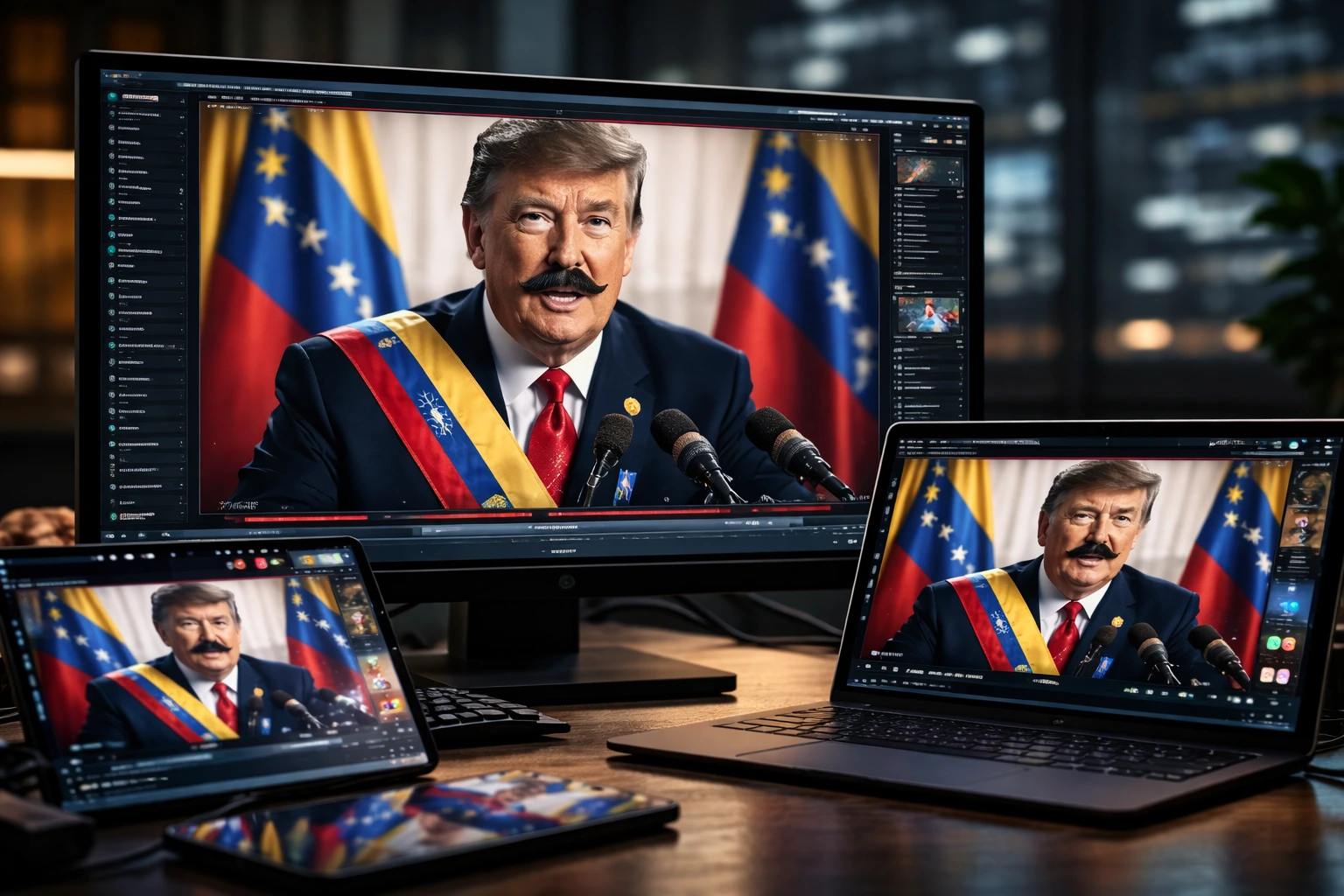
The Trump AI Maduro video has drawn widespread attention after a fabricated clip showing Donald Trump as Venezuela’s new leader began circulating online. The video appeared during a period of heightened interest in Venezuela’s political situation and quickly gained traction across social platforms. Although clearly artificial upon closer inspection, the clip initially confused many viewers due to its polished visuals and familiar political messaging.
The incident has reignited concerns about how AI-generated media can distort public understanding of real-world events. As generative tools grow more accessible, misleading political content can spread faster than audiences can verify it.
What the AI-Generated Video Depicts
The Trump AI Maduro video presents an altered version of Donald Trump styled to resemble a Venezuelan political figure. In the clip, the AI-generated character delivers exaggerated statements and symbolic gestures designed to mimic political announcements.
Creators appear to have framed the video as parody. However, the realistic perception of the figure and the timing of its release blurred that intent for many viewers. The combination of recognizable imagery and topical references helped the video spread rapidly before its artificial nature became widely understood.
Timing and Political Context
The video surfaced amid intense discussion about Venezuela’s leadership and recent developments involving President Nicolás Maduro. Online speculation and fragmented reporting created an environment where misleading content could thrive.
During moments of political uncertainty, audiences often seek quick explanations or dramatic narratives. AI-generated content that aligns with those expectations can easily gain traction, even when it lacks factual grounding.
Why AI Political Deepfakes Are Effective
AI-generated political videos succeed because they blend familiar figures with plausible scenarios. Viewers tend to trust visual content, especially when it features well-known personalities and professional production quality.
Unlike traditional misinformation, AI deepfakes require less explicit false claims. The imagery itself can shape perception, influence emotional responses, and reinforce assumptions without direct statements. This makes detection and correction more difficult once content spreads widely.
Risks Posed by AI-Generated Political Content
The Trump AI Maduro video highlights the growing risks associated with AI-driven political media. Even when intended as satire, such content can mislead audiences who encounter it out of context.
These videos can also undermine trust in legitimate reporting. As fabricated visuals become more common, viewers may question authentic footage, creating confusion rather than clarity during critical events.
Challenges for Platforms and Audiences
Online platforms face increasing pressure to identify and moderate AI-generated political content. Automated detection systems often struggle to keep pace with rapid advances in generative technology.
At the same time, audiences must develop stronger media literacy habits. Verifying sources, questioning sensational visuals, and recognizing AI artifacts now play a critical role in responsible information consumption.
Conclusion
The Trump AI Maduro video demonstrates how quickly AI-generated political content can spread and influence public perception. While the clip did not represent reality, its impact highlights the broader challenges posed by deepfake technology. As AI tools continue to evolve, clear labeling, improved detection, and informed audiences will remain essential to limiting the harm caused by misleading digital media.
0 responses to “Trump AI Maduro Video Sparks Concern Over Political Deepfakes”