


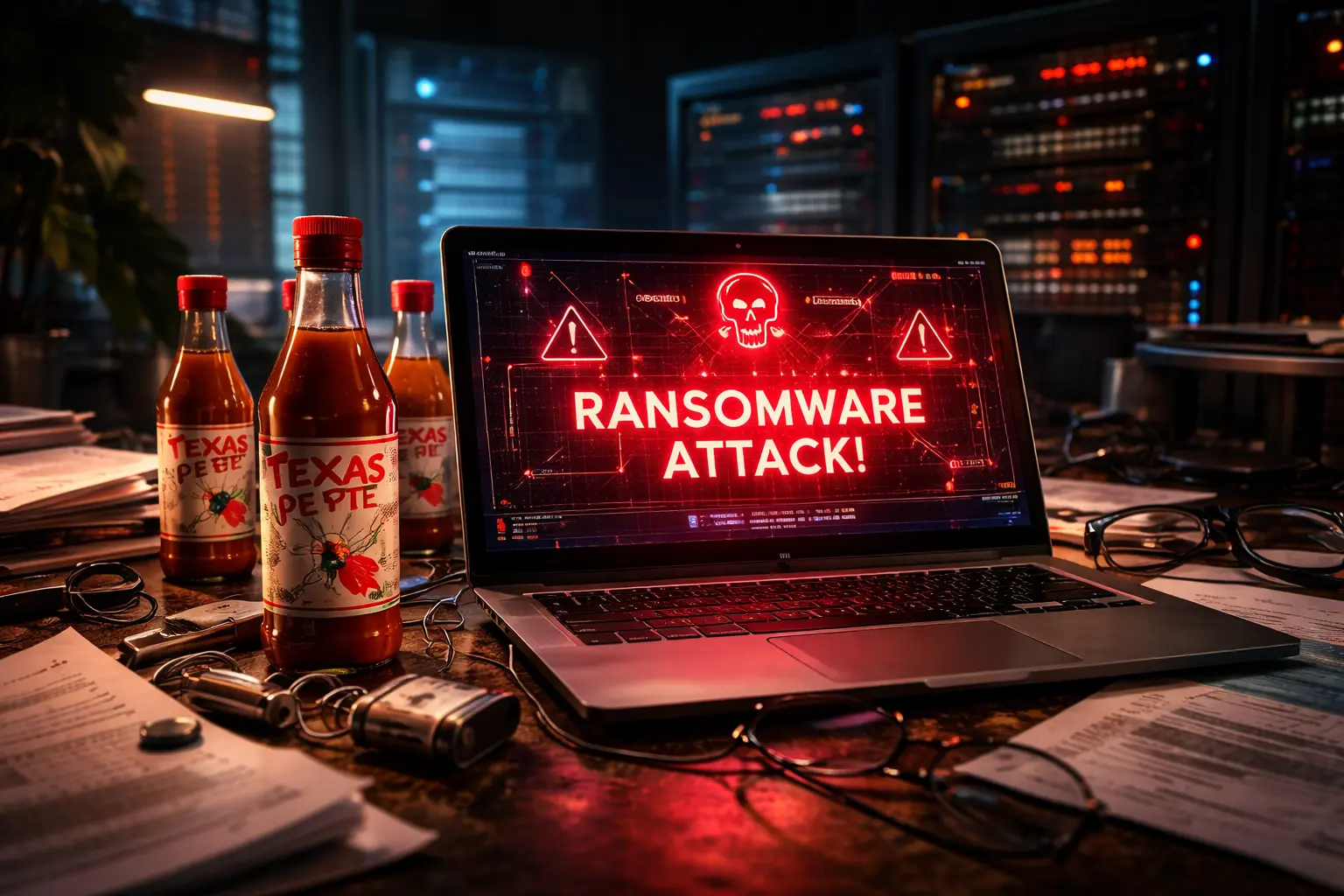
The Texas Pete ransomware attack has affected Garner Foods, the U.S. company behind the popular hot sauce brand. The Play ransomware group claimed responsibility and alleged it accessed sensitive internal systems before issuing extortion threats.
Garner Foods operates from North Carolina and has produced Texas Pete hot sauce for decades. The attack highlights how ransomware groups increasingly target manufacturers with established supply chains and valuable internal data.
What Attackers Claim to Have Stolen
The Play ransomware group claims it exfiltrated a broad range of internal files from Garner Foods. According to the attackers, the stolen data includes both corporate and personal records tied to company operations.
The alleged data includes:
- Internal business and operational documents
- Financial and budget records
- Client-related files
- Payroll information
- Identification and tax-related documents
If confirmed, this level of access could expose employees to identity theft and companies to financial fraud. It may also create legal and regulatory risks if personal data becomes public.
Short Deadline Increases Pressure
Play reportedly gave Garner Foods a limited time window to respond before publishing the data. This tactic follows the group’s typical double-extortion model, which combines data theft with public leak threats.
Short deadlines increase pressure on victims and reduce response time. Organizations must quickly assess exposure, contain systems, and coordinate legal and incident response teams.
Why Food Manufacturers Are Increasing Targets
Ransomware groups increasingly target food producers and distributors. These companies rely on continuous operations and complex logistics systems, which attackers view as leverage points.
Disruptions can delay production, interrupt shipments, and affect contracts. Even without encryption-related downtime, data exposure alone can damage trust with partners and retailers.
The Texas Pete ransomware attack fits a wider pattern affecting manufacturing and consumer goods brands.
About the Play Ransomware Group
Play ransomware has emerged as one of the more active extortion groups in recent years. The group targets organizations across multiple industries, including healthcare, manufacturing, retail, and logistics.
Play typically steals data before launching encryption attacks. The group then threatens to publish sensitive files if victims refuse to negotiate. This strategy focuses on reputational harm rather than system disruption alone.
Garner Foods’ Response Status
At the time of reporting, Garner Foods has not issued a public statement confirming the breach. The company has not disclosed whether systems were encrypted or whether negotiations occurred.
Organizations often delay public disclosures while investigations continue. This approach allows companies to verify claims and meet legal obligations before making statements.
Conclusion
The Texas Pete ransomware attack shows how established food brands remain vulnerable to modern cyber extortion. With attackers claiming access to financial, payroll, and identity data, the potential impact extends beyond operational disruption.
As ransomware groups refine their tactics, manufacturers face growing pressure to secure internal systems and prepare response plans before incidents occur.
0 responses to “Texas Pete Ransomware Attack Linked to Play Group”