


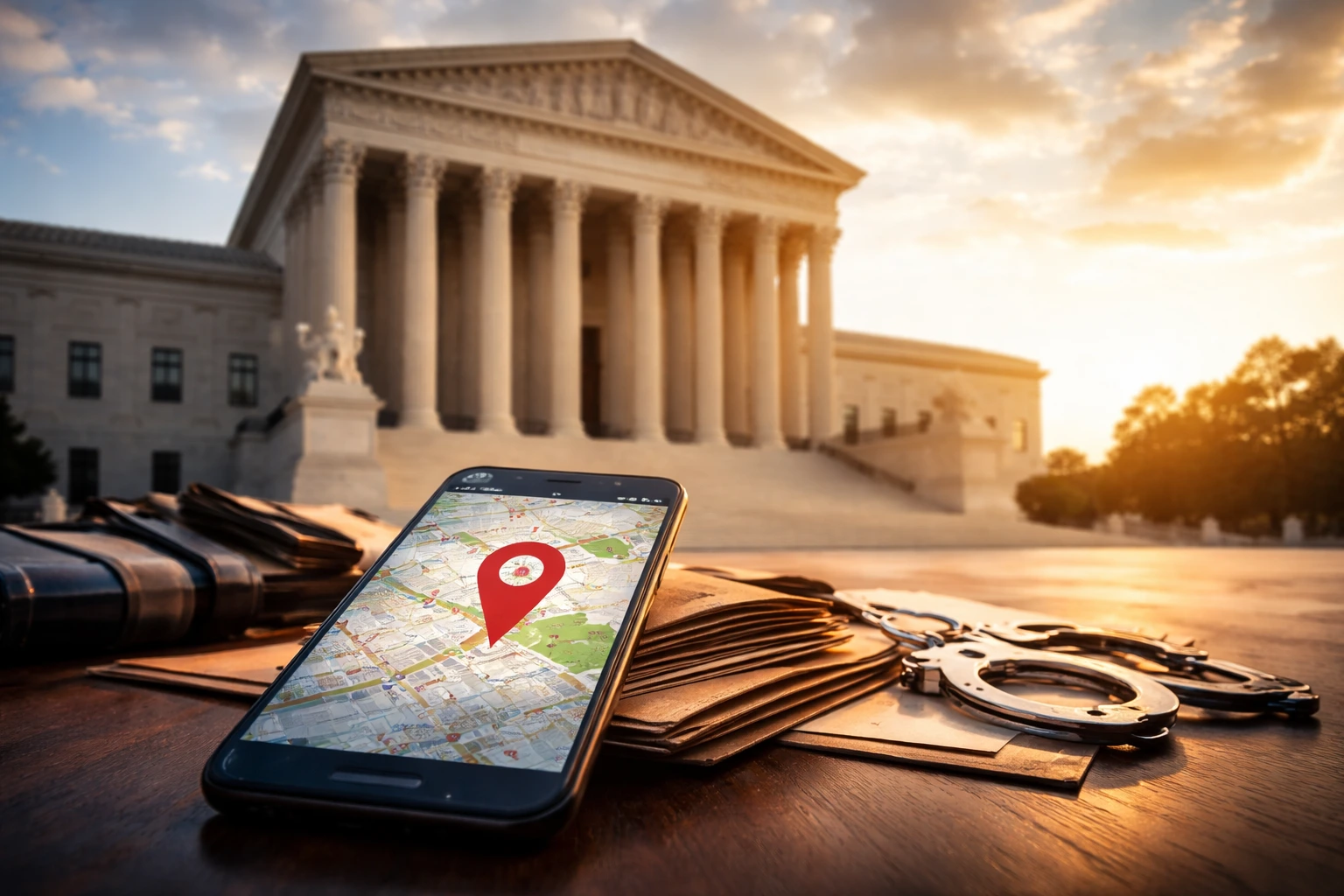
A major privacy battle is heading to the highest court in the United States. The Supreme Court cellphone warrants case will determine whether police can use broad warrants to collect location data from people who are not suspected of crimes. At the center of the dispute is whether these sweeping requests violate constitutional protections against unreasonable searches. The ruling could influence how digital evidence is gathered for years.
What the Case Is About
The case focuses on warrants that allow law enforcement to demand location data from technology companies. These warrants cover every mobile device near a specific place during a defined time window. Investigators use the data to identify possible suspects after a crime occurs.
In the case under review, police used such a warrant during a bank robbery investigation. The order required a technology company to provide anonymized location records for all devices near the crime scene. Police later narrowed the list and identified a suspect. Defense lawyers argued the method violated privacy rights because it captured data from many innocent people.
A lower court agreed that the warrant raised constitutional concerns. However, the judge still allowed the evidence because officers relied on the warrant in good faith. The conflicting ruling created uncertainty, which is why the Supreme Court stepped in.
Why Cellphone Location Data Raises Privacy Concerns
Cellphone location data reveals far more than a single moment in time. It can show where people live, work, worship, and socialize. Privacy advocates argue that collecting this information without individualized suspicion treats everyone near a crime scene as a potential suspect.
Critics say this approach reverses the traditional role of warrants. Instead of targeting known suspects, investigators gather massive data sets first and search for leads later. This method risks exposing private behavior unrelated to criminal activity.
Supporters counter that people voluntarily share location data through mobile apps. They argue that users accept certain privacy tradeoffs in exchange for convenience and personalized services.
How This Case Fits Into Existing Privacy Law
The Supreme Court has previously ruled that certain digital data deserves strong constitutional protection. Earlier decisions recognized that modern technology can reveal deeply personal information that traditional search rules never anticipated.
This case tests how far those protections extend. The justices must decide whether broad location warrants cross a constitutional line or fall within acceptable investigative limits. Their answer will clarify how privacy law applies in an era dominated by smartphones.
Potential Impact on Law Enforcement
A ruling against broad warrants would force police to change investigative strategies. Officers might need more precise evidence before requesting location data. This could slow investigations but strengthen privacy safeguards.
If the Court allows such warrants, law enforcement agencies may rely on them more frequently. That outcome could expand surveillance capabilities while raising ongoing privacy concerns.
Conclusion
The Supreme Court cellphone warrants case will shape the future of digital privacy and police investigations. The decision will determine whether location data can be collected in bulk or only through narrowly targeted warrants. As smartphones continue to track daily life, the Court’s ruling will define how constitutional rights apply in the digital age.
0 responses to “Supreme Court cellphone warrants could reshape digital privacy”