


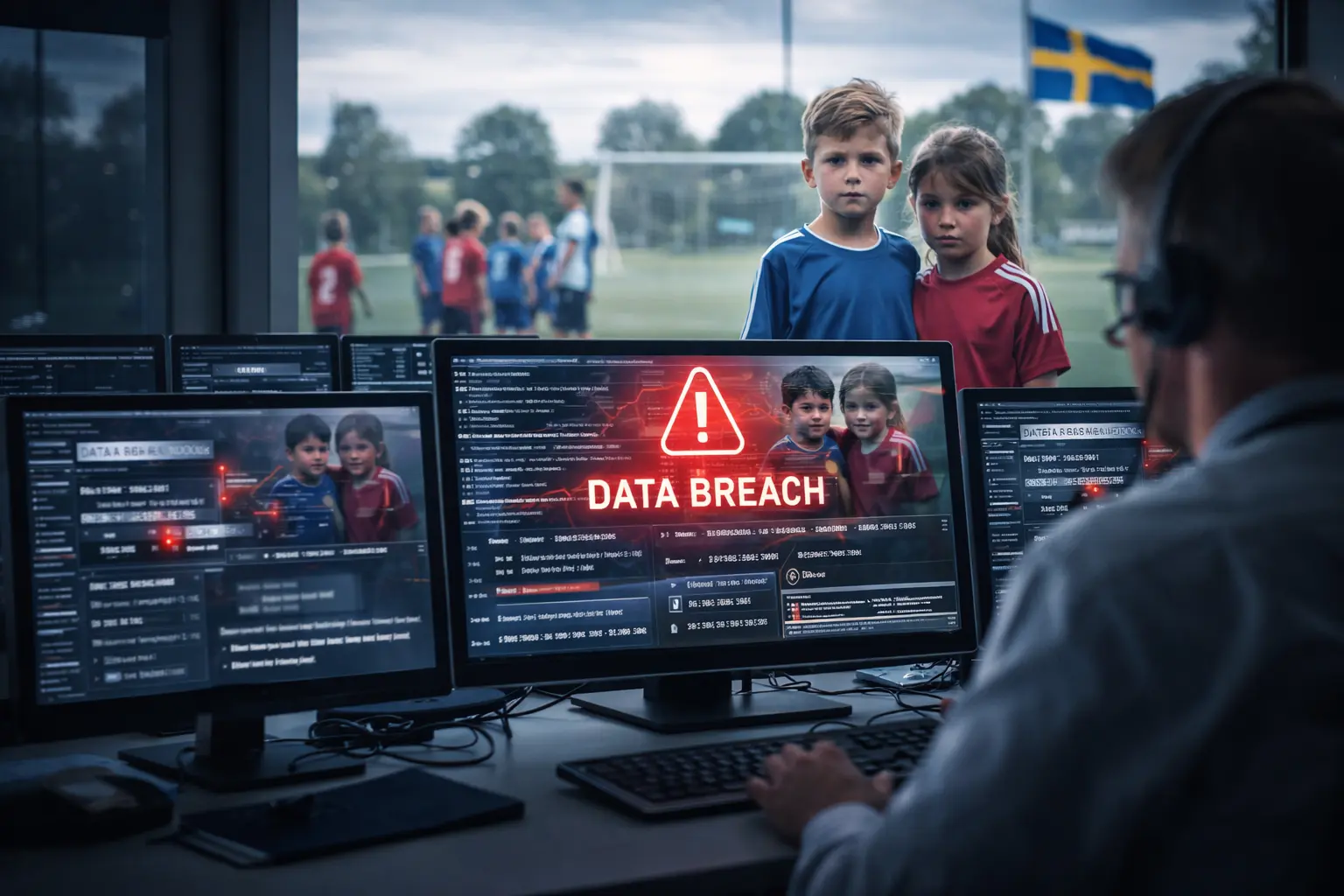
The SportAdmin data breach fine marks one of Sweden’s most serious penalties involving the exposure of children’s personal data. Authorities concluded that a cyberattack against the sports software provider led to the public disclosure of highly sensitive information. The case has raised concerns about how organizations protect minors’ data in digital platforms used by schools and sports clubs.
Regulators emphasized that companies handling large volumes of personal data must apply strong security measures, especially when children are involved.
What Happened During the Breach
Attackers exploited a technical weakness in SportAdmin’s systems that allowed unauthorized access to internal databases. Once inside, they obtained personal information linked to millions of individuals associated with sports organizations across Sweden. A significant portion of the exposed data belonged to children.
The stolen information included names, contact details, personal identification numbers, and relationships between children and guardians. In some cases, the data also revealed sensitive information about health conditions and special needs.
Why the Incident Was Especially Serious
Authorities treated the breach as particularly severe due to the nature of the exposed information. Children’s data carries higher legal protections because of the long-term risks associated with misuse. Identity theft, fraud, and lasting privacy harm become far more likely when such details are publicly released.
The breach also affected trust between families, sports clubs, and the software platforms responsible for managing registrations and communications.
Regulatory Findings and Security Failures
Sweden’s data protection authority found that SportAdmin failed to implement adequate technical safeguards. Investigators identified weaknesses that could have been prevented using well-known security practices. The company did not sufficiently protect its systems against common attack methods.
The regulator also determined that access controls were too broad and that monitoring mechanisms were inadequate. These shortcomings allowed the attackers to move through systems without detection.
The €565,000 Fine Explained
Based on the scale of the breach and the sensitivity of the exposed data, regulators imposed a SportAdmin data breach fine of €565,000. The authority stated that the company did not meet its obligations to ensure an appropriate level of data security.
Officials stressed that while cyberattacks are increasingly common, organizations must still take responsibility for preventing foreseeable risks. Failure to do so can result in significant penalties.
Aftermath and Remedial Actions
Following the breach, SportAdmin shut down affected systems and began implementing stronger security controls. The company introduced additional protections designed to block similar attacks and worked to notify affected organizations and individuals.
These measures reduced future risk but did not alter the regulator’s assessment of the original security failures.
Broader Implications for Digital Services
The SportAdmin case serves as a warning to companies providing digital services to schools, clubs, and youth organizations. Handling large datasets involving children requires continuous security testing and proactive risk management.
Regulators have signaled that lapses affecting minors will attract heightened scrutiny and stricter enforcement.
Conclusion
The SportAdmin data breach fine highlights the serious consequences of failing to protect sensitive personal information. Swedish authorities determined that preventable security weaknesses led to the exposure of children’s data on a massive scale. The case reinforces the importance of strong cybersecurity practices, particularly when organizations are entrusted with protecting vulnerable groups.
0 responses to “SportAdmin Data Breach Fine Highlights Failures in Protecting Children’s Data”