


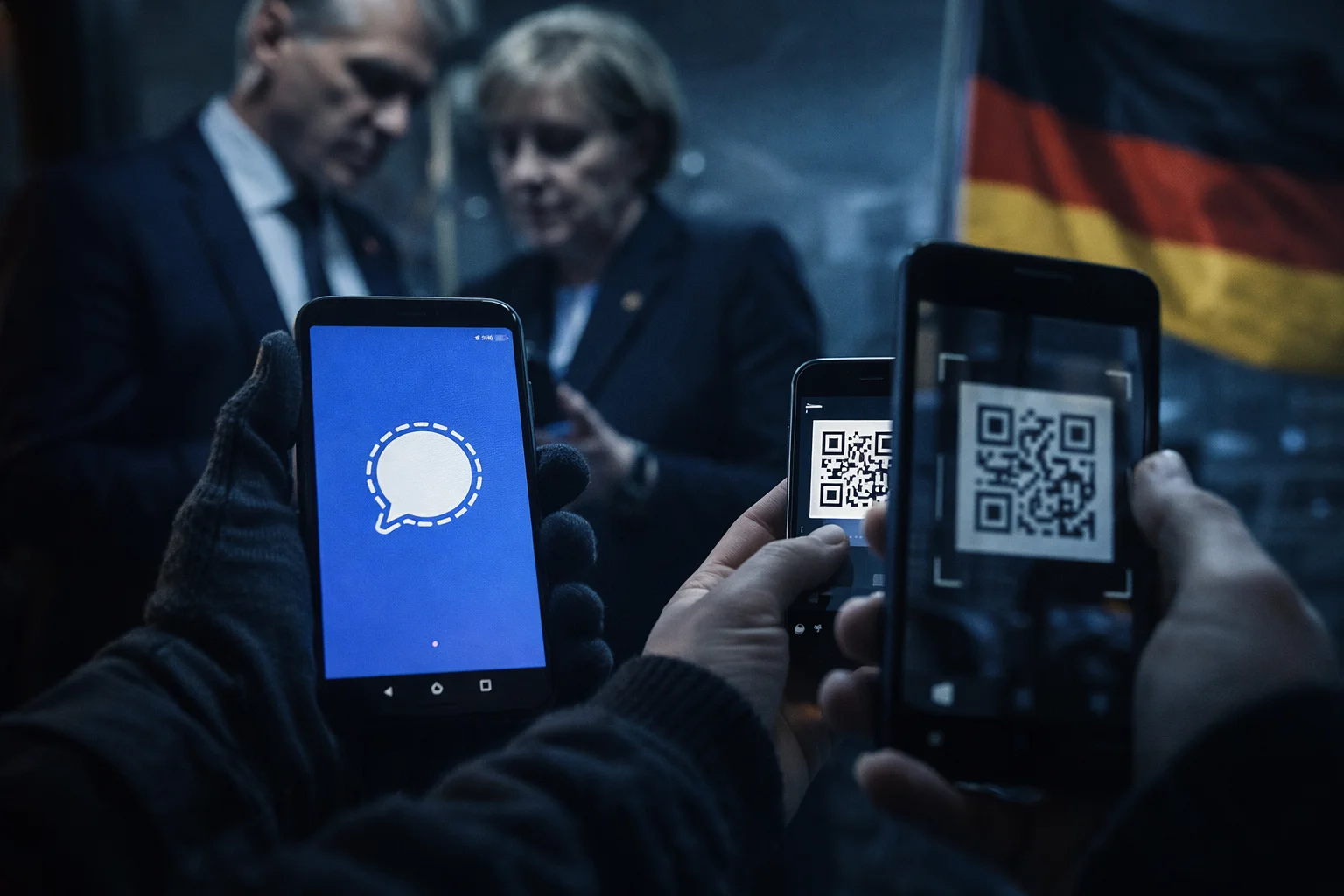
Encrypted messaging apps often create a sense of safety, but attackers increasingly target users instead of software flaws. German authorities have issued a warning about a Signal account hijacking campaign aimed at senior political, military, and media figures. The attacks rely on social engineering techniques that trick victims into handing over account access.
Officials stress that the campaign does not exploit weaknesses in Signal’s encryption. Instead, attackers manipulate trust and misuse legitimate account features to gain control.
How the Signal account hijacking campaign works
The Signal account hijacking campaign relies on phishing messages that impersonate trusted contacts or Signal-related services. Attackers approach targets with urgent requests that appear legitimate and time-sensitive.
In some cases, attackers ask victims to share verification codes sent during account registration. Once the attacker receives the code, they register the Signal account on their own device and disconnect the legitimate user.
Other attacks use fraudulent device pairing requests. Victims receive QR codes and are instructed to scan them under false pretenses. Scanning the code links the attacker’s device to the victim’s Signal account, allowing silent access to messages and contacts.
Who attackers are targeting
German security agencies report that the campaign focuses on high-profile individuals. Targets include senior government officials, members of the armed forces, diplomats, and journalists.
Attackers likely value these accounts because of the sensitive conversations they contain. Group chats increase the risk further, as a single compromised account can expose communications between multiple senior figures.
Authorities believe the campaign aligns with intelligence-gathering objectives rather than financial crime.
Why Signal remains secure despite the attacks
Officials emphasize that Signal’s encryption remains intact. The attackers do not break cryptography or exploit technical vulnerabilities in the app itself.
Instead, they abuse built-in features such as device linking and registration flows. When victims cooperate with requests, attackers gain access without triggering security alarms.
This distinction matters because it shows that user awareness remains a critical defense even when using secure platforms.
How to protect Signal accounts
German authorities urge users, especially high-risk individuals, to take immediate precautions:
- Never share Signal verification codes or PINs
- Treat unexpected support-style messages as suspicious
- Enable registration lock to prevent unauthorized re-registrations
- Regularly review linked devices and remove unknown entries
- Confirm requests through trusted secondary channels
These steps significantly reduce the risk of account takeover.
Conclusion
The Signal account hijacking campaign highlights how attackers bypass strong encryption by targeting human behavior. By exploiting trust and urgency, attackers gain access without breaking the technology itself.
Secure communication depends on both strong tools and informed users. As this campaign shows, protecting accounts now requires vigilance against social engineering as much as technical threats.
0 responses to “Signal account hijacking campaign targets senior German officials”