


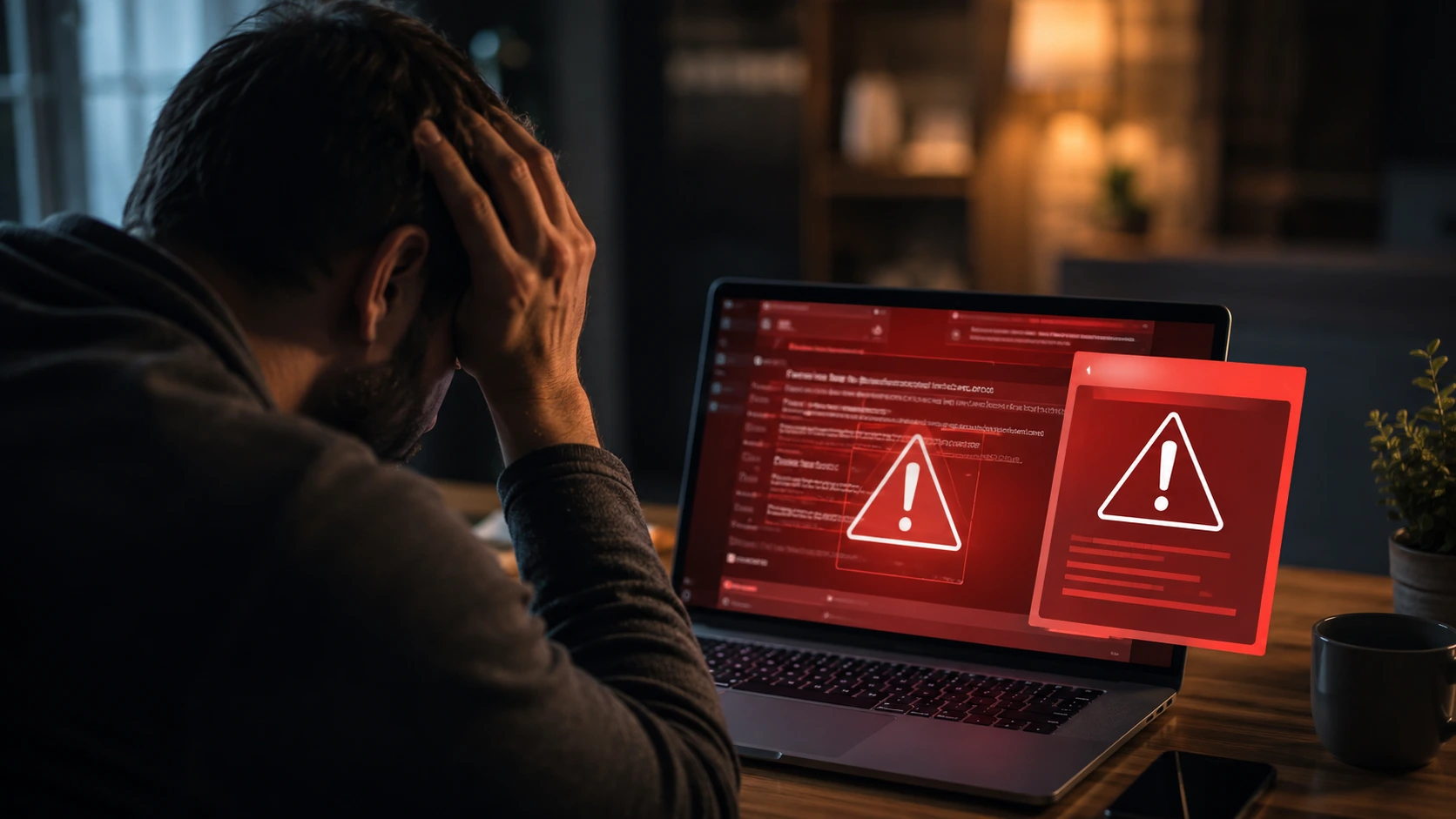
A large-scale scareware attack campaign has targeted millions of users through fake security warnings and fraudulent IT support pages. Researchers say the operation tricks victims into believing their devices have been compromised before directing them to fake helpdesk services controlled by cybercriminals.
The campaign reportedly affected around 2.8 million users during the first half of 2026. Security experts warn that the operation relies heavily on fear and psychological pressure instead of traditional malware delivery methods.
Fake Security Warnings Trigger Panic
Researchers identified the operation as a sophisticated browser-based scam designed to imitate legitimate security alerts. Victims usually encounter the attack through phishing emails, malicious advertisements, or compromised websites.
Once users open the malicious page, they see aggressive warning messages claiming their computer has been hacked or infected. Many pages include flashing alerts, loud sounds, repeated pop-ups, and fake virus scans designed to create panic.
Some variants attempt to prevent users from closing the browser window. Others repeatedly display warning messages to pressure victims into calling a fake support number immediately.
The attackers then impersonate IT support staff and attempt to gain remote access to the victim’s device. Once connected, scammers may steal passwords, banking information, authentication data, or install additional malicious software.
Browser-Based Tactics Help Attackers Avoid Detection
Researchers say the scareware attack stands out because it mainly operates through the browser instead of relying on direct malware downloads. This approach allows attackers to target large numbers of users quickly while reducing the chances of traditional antivirus detection.
The malicious content reportedly stays inactive until certain conditions are met. That behavior makes the campaign harder for automated security systems to identify immediately.
Modern phishing operations increasingly combine technical tricks with advanced social engineering methods. Security researchers continue to see cybercriminals using realistic fake support pages, AI-generated phishing messages, and deceptive browser notifications to improve success rates.
Why Scareware Still Works
Scareware attacks remain effective because they exploit fear and urgency. Many users react emotionally when they suddenly see warnings claiming their device has been compromised.
The scam technique has existed for years, but attackers continue improving the presentation and realism of fake alerts. Modern scareware pages often closely resemble genuine security warnings or operating system notifications.
Remote work environments also create more opportunities for these scams. Many users regularly interact with online support systems and remote assistance tools, making fake IT helpdesks appear more believable.
How Users Can Stay Safe
Security experts recommend ignoring any unexpected browser warning that demands urgent action or phone calls. Legitimate technology companies do not use aggressive pop-ups to request remote access sessions.
Users should also follow several basic security practices:
- Close suspicious browser tabs immediately
- Avoid calling numbers shown in pop-up warnings
- Keep browsers and security software updated
- Avoid opening unexpected email attachments
- Verify support requests through official company channels
- Use phishing protection and browser security features
Organizations should continue training employees to recognize fake support scams and browser-based phishing attacks.
Conclusion
The latest scareware attack campaign highlights how effective social engineering remains for cybercriminals. By combining fake security alerts with fraudulent IT support services, attackers managed to target millions of users worldwide. Researchers expect similar browser-based scams to continue evolving as threat actors refine phishing tactics and improve the realism of fake warning systems.
0 responses to “Scareware Attack Targets Millions Through Fake IT Alerts”