


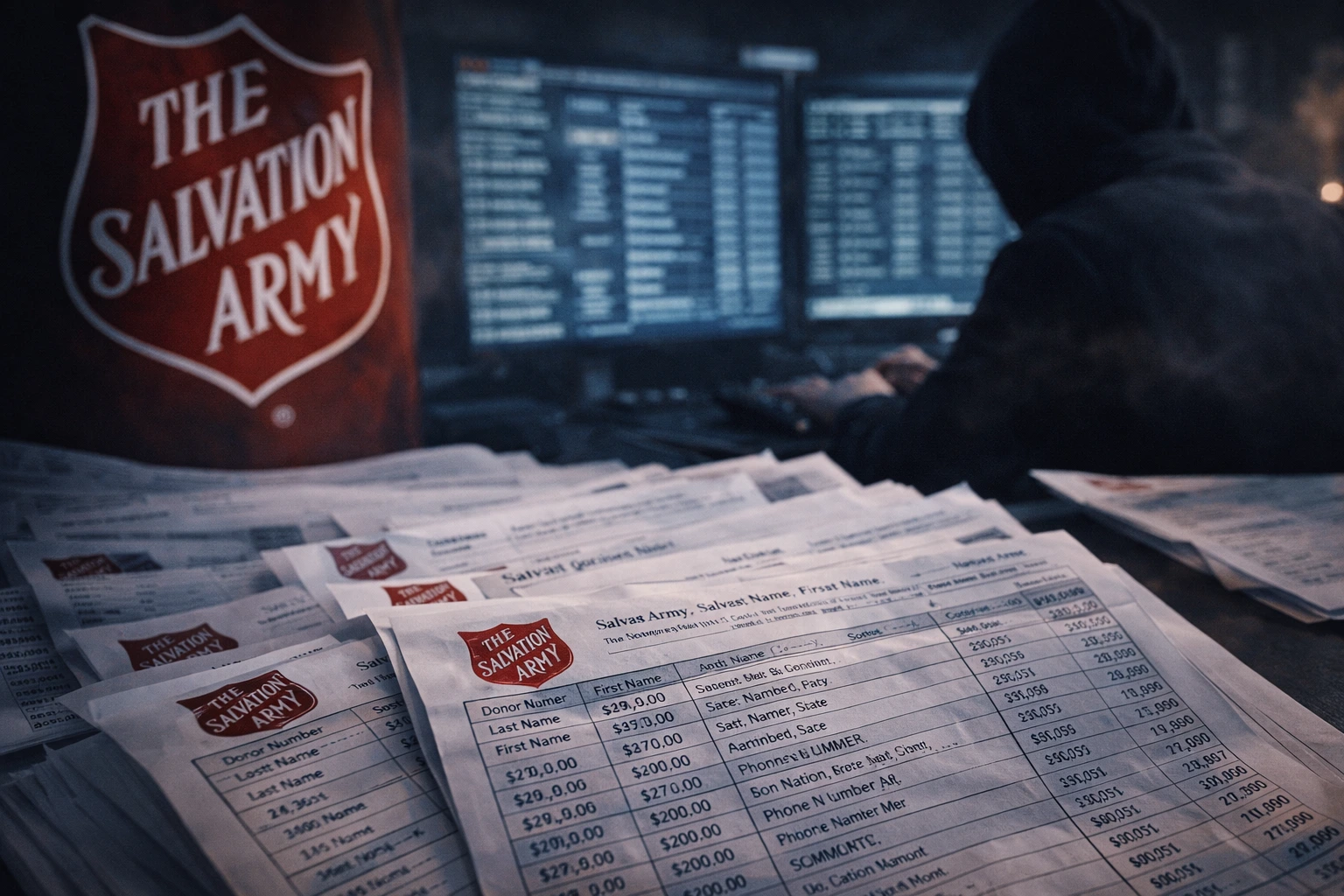
Concerns are growing after reports surfaced of a large data leak allegedly involving donor records tied to the Salvation Army. The Salvation Army data breach may have exposed personal information belonging to millions of individuals who supported the organization through donations. Cybersecurity analysts say the exposed data appears extensive and structured, suggesting unauthorized access to internal systems rather than a limited or accidental disclosure.
The incident highlights the increasing risk charities face as cybercriminals target organizations that store sensitive donor information. Donors now face uncertainty about how their personal details may be misused.
What the Alleged Data Breach Involved
The Salvation Army data breach reportedly exposed more than 1.6 million donation records. The dataset appears to include full names, home addresses, phone numbers, and detailed donation histories. In many cases, the records show individual contribution amounts and dates, creating a clear financial profile for affected donors.
Security researchers reviewing the data say its structure points to direct database access. The information appears organized and complete, which raises concern about the depth of the intrusion and the level of access attackers may have achieved.
Who Claimed Responsibility
A ransomware group operating under the name Interlock claimed responsibility for the alleged breach. The group published samples of the data on its leak site, a tactic commonly used to pressure victims during extortion attempts. Cybersecurity analysts reviewed portions of the posted samples and found them consistent with authentic donor records.
Interlock has previously targeted organizations across multiple sectors. The group often relies on data theft combined with public exposure threats to coerce payments rather than solely encrypting systems.
Why the Exposed Data Poses a Risk
Even without credit card numbers or login credentials, the exposed information creates serious risk for donors. Criminals can use names, addresses, and donation histories to craft convincing phishing messages that reference past contributions. These scams may appear legitimate and emotionally compelling.
Donation amounts add another layer of sensitivity. Attackers can tailor fraud attempts based on perceived generosity, increasing the likelihood of successful social engineering attacks.
Impact on Donors and Trust
Charitable organizations rely heavily on trust. Donors expect their personal information to remain private when they contribute to a cause. The Salvation Army data breach may undermine that trust, particularly if donors begin to receive fraudulent requests that exploit their past generosity.
Repeated incidents across the nonprofit sector show how cyberattacks can damage donor confidence and long-term fundraising efforts.
What Donors Should Watch For
Donors should remain alert for unexpected emails, calls, or messages requesting additional donations or personal information. Any communication that pressures immediate action or references private donation details should raise concern.
Monitoring financial accounts and remaining cautious with unsolicited requests can reduce the risk of fraud. Donors may also consider limiting the personal information shared during future contributions.
Conclusion
The Salvation Army data breach serves as another reminder that charitable organizations face growing cybersecurity threats. The alleged exposure of millions of donor records highlights how attractive nonprofit databases have become to cybercriminals seeking exploitable personal data.
As investigations continue, donors should remain vigilant and skeptical of unexpected requests. For charities, the incident underscores the need for stronger data protection practices to safeguard supporter trust in an increasingly hostile digital environment.
0 responses to “Salvation Army Data Breach Exposes Millions of Donor Records”