


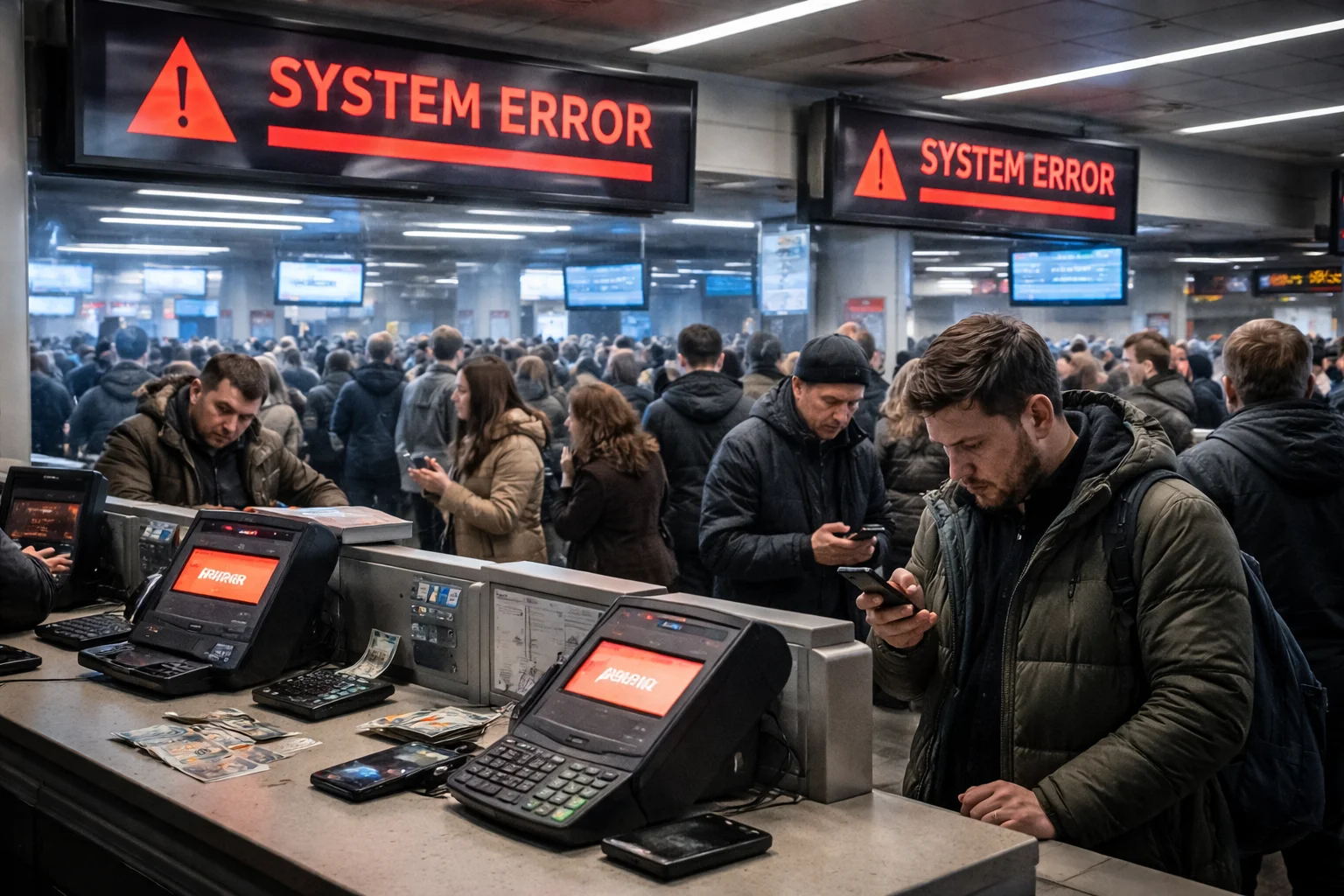
The Russia VPN crackdown is now affecting more than internet access. New disruptions show that financial systems have also started to break down. Telegram CEO Pavel Durov says recent restrictions triggered a payment system failure, raising concerns about how far the impact could spread.
Payment disruption exposes system fragility
Authorities intensified efforts to block VPN services across Russia. Soon after, a major domestic payment system began to fail. The issue disrupted everyday transactions and forced businesses to adjust quickly.
Some services allowed temporary access without payment, while others switched to cash. These workarounds helped keep operations running, but they also revealed how dependent daily life has become on stable digital infrastructure.
The incident highlights a key risk. When tightly connected systems fail, the impact spreads fast and affects multiple sectors at once.
Crackdown fuels user pushback
The Russia VPN crackdown forms part of a broader push to control online activity. Authorities continue to expand their ability to block tools that bypass restrictions. At the same time, demand for VPN services keeps rising.
Users actively look for alternatives as new blocks appear. This creates a continuous cycle where restrictions increase, and users respond with new обход solutions. The result is an ongoing struggle between control and access.
Durov described this pattern as digital resistance, where users adapt faster than restrictions can fully contain them.
Financial controls tighten restrictions
Authorities have also targeted the financial side of VPN usage. Payment methods linked to VPN subscriptions face new limits, making it harder for users to access premium services.
These measures expand the scope of control beyond internet access. They bring financial systems into the same framework of restrictions. As a result, users face both technical and economic barriers.
This shift shows how digital policy now reaches across multiple layers of infrastructure.
Wider strategy increases risks
The Russia VPN crackdown reflects a broader strategy to reshape the country’s digital environment. Authorities continue to promote domestic platforms while limiting access to foreign services.
This approach increases state control, but it also introduces instability. Systems that depend on consistent connectivity become more vulnerable when restrictions intensify.
The recent payment disruption shows how quickly unintended consequences can appear. Even targeted measures can trigger wider failures across critical services.
Conclusion
The Russia VPN crackdown now reaches beyond censorship and into essential systems. The reported payment disruption shows how fragile interconnected infrastructure can be under pressure. As restrictions expand, the risk of further disruptions grows. At the same time, users continue to adapt, keeping the tension between control and access ongoing.
0 responses to “Russia VPN crackdown disrupts payments, Durov warns”