


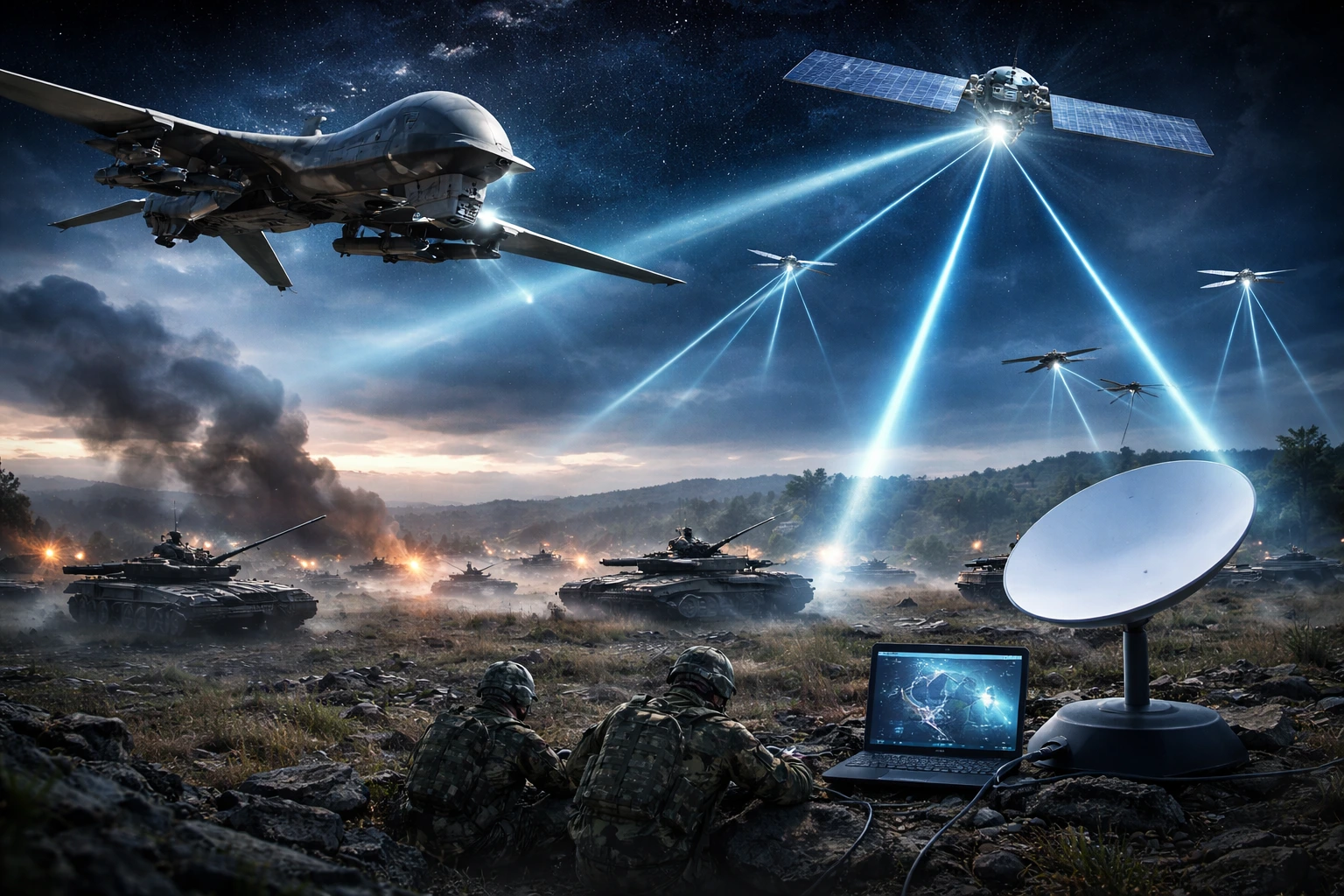
Russia Starlink drones have become a growing concern as reports indicate Russian forces are using satellite internet connectivity to extend drone operations. This development marks a significant shift in how unmanned systems are deployed during modern conflicts. By relying on satellite-based communication, drones can operate far beyond traditional control limits.
This approach highlights how commercial technology can reshape military capabilities. It also raises difficult questions about oversight, accountability, and unintended consequences. As drone warfare evolves, access to resilient communication networks becomes a decisive factor.
How satellite connectivity changes drone warfare
Traditional drones depend on radio signals with limited range and vulnerability to jamming. Satellite connectivity removes many of these constraints. With stable internet access, operators can control drones across much greater distances.
Russia Starlink drones reportedly maintain command links even in contested environments. This allows continued operation when standard communications fail. As a result, defensive systems designed to disrupt radio signals lose effectiveness.
Extended connectivity also improves real-time navigation and targeting. Operators receive consistent data streams, which enhances precision and coordination. These capabilities shift the balance between offensive reach and defensive countermeasures.
Strategic and military implications
The use of satellite-supported drones alters battlefield dynamics. Long-range strikes become easier to coordinate and harder to interrupt. This forces opposing forces to reconsider existing air defense and electronic warfare strategies.
Russia Starlink drones also demonstrate how adaptable modern militaries have become. Rather than relying only on specialized equipment, forces increasingly integrate widely available technologies. This trend lowers barriers to advanced capabilities while increasing unpredictability.
Such adaptations complicate planning for both attackers and defenders. Countering satellite-enabled systems may require new detection methods and alternative disruption techniques.
Ethical and regulatory concerns
The involvement of civilian communication infrastructure introduces ethical challenges. Satellite networks were not designed for combat operations. Their use in warfare blurs the boundary between civilian services and military tools.
Questions also arise about responsibility and control. When commercial systems influence combat effectiveness, accountability becomes unclear. Policymakers and technology providers face pressure to address these risks.
This situation exposes gaps in existing regulations. Export controls and sanctions may struggle to keep pace with rapidly repurposed technology.
Conclusion
Russia Starlink drones illustrate how modern warfare increasingly relies on commercial innovation. Satellite connectivity extends drone range, resilience, and effectiveness. At the same time, it introduces strategic uncertainty and ethical complexity.
As conflicts continue to evolve, satellite-supported systems will likely play a larger role. Addressing the risks requires coordinated action between governments, defense planners, and technology providers. Without stronger safeguards, similar integrations may reshape future battlefields in unpredictable ways.
0 responses to “Russia Starlink drones expand battlefield capabilities”