


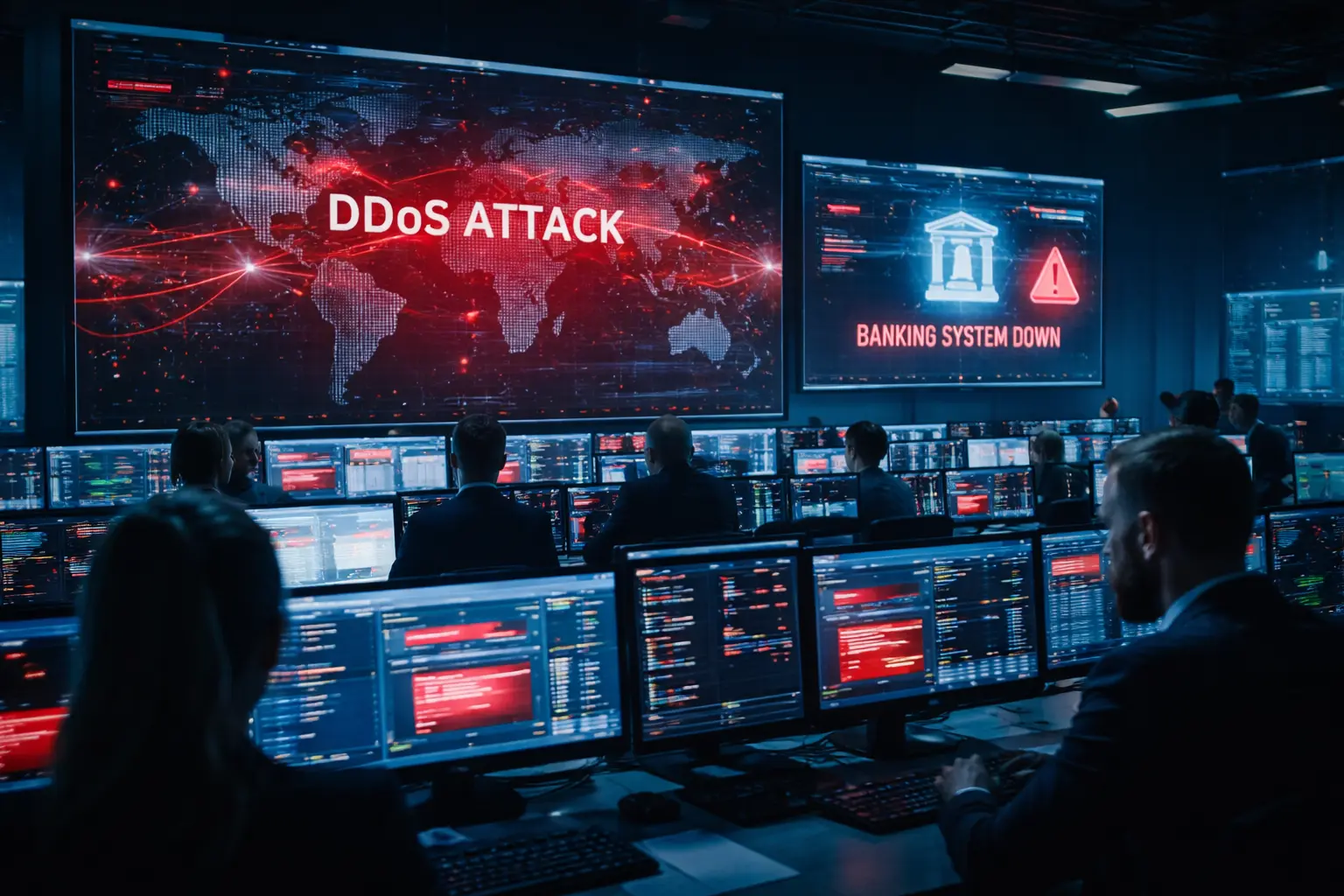
A large-scale Rostelecom DDoS attack disrupted internet access and banking services across Russia. Users reported outages across multiple regions, with key platforms going offline at the same time. The incident shows how quickly a single attack can impact several sectors at once.
The disruption started on April 6 and spread rapidly. Many users lost access to essential online services, while others experienced unstable connections and repeated failures. The outage did not stay isolated to one system. It affected a wide range of digital services that depend on the same infrastructure.
Core Infrastructure Hit at Scale
The Rostelecom DDoS attack targeted a central telecom provider that supports millions of users. This made the impact immediate and widespread, especially in major cities.
Users reported issues with several types of services:
- Online banking platforms
- Government portals
- Messaging apps
- Cloud services and websites
These systems rely on stable connectivity. Once the network came under pressure, failures appeared across different platforms at the same time. This created a chain reaction that extended beyond simple internet outages.
Banking Services Experience Direct Impact
The disruption quickly reached financial systems. Many users could not access their banking apps or complete basic transactions. Payments failed, and some services became temporarily unavailable.
The impact affected everyday actions:
- Sending money
- Making card payments
- Accessing mobile banking
- Completing online purchases
This shows how tightly connected telecom infrastructure is with financial services. When connectivity fails, banking systems struggle to function normally.
Defensive Measures Added Pressure
Rostelecom moved quickly to respond to the attack. The company filtered incoming traffic to block malicious requests and stabilize the network.
This response helped reduce the attack’s impact, but it also created side effects. Some legitimate traffic was restricted during the process, which caused additional service disruptions. Even after the attack slowed down, users continued to experience access issues.
This highlights a common problem in DDoS mitigation. Actions taken to protect systems can also affect normal service availability.
Uncertainty Around the Cause
Officials confirmed that a DDoS attack played a role in the disruption. At the same time, other explanations appeared, including possible network faults.
This creates uncertainty around what exactly triggered the outage. Large-scale incidents often involve more than one issue. An attack can expose existing weaknesses or combine with technical failures.
As a result, it becomes harder to determine a single cause. The outcome remains the same for users, who experience widespread service disruption.
Pressure on Centralized Systems Continues
The Rostelecom DDoS attack reflects broader pressure on centralized infrastructure. When many services rely on a single provider, any disruption can spread quickly.
Several factors increase this risk:
- Growing volume of cyberattacks
- Heavy dependence on core providers
- Network-level filtering and control
- Limited system flexibility under stress
These conditions make large-scale outages more likely and harder to contain.
Conclusion
The Rostelecom DDoS attack shows how interconnected modern digital systems have become. A single disruption can affect internet access, banking, and public services at the same time.
The response helped contain the attack, but it also contributed to service instability. This balance between security and availability remains difficult to manage.
As reliance on centralized infrastructure grows, similar incidents will likely have even wider impact.
0 responses to “Rostelecom DDoS Attack Disrupts Internet and Banking”