


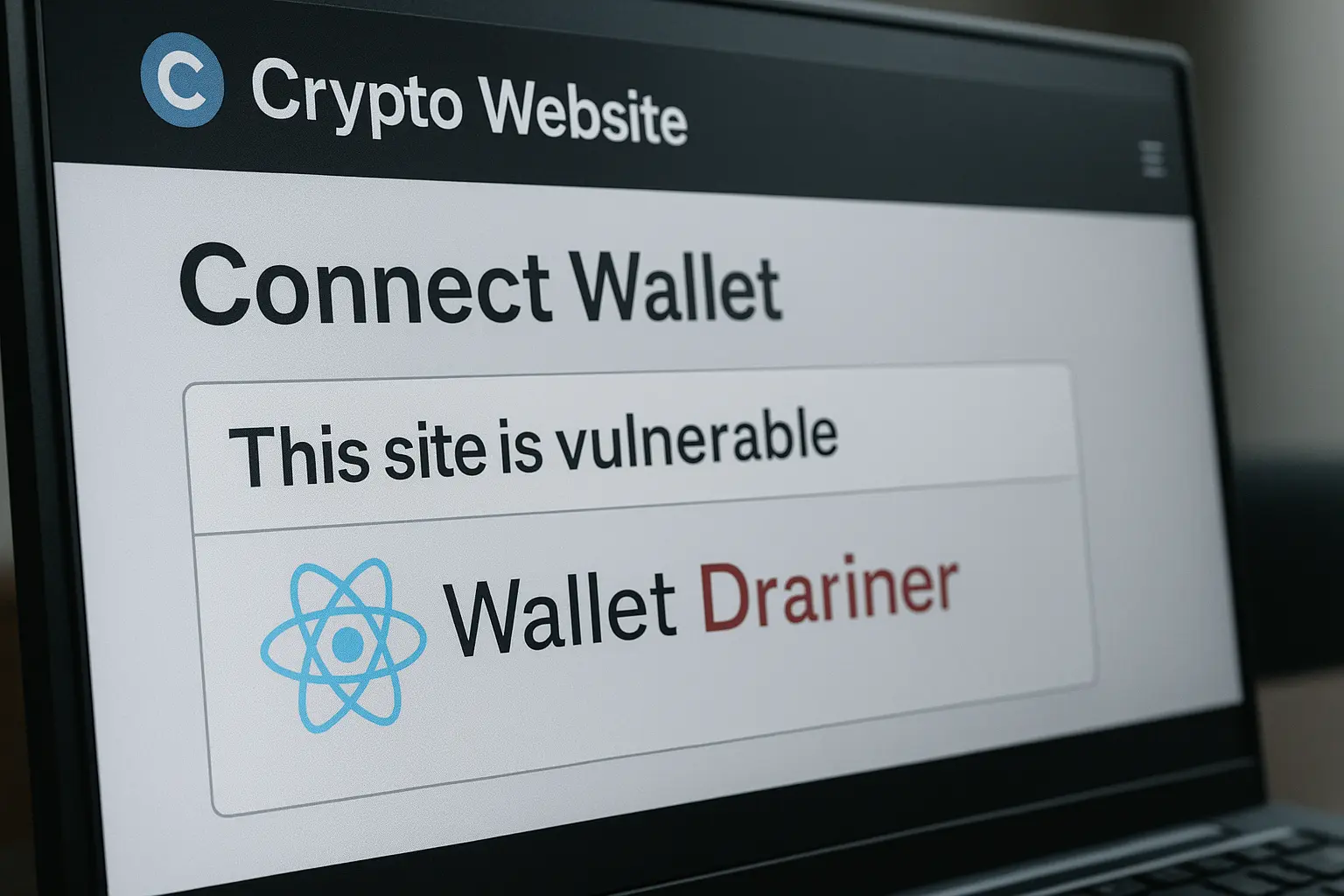
A React vulnerability crypto attackers are actively exploiting has placed numerous cryptocurrency websites at risk. Threat actors are abusing the flaw to inject malicious scripts that drain users’ wallets when they interact with compromised pages. The campaign highlights how weaknesses in popular web frameworks can quickly escalate into large-scale financial theft.
The attacks target trust, not just code.
How the vulnerability is exploited
The issue affects crypto websites built with React that fail to properly sanitize user-controlled inputs. Attackers take advantage of this weakness to inject malicious JavaScript into vulnerable components. Once embedded, the script activates when users connect their wallets or approve transactions.
Instead of redirecting users to obvious phishing pages, the attackers operate directly within legitimate sites. That approach makes the activity far harder to detect and significantly more effective.
Wallet drainers embedded in legitimate sites
The injected scripts deploy crypto drainers that monitor wallet interactions in real time. When users attempt to sign transactions, the malicious code alters requests or triggers unauthorized transfers. Victims often remain unaware until their funds disappear.
Because the affected sites appear legitimate and function normally, users have little reason to suspect foul play. This gives attackers a narrow but highly profitable window to siphon assets.
Why the threat is difficult to stop
The React vulnerability crypto campaigns move quickly and leave minimal traces. Attackers rotate payloads, domains, and scripts to evade detection. In many cases, security teams only discover the compromise after users report missing funds.
The problem also exposes a broader issue in the crypto ecosystem. Many projects prioritize rapid development over secure implementation, increasing exposure to supply-chain and framework-level risks.
Impact on the crypto ecosystem
Wallet drainers remain one of the most damaging threats in crypto, largely because transactions are irreversible. Once funds move, recovery becomes nearly impossible. Exploits tied to a React vulnerability amplify that risk by targeting trusted platforms rather than individual users.
The incidents also undermine confidence in decentralized applications, where users expect transparency and security by design.
How developers and users can reduce risk
Developers should audit React components for improper input handling and ensure strict sanitization across all user-facing elements. Regular dependency updates and security reviews reduce exposure to known flaws.
Users should remain cautious when connecting wallets, even on familiar sites. Unexpected transaction prompts or unusual behavior should be treated as warning signs.
Conclusion
The React vulnerability crypto attackers are exploiting underscores how fragile trust can be in the digital asset space. By embedding wallet drainers into legitimate websites, threat actors bypass traditional defenses and strike directly at users’ funds. Strengthening application security and improving user awareness remain critical as attackers continue to target popular frameworks.
0 responses to “React vulnerability crypto websites abused by wallet drainers”