


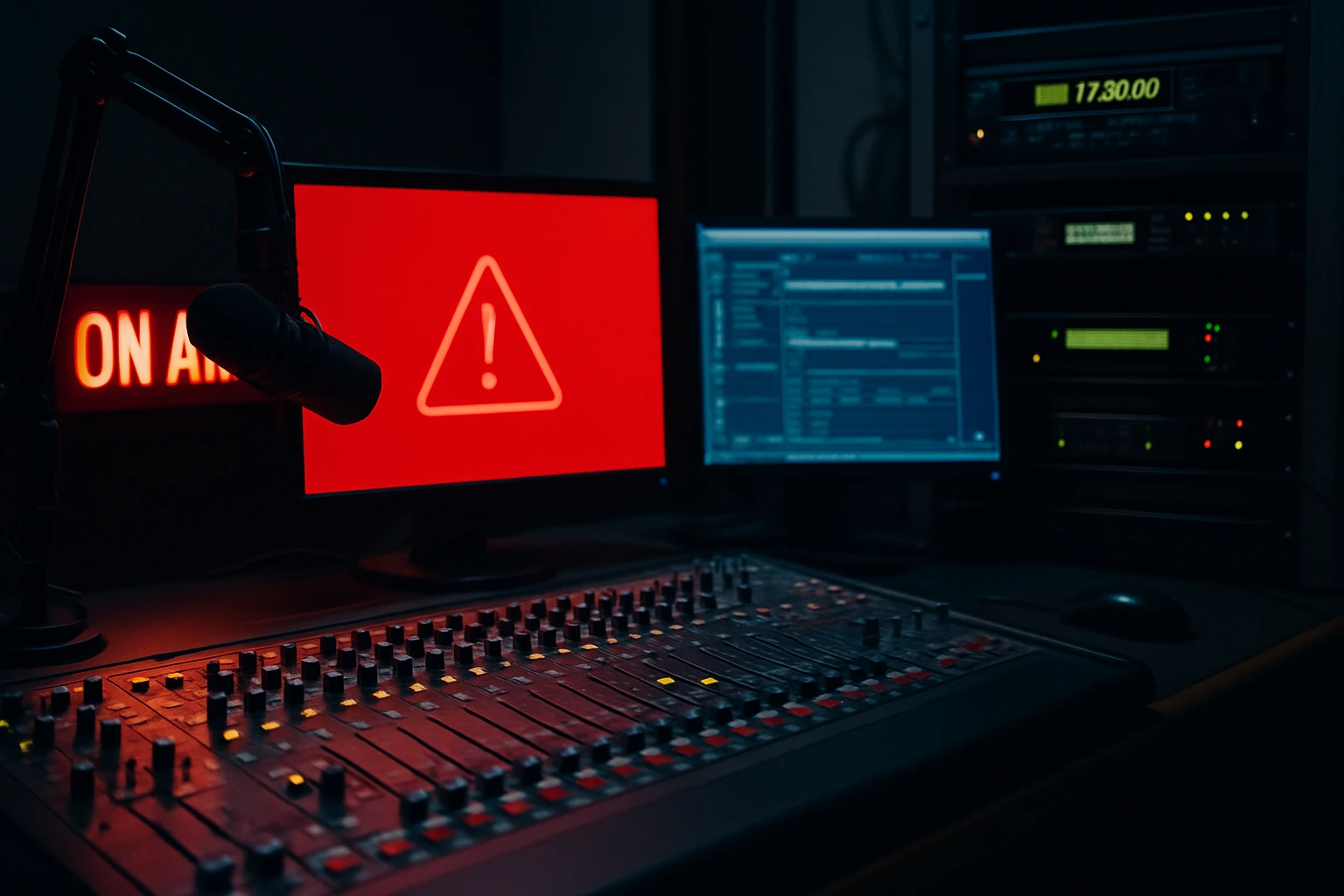
The latest wave of radio station hacking targeted multiple U.S. radio stations. Hackers took control of broadcast systems, aired fake emergency alerts and played obscene messages. The incident alarmed listeners and forced stations to scramble to restore legitimate programming.
What Happened
Hackers breached internal systems used for radio broadcasting. Once inside, they triggered false emergency alerts that warned listeners of non-existent crises. Then they played lewd or obscene audio — shocking many people who heard the broadcasts. This breach undermined trust in radio’s reliability and raised alarm within affected communities.
Stations broadcast false alerts and offensive content over regular programming. The sudden switch confused listeners, caused panic, and in some areas triggered local authorities to issue clarifications. The malicious broadcasts lasted several minutes before technicians regained control and restored normal transmissions.
Why It Matters
This attack shows how vulnerable broadcast systems remain — even legacy ones like radio. Broadcasters often rely on older or poorly secured infrastructure. Attackers exploited those weaknesses to hijack live broadcasts. The breach demonstrated that hackers can weaponize trusted media channels for disinformation, disruption or shock value.
Radio remains a widely used emergency-alert medium. When attackers exploit that channel, they risk sowing widespread panic or misinformation. The incident eroded confidence in standard alert systems that communities rely on in real emergencies.
Risks and Consequences
The fallout of this radio station hacking includes:
- Loss of public trust in broadcast alerts
- Potential for mass panic and confusion
- Disruption of legitimate programming
- Emotional distress among listeners exposed to obscene content
- Long-term reputational damage for stations
Local authorities and media regulators now face pressure to review security measures around broadcast infrastructure. Audience safety and content integrity come under renewed concern after such a breach.
What Needs to Change
Stakeholders should improve broadcast-system security. They must:
- Audit current infrastructure for vulnerabilities
- Update legacy systems vulnerable to intrusion
- Implement stricter access controls and authentication
- Monitor broadcast pipelines in real-time for unauthorized content
- Prepare rapid response plans to revert hijacked signals
Broadcasters should treat legacy systems with the same security scrutiny as modern digital networks. Without that, even trusted systems remain at risk.
Conclusion
The recent radio station hacking incident exposed serious flaws in broadcast security. Fake emergency alerts and obscene messages undermined trust in traditional media and posed potential for widespread panic. Stations must strengthen their defenses to prevent similar disruptions and safeguard public confidence in alert systems.
0 responses to “Radio Station Hacking Sparks Outrage After Fake Emergency Alerts and Obscene Messages”