


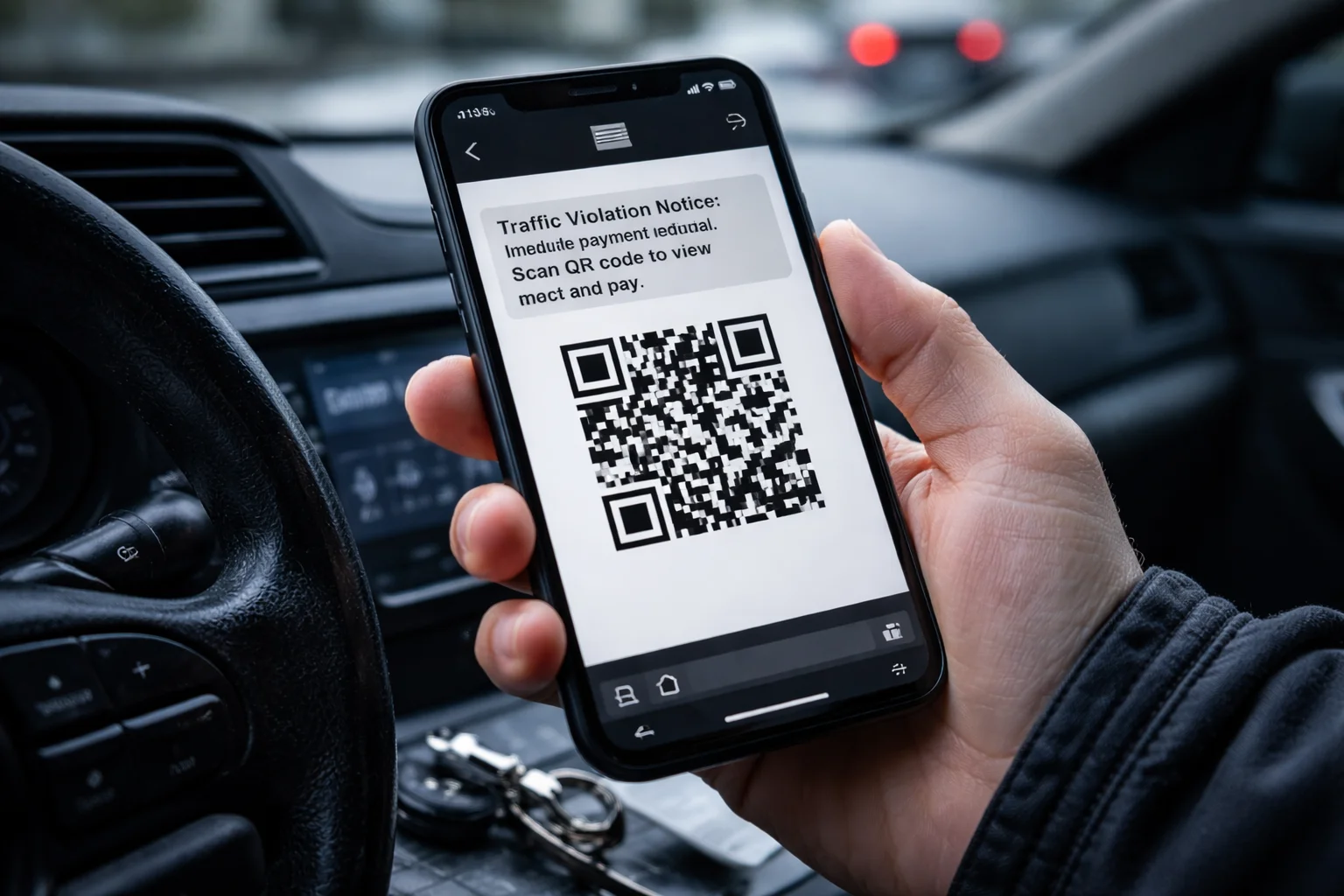
A new QR code phishing scam is targeting drivers through fake traffic violation texts. Attackers are replacing traditional links with QR codes to make their messages harder to detect. Security researchers warn that this shift increases both reach and effectiveness.
QR codes bypass traditional detection
Scammers send text messages that claim recipients have unpaid traffic fines. Instead of including a clickable link, the message instructs users to scan a QR code.
This tactic helps attackers avoid standard security filters. Many systems can detect malicious URLs, but QR codes hide the destination. As a result, more messages reach users without being blocked.
The messages often create urgency by warning about penalties or legal consequences. This pressure pushes victims to act quickly without verifying the source.
CAPTCHA step strengthens the deception
After scanning the code, users are redirected to a phishing site. The page requires them to complete a CAPTCHA before continuing.
This step serves two purposes. It blocks automated security analysis and makes the site appear legitimate. Many users associate CAPTCHA checks with trusted services, which increases the chance they proceed.
Fake payment pages collect sensitive data
Once past the CAPTCHA, victims land on a payment page that mimics official systems. The site requests payment details and personal information.
Attackers typically collect:
- credit card details
- names and addresses
- phone numbers and emails
These scams rely on urgency and fear. Victims often submit information quickly to avoid supposed fines or penalties.
QR-based phishing continues to grow
This campaign reflects a broader trend known as QR-based phishing. Attackers use QR codes because users rarely question them and often trust the format.
Unlike links, QR codes do not clearly show where they lead. This makes them effective for hiding malicious destinations and bypassing detection tools.
As attackers refine these techniques, the scams become harder to recognize.
Awareness remains the strongest defense
Authorities stress that official organizations do not request payments through unsolicited texts or QR codes. Users should treat unknown QR codes as suspicious.
Accessing services directly through official websites reduces risk. Verifying messages before taking action remains essential.
Conclusion
The QR code phishing scam shows how attackers adapt to evade detection and exploit user behavior. By combining QR codes with fake payment pages, they create a more convincing attack chain. As these tactics evolve, awareness and caution remain critical defenses.
0 responses to “QR code phishing scam targets drivers with fake traffic texts”