


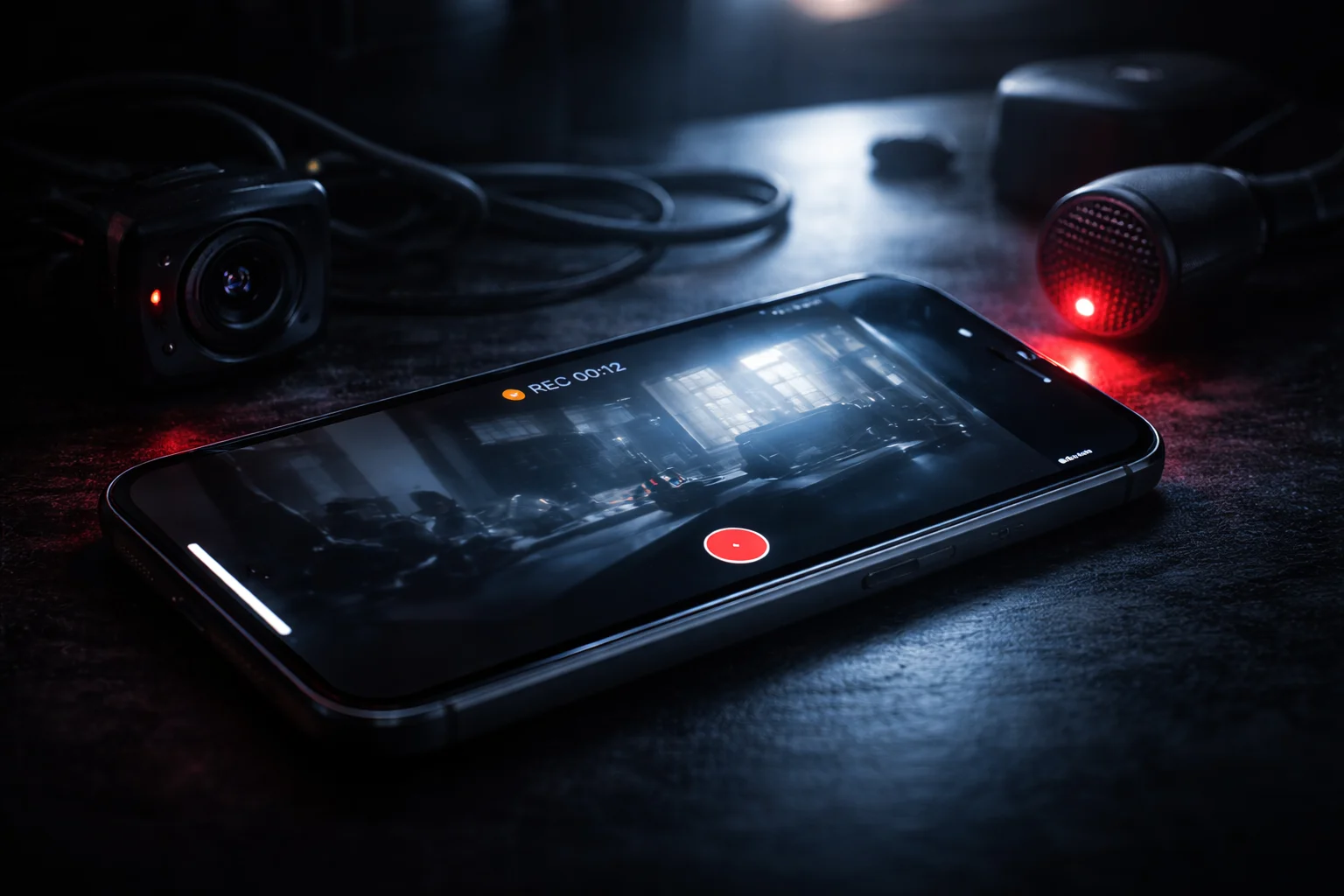
Security researchers have uncovered a new capability in Predator spyware that allows it to suppress Apple’s built-in recording indicators. The Predator spyware iOS bypass enables the malware to use the microphone and camera on compromised iPhones without triggering the familiar orange or green status dots.
These privacy indicators were designed to alert users whenever an app activates sensitive sensors. By interfering with that mechanism, the spyware significantly reduces the chance of detection.
How the Bypass Works
Apple’s operating system displays a green dot when the camera is active and an orange dot when the microphone is in use. These indicators are controlled by the system interface process known as SpringBoard.
Researchers found that Predator spyware hooks directly into SpringBoard after achieving deep system-level access. Instead of disabling the sensors, the malware intercepts the internal signals that would normally trigger the visual indicators. As a result, the camera or microphone can operate normally while no warning appears on screen.
The technique does not rely on a newly disclosed iOS vulnerability. Instead, it functions after the device has already been fully compromised through other attack methods. Once high-level privileges are obtained, the spyware can modify system behavior at a low level.
Why This Is Significant
The Predator spyware iOS bypass weakens one of the most visible privacy protections in modern smartphones. Users often rely on visual cues to detect suspicious activity. If those signals can be suppressed, covert surveillance becomes much harder to identify.
This capability demonstrates how advanced spyware operators focus not only on gaining access but also on maintaining stealth. Suppressing privacy indicators allows attackers to monitor targets without raising suspicion.
The research suggests that this functionality is part of a broader toolkit used in targeted surveillance campaigns. Predator spyware has previously been linked to high-profile espionage operations.
Risk Level for Users
The bypass requires deep system compromise. Achieving that level of control typically involves sophisticated attack chains. These may include zero-click exploits, malicious configuration profiles, or advanced phishing campaigns.
For most everyday users, the risk remains limited. However, journalists, activists, government officials, and corporate executives face a higher exposure level.
Organizations should treat this development as a reminder that endpoint security must extend beyond visible protections. Monitoring, mobile threat detection tools, and strict device management policies are critical in high-risk environments.
Broader Implications
The Predator spyware iOS bypass reflects a broader trend in mobile threats. Attackers increasingly target system processes rather than applications. By interfering with core operating system functions, spyware can evade detection while maintaining full surveillance capabilities.
Privacy features remain important, but they cannot protect a device that has already been deeply compromised. Strong patch management, cautious user behavior, and layered security controls remain essential defenses.
Conclusion
The Predator spyware iOS bypass shows how advanced surveillance tools can undermine built-in privacy safeguards. By hooking into system processes and suppressing recording indicators, the spyware enables silent microphone and camera monitoring.
Although the technique requires prior compromise, it highlights the evolving sophistication of commercial spyware. As mobile threats continue to mature, both individuals and organizations must prioritize deeper security controls beyond surface-level privacy indicators.
0 responses to “Predator Spyware iOS Bypass Hides Mic and Camera Activity”