


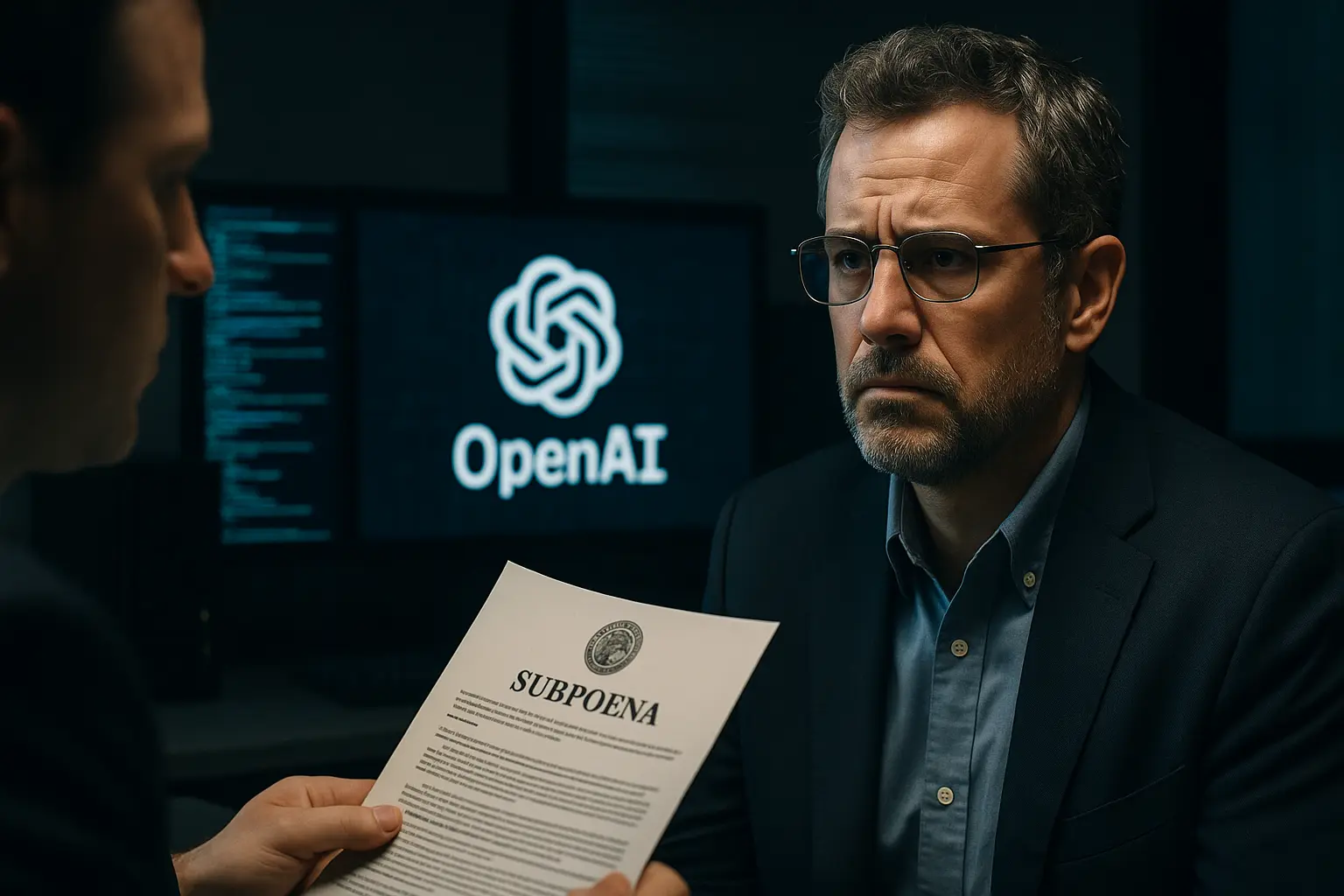
OpenAI has issued a subpoena to Nathan Calvin, vice president at Encode AI, demanding records of his communications related to Elon Musk and California’s AI regulation bill. The move has triggered a public debate about corporate power, transparency, and free speech in the artificial intelligence industry.
Subpoena Raises Transparency Concerns
Calvin revealed that a sheriff’s deputy delivered the subpoena to his home, ordering him to provide private messages, emails, and documents referencing Musk or Senate Bill 53, California’s new AI regulation law.
He described the action as a deliberate attempt to intimidate critics who challenge OpenAI’s growing influence.
The subpoena follows Calvin’s outspoken criticism of OpenAI’s lobbying efforts and its alleged attempts to soften regulatory requirements. He claimed the company’s leadership wants to avoid government oversight while maintaining its dominant position in the AI market.
Musk Connection Under Scrutiny
OpenAI reportedly believes Calvin has ties to Elon Musk, citing an amicus brief submitted by Encode AI that echoes parts of Musk’s legal arguments. Calvin denied any coordination, stating that his organization acted independently and has no communication with Musk or his affiliates.
He called the allegations “baseless conspiracy theories” and warned that OpenAI’s legal tactics threaten to silence advocacy groups that support responsible AI governance.
The Politics Behind SB 53
The subpoena also relates to California’s SB 53, a law aimed at improving transparency and whistleblower protection in the AI sector. Calvin supported the bill and publicly accused OpenAI of lobbying to remove key accountability clauses before it passed.
According to Calvin, the company’s legal pressure is an effort to discourage further policy criticism. He argued that public debate over AI regulation must remain open to ensure accountability in emerging technologies.
Industry Reaction and Implications
Legal experts view the case as part of a broader struggle between corporate AI developers and regulatory advocates. The subpoena raises questions about how far powerful firms can go to protect their interests without infringing on free expression.
Privacy advocates say the case could set a precedent for how Big Tech handles dissent and oversight. Critics warn that if OpenAI prevails, it could embolden other tech giants to use similar tactics against policy advocates and researchers.
Conclusion
The OpenAI Targets Nathan Calvin dispute highlights the growing tension between transparency advocates and dominant AI firms. As investigations continue, the outcome may define how far companies can go when confronting critics in the age of artificial intelligence governance.
0 responses to “OpenAI Targets Nathan Calvin in Elon Musk Subpoena Dispute”