


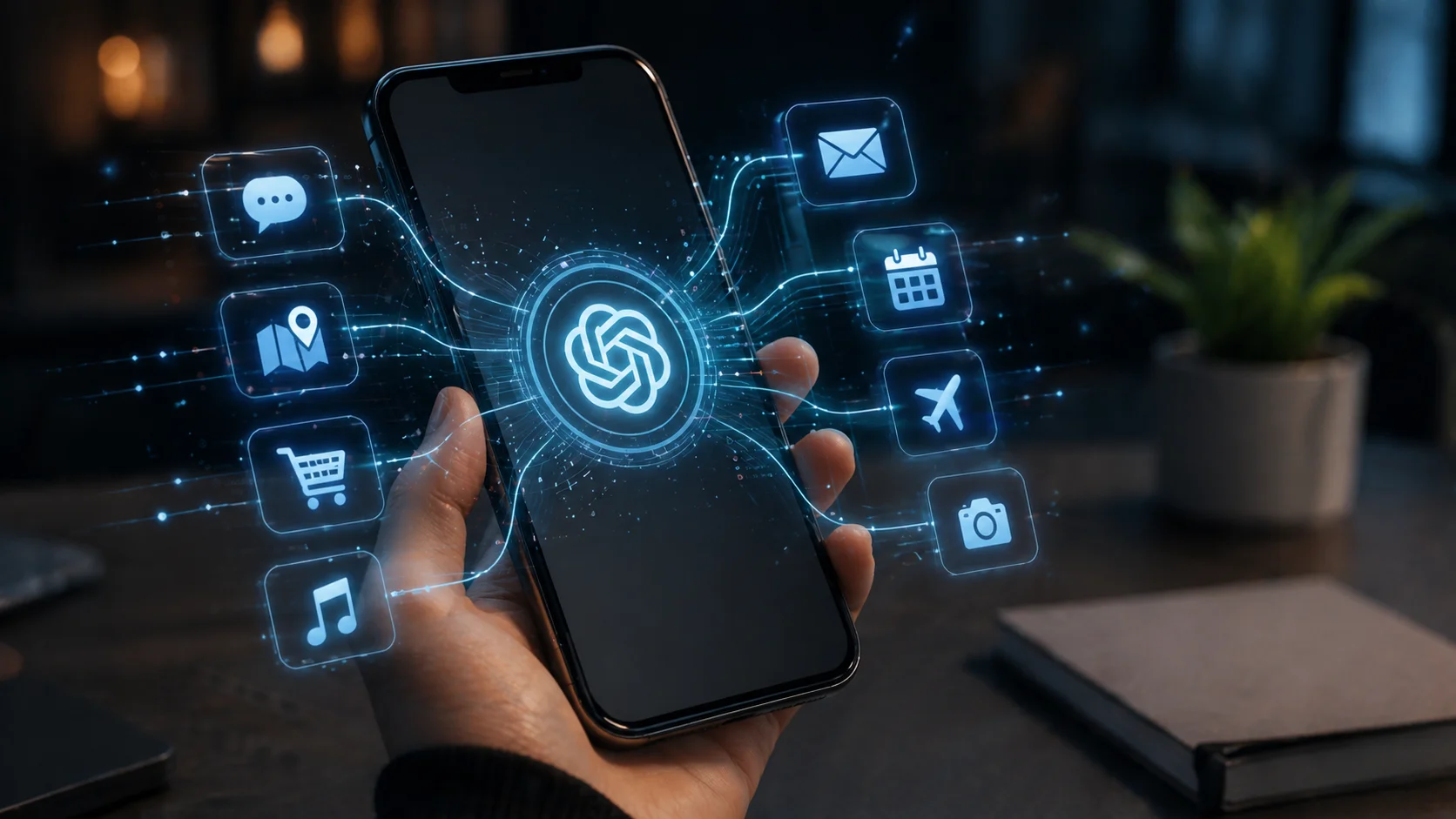
The OpenAI phone concept is gaining traction as a potential shift in smartphone design. Reports suggest the device may remove traditional apps and replace them with AI agents that complete tasks on behalf of users.
This approach changes how people use mobile devices. Instead of switching between apps, users would describe a task and let the system handle it.
AI agents take over everyday tasks
The OpenAI phone would rely on AI agents as the main interface. These agents could manage actions across multiple services without requiring manual input from the user.
For example, a single request could handle booking, messaging, and payments in one flow. The system would coordinate each step behind the scenes.
This model focuses on completing tasks rather than navigating interfaces.
Hardware push signals serious ambition
The OpenAI phone is not just a software idea. Reports suggest the project may involve hardware partners such as Qualcomm and MediaTek.
This points to a dedicated device built around AI-first interaction. Early timelines suggest development is ongoing, with potential production in the coming years.
Potential challenge to current ecosystems
The OpenAI phone could disrupt existing mobile platforms. Today, companies like Apple and Google control how apps are distributed and used.
Replacing apps with AI agents could reduce reliance on app stores. This would shift control away from platform owners and toward AI-driven systems.
Developers may need to adapt their services to work with AI agents instead of traditional apps.
Privacy and control remain key concerns
The OpenAI phone raises important questions about data access. AI agents would need permission to handle messages, payments, and personal information.
This creates a new level of trust between users and devices. Strong controls and transparency will be essential for adoption.
Without clear safeguards, users may hesitate to rely on fully automated systems.
Conclusion
The OpenAI phone concept signals a major shift in mobile technology. AI agents could replace apps and simplify how people interact with their devices.
While the idea is still evolving, it highlights a clear direction for the industry. Future smartphones may focus on automation rather than app-based navigation.
0 responses to “OpenAI phone could replace apps with AI agents”