


Millions of telecom users in the Netherlands are now at risk after attackers accessed internal systems belonging to Odido. The Odido data breach exposed sensitive identity information that criminals can use for impersonation and fraud. Although the company says services remain safe, the scale of the leak creates long-term security concerns for customers.
Attackers accessed customer records
The incident began when unusual activity appeared inside a customer management environment. Investigation confirmed unauthorized access and data extraction affecting about 6.2 million individuals.
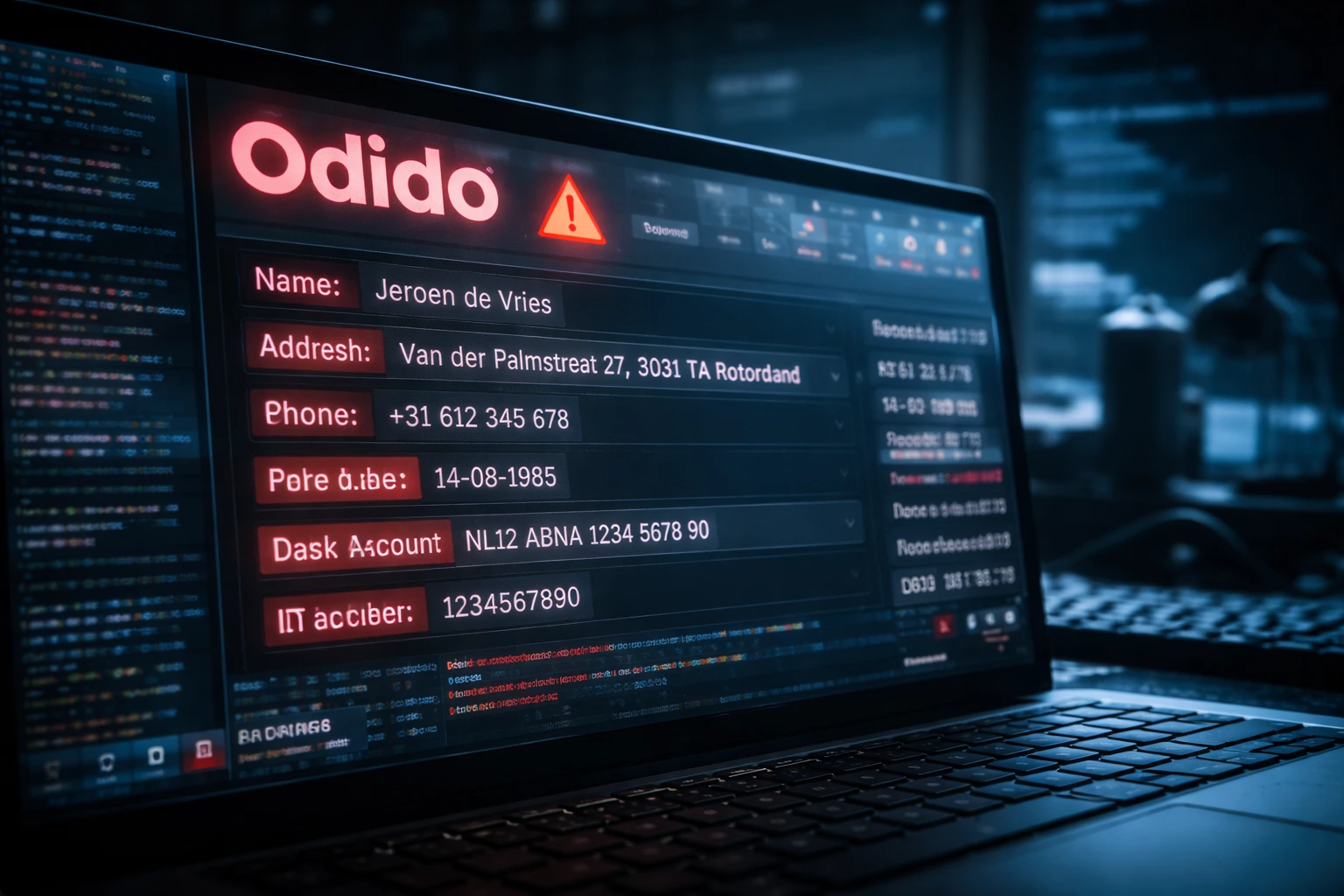
The compromised database contained personal identity details rather than login credentials. Exposed information includes names, addresses, phone numbers, dates of birth, and customer identifiers. Some records also contained bank account numbers and government identification details.
Odido reported that passwords, communication history, and usage data were not accessed. However, identity information alone allows criminals to build convincing scams.
Why the stolen data is dangerous
The Odido data breach mainly involves verification information used by organizations to confirm a person’s identity. That makes the data particularly useful for social-engineering attacks.
Criminals can now impersonate trusted institutions and contact victims using accurate personal details. Messages may appear legitimate because attackers already know real information about the recipient.
Possible abuse includes:
- Account takeover attempts
- Fake billing requests
- Phone support impersonation
- Financial fraud targeting banks or providers
Unlike passwords, identity data cannot easily be changed once exposed.
Company response
Odido closed the unauthorized access and informed regulators and customers. Additional monitoring measures were deployed to detect suspicious behavior connected to affected accounts.
The company emphasized that telecom services continue operating normally and infrastructure systems were not disrupted. Notifications warned users to stay alert for suspicious communication and verification requests.
Ongoing risk
The stolen dataset has not yet been publicly released, but that does not remove the threat. Criminal groups often hold information for later campaigns or sell it privately.
Large identity datasets are valuable because they enable long-term fraud rather than immediate attacks. Victims may face scams months or even years after the original incident.
Conclusion
The Odido data breach demonstrates how identity exposure creates lasting cybersecurity risk even without passwords or service disruption. Attackers now possess enough personal information to impersonate real customers convincingly.
Users should treat unexpected contact requests with caution and verify communications directly with providers. Data breaches increasingly target identity verification itself, making awareness as important as technical protection.
0 responses to “Odido data breach exposes 6.2 million customer identities”