


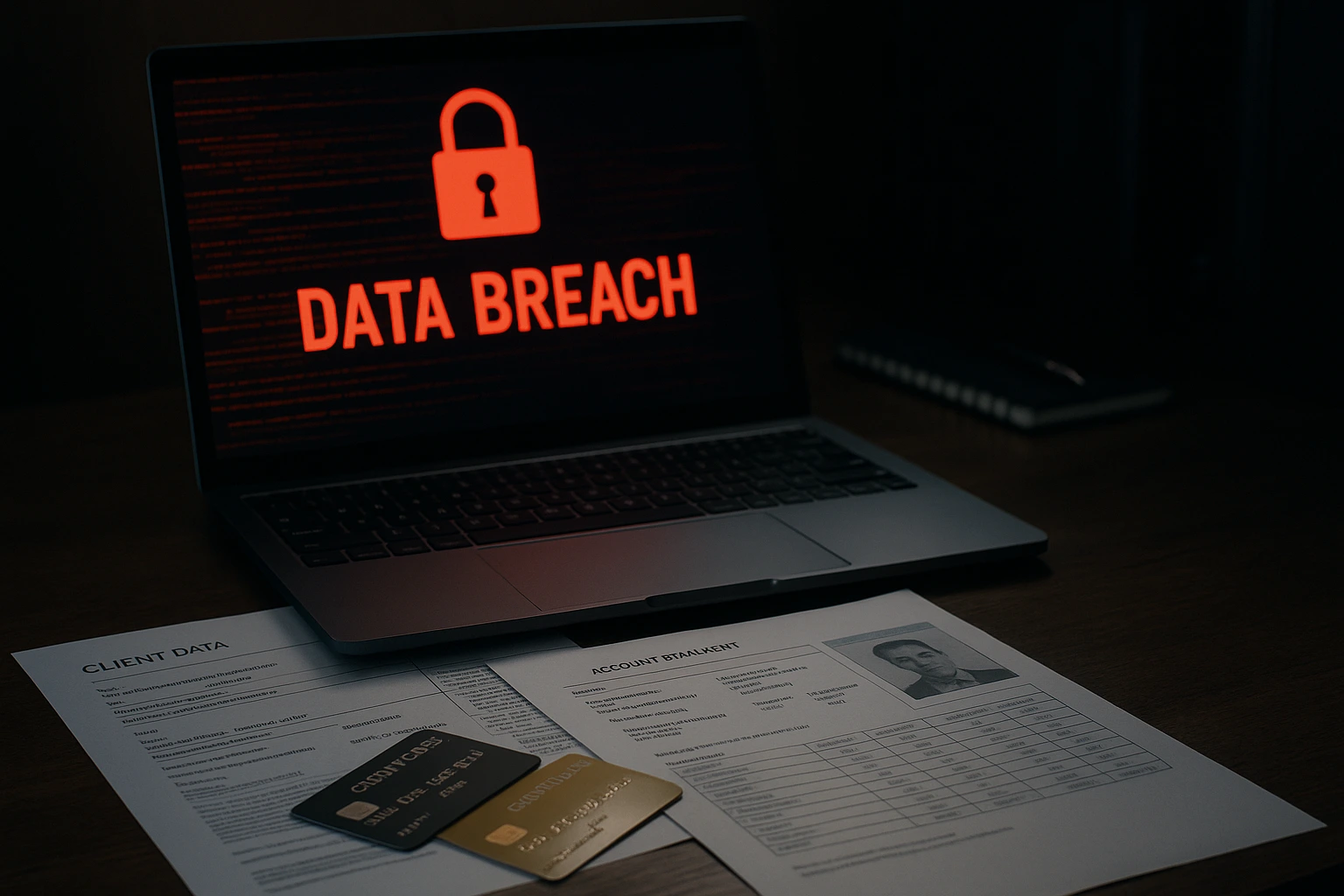
A major ransomware incident hit Money Mart and exposed large volumes of sensitive information. Attackers linked to the Everest ransomware group claimed responsibility for the attack. They published sample records to support their claims. The money mart breach affects customers and employees across the United States and Canada. The scale of exposed data creates serious risks for anyone who used the company’s financial services.
How the attack unfolded
Everest ransomware operators claimed they accessed Money Mart’s internal network and exfiltrated over eighty thousand files. The samples they released contained personal details, financial records and internal documents. The attackers used the stolen data to pressure the company. Their published samples included identity documents and detailed financial histories.
Money Mart offers payday loans, check-cashing services, wire transfers, prepaid cards and currency-exchange support. These operations generate large volumes of customer data. The attack targeted that data directly. The stolen files reveal information that criminals can easily use for fraud or identity theft. The money mart breach exposed the most sensitive information stored within the company’s systems.
What information was exposed
Customer data
- Full names, addresses and contact information
- Identity documents and personal identifiers
- Credit-card information with transaction histories
- Check-cashing records and approval codes
- Billing invoices and merchant details
Employee data
- Staff contact details
- Employment histories
- Job assignment information
- Internal identification numbers
The combined exposure affects thousands of people. Criminals now have access to data that supports credit fraud, impersonation, phishing attacks and targeted scams.
Why the incident matters
Money Mart serves many underbanked customers who rely on its services for urgent financial needs. These users often face higher risk when their data leaks. Many depend on short-term credit and cash-access services that require sensitive documentation. The money mart breach increases the potential for identity theft within vulnerable communities.
The attack also highlights the danger of storing financial records without strong security controls. Companies that manage financial information must maintain strict protection and rapid detection capabilities. Ransomware groups continue to target financial-service providers because these targets hold high-value data.
What affected individuals should do
Immediate protective steps
- Check bank statements and credit-card activity for unusual charges.
- Freeze credit reports to prevent unauthorized loans or account openings.
- Change reused passwords and avoid predictable patterns.
- Enable multi-factor authentication on every financial account.
Long-term vigilance
- Monitor email and phone activity for targeted phishing attempts.
- Track credit scores for unexpected drops.
- Store identity documents securely and avoid sharing them unnecessarily.
Companies facing similar attacks should review access controls, improve encryption standards and conduct full audits. They should also notify all affected customers and employees.
Conclusion
The money mart breach caused severe exposure of financial and personal information. The attack demonstrates the increasing pressure on financial-service providers as ransomware groups pursue high-value data. Affected individuals must act quickly to protect themselves. Companies must strengthen security practices and maintain full transparency to reduce long-term harm.
0 responses to “Money Mart breach exposes customer and employee financial data”