


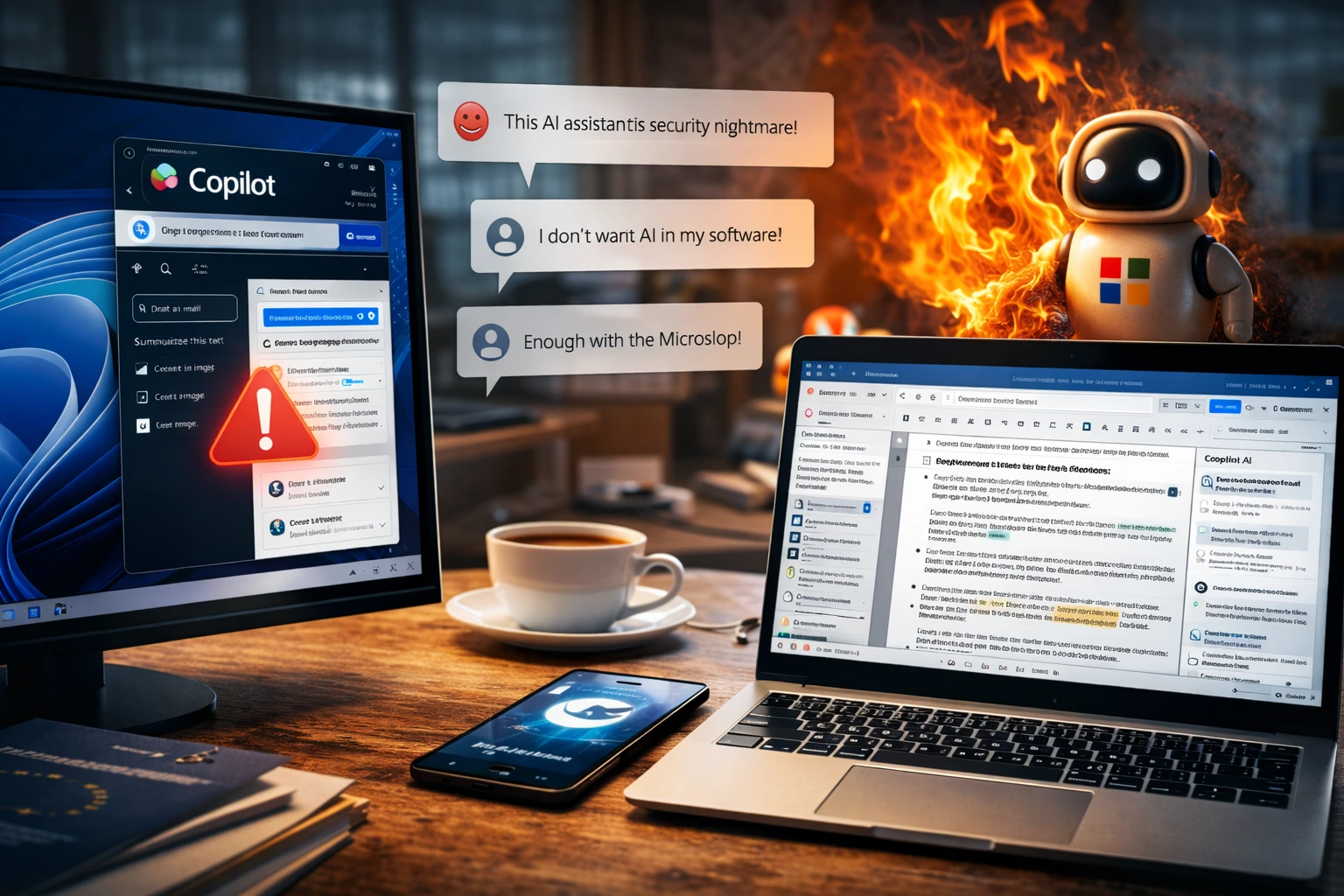
Microsoft’s rapid push into artificial intelligence is drawing increasing backlash from users and researchers. The Microsoft Copilot criticism reflects growing frustration with how AI features are being integrated into widely used software products.
Copilot is designed to assist users across Microsoft services such as Windows, Office applications, and cloud tools. The company has promoted the assistant as a productivity enhancer capable of helping with tasks ranging from writing emails to summarizing documents.
However, critics argue that the expansion of AI into core system functions has created new concerns. Some users believe the technology introduces unnecessary complexity, while others worry about security risks and privacy issues.
These concerns have fueled an online debate that now includes a viral nickname mocking Microsoft’s AI strategy.
The “Microslop” Nickname Spreads Online
The term “Microslop” has emerged in online communities discussing Microsoft’s AI initiatives. The nickname combines the company’s name with “AI slop,” a phrase often used to describe low-quality or excessive AI-generated content.
The phrase began circulating among developers and technology enthusiasts who felt that companies are pushing AI features too aggressively.
Reports indicate that moderators in Microsoft’s Copilot Discord community attempted to block the term from appearing in conversations. The move quickly attracted attention and caused the nickname to spread even further across online forums.
The situation illustrates how criticism of large technology companies can rapidly evolve into viral internet memes.
Copilot Integration Plans Face Adjustments
Microsoft originally presented Copilot as a major transformation for Windows and productivity software. Early plans suggested the assistant could appear across multiple areas of the operating system.
The concept involved a form of background AI assistance that would help users manage files, adjust settings, and automate tasks.
Recent reports suggest that Microsoft has reconsidered some of these broader integration ideas. Instead of embedding Copilot deeply across all system components, the company appears to be focusing on more limited features.
These adjustments may reflect user feedback and technical challenges associated with large-scale AI integration.
Security Issues Add to the Debate
Security concerns have also contributed to the Microsoft Copilot criticism.
Researchers have reported vulnerabilities affecting AI assistants integrated with email and messaging services. Some demonstrations suggested that specially crafted messages could cause AI tools to reveal sensitive information or process malicious instructions.
Other research has shown that attackers may be able to exploit AI assistants through links or prompts that manipulate how the systems interpret instructions.
Although companies quickly patch many vulnerabilities, these findings highlight the new security challenges introduced by AI-powered assistants.
Questions About AI Productivity
Another factor driving skepticism involves the real-world productivity benefits of AI tools.
Supporters argue that assistants like Copilot can help automate repetitive work and improve efficiency. They point to features such as document summaries, automated writing suggestions, and quick data analysis.
Critics say many of these tools still struggle with reliability and accuracy. In some cases, users report that AI suggestions require significant correction before they become useful.
This mixed experience has led some analysts to question whether companies are introducing AI features faster than the technology can mature.
Conclusion
The growing Microsoft Copilot criticism highlights the tension between technological innovation and user expectations. While AI assistants promise powerful new capabilities, their rapid deployment has raised questions about security, usability, and long-term value.
Online reactions such as the “Microslop” nickname demonstrate how public perception can quickly shift when new technologies appear intrusive or unreliable.
As Microsoft continues refining its AI strategy, balancing innovation with user trust will remain a key challenge for the company.
0 responses to “Microsoft Copilot Criticism Fuels “Microslop” AI Debate”