


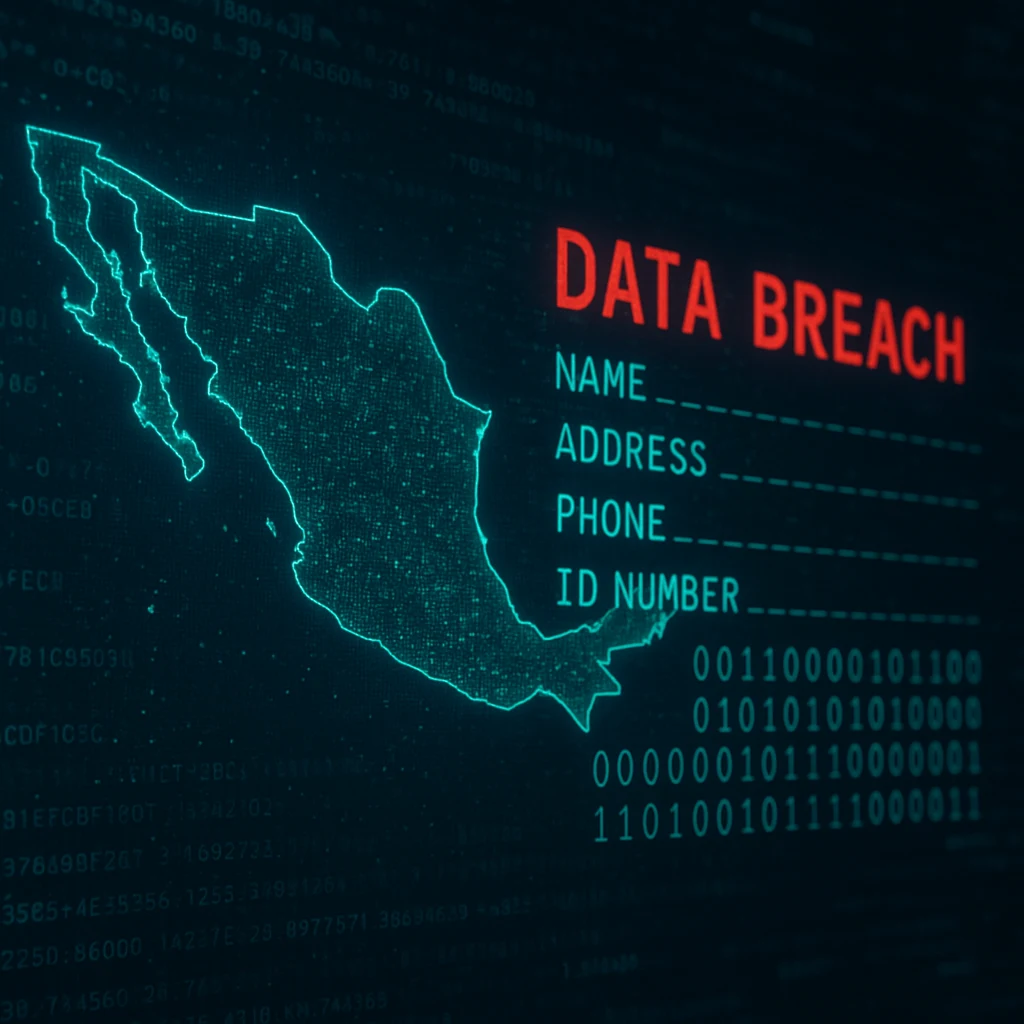
The Mexico debtors data leak has exposed over eight million financial records on dark-web forums. The massive dataset, allegedly stolen from debt-collection agencies, contains personal and banking information from Mexican citizens. Security experts warn that this breach could trigger widespread fraud and identity theft across the country.
What Was Exposed
Cybernews investigators found that the leaked database includes full names, home addresses, phone numbers, email accounts, and dates of birth. It also holds bank details, outstanding debt amounts, and the Mexican national identification number (CURP).
The inclusion of CURP numbers makes this leak especially dangerous. This identifier functions like a social security number and can be used to open accounts, apply for loans, or impersonate victims. Analysts believe the exposed data may come from several debt-collection companies that manage financial portfolios from 2023 to 2025.
How the Breach Happened
The exact method used to obtain the data remains unclear. The hacker behind the Mexico debtors data leak claimed they accessed internal systems of debt-collection firms and still maintain access today. Sample records shared online appear genuine, increasing the likelihood that the dataset is authentic.
Experts suspect that weak access controls, poor segmentation, and outdated software contributed to the breach. Many small and mid-size agencies in Mexico still rely on unsecured databases, leaving sensitive customer data vulnerable to exploitation.
Why the Mexico Debtors Data Leak Matters
The breach exposes systemic weaknesses in Mexico’s financial infrastructure. More than eight million affected records make this one of the largest known leaks involving debt information.
The incident raises several risks:
- Identity theft: Criminals can combine CURP data with bank details to commit fraud.
- Financial scams: Attackers may impersonate collection agencies to extort payments.
- Loss of trust: Customers may hesitate to share information with legitimate lenders.
- Regulatory pressure: Authorities face growing demands to strengthen Mexico’s data protection laws.
How Affected Individuals Can Respond
People who suspect their information is included should act quickly:
- Check credit reports for any unauthorized activity.
- Avoid responding to unsolicited debt-related messages.
- Place fraud alerts or freezes with credit bureaus.
- Update online banking passwords and enable two-factor authentication.
Debt-collection agencies should also audit their data storage, enforce strict access policies, and deploy encryption to secure sensitive records.
Conclusion
The Mexico debtors data leak highlights how fragile financial data protection remains within the debt-collection sector. Millions now face potential scams and long-term privacy risks because of weak cybersecurity measures. Companies must modernize their systems, regulators must strengthen oversight, and individuals must stay vigilant to minimize damage from future leaks.
0 responses to “Mexico debtors data leak exposes millions of financial records”