


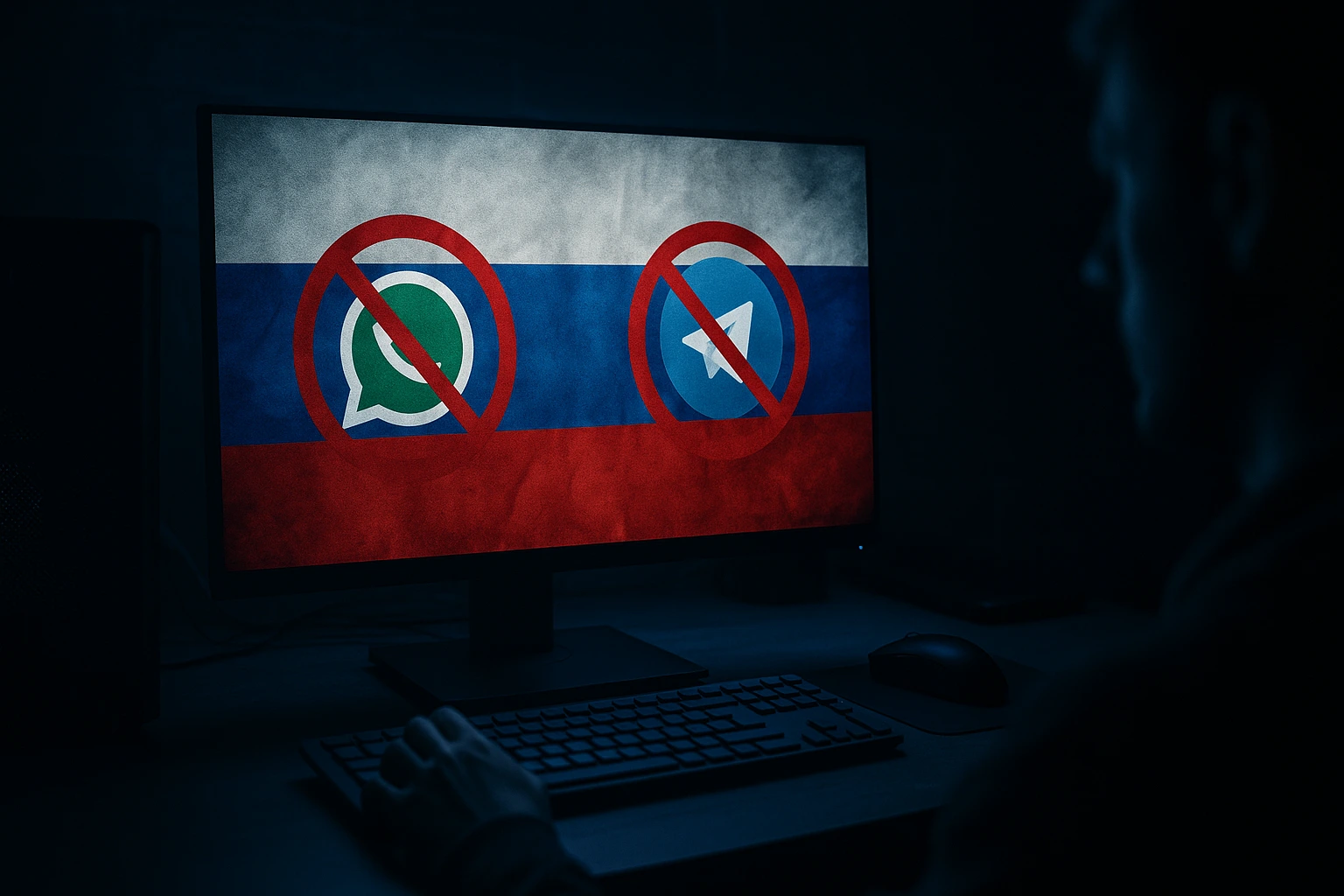
Russia has restricted voice and video calls on WhatsApp and Telegram. This move affects millions and strengthens the state’s control over online communication.
Reasons for the restrictions
Roskomnadzor, Russia’s communications regulator, claims criminals use these apps for fraud, extortion, and sabotage coordination. Officials say both platforms failed to comply with legal demands for user data access and content removal.
Scope of the ban
The restriction applies to voice and video call functions. Text messaging, file sharing, and other non-call features remain available for now.
Government’s broader strategy
This action aligns with Russia’s plan to reduce dependence on foreign platforms. The state has launched its own messaging app, Max, which complies with domestic laws and monitoring requirements. Users are encouraged to migrate to Max for full functionality.
Platform responses
WhatsApp stated that the restrictions aim to weaken secure communication for over 100 million Russian users. Telegram responded by highlighting its AI moderation tools, which the company says help prevent harmful content while maintaining user privacy.
Wider implications
This move adds to Russia’s expanding internet controls, including censorship, VPN restrictions, and temporary mobile internet shutdowns in 2025. Experts warn these measures deepen the isolation of the Russian internet and limit citizens’ access to global communication.
Conclusion
Messaging call restrictions in Russia show the government’s determination to control digital communication. By targeting WhatsApp and Telegram calls, authorities tighten their grip on online speech while promoting state-approved alternatives.
0 responses to “Messaging call restrictions hit Russian users”