


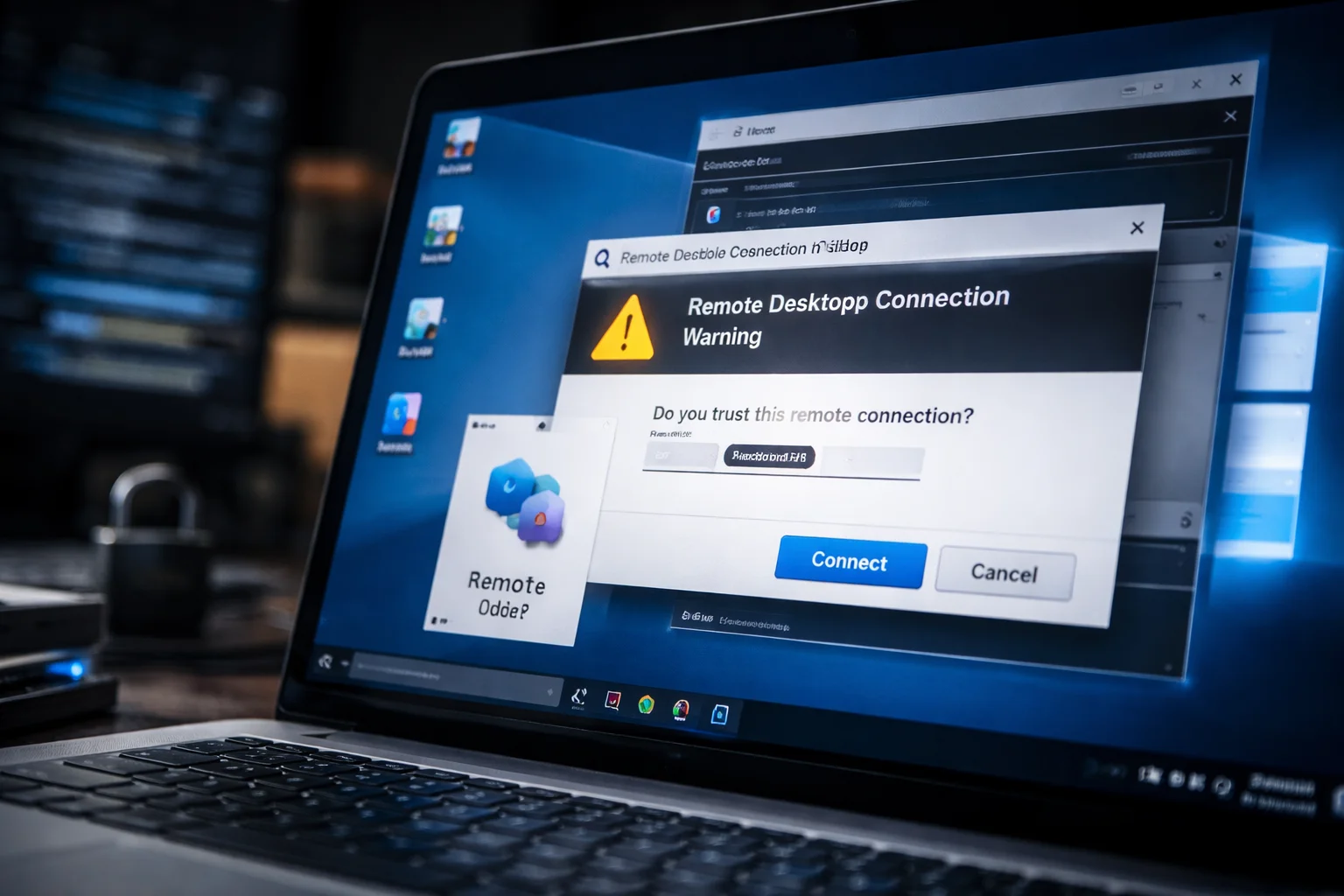
Microsoft has introduced new safeguards to reduce a growing security risk. Malicious RDP file protection is now included in recent Windows updates, targeting abuse of Remote Desktop connection files. These files are widely used in enterprise environments, but attackers have begun using them in phishing campaigns.
The update focuses on limiting automatic access and increasing visibility before a connection is established.
RDP Files Become a Phishing Vector
Remote Desktop Protocol files allow users to connect to remote systems quickly. However, attackers have started using them as part of phishing campaigns.
A malicious file can initiate a connection to an attacker-controlled system. It can also attempt to access local resources during the session. Because the file appears legitimate, users may not recognize the risk.
This makes RDP files an effective tool for social engineering attacks.
Warnings Add a Critical Layer of Defense
Microsoft has introduced clearer security prompts when users open RDP files. These warnings appear before any connection is made and provide key details about the remote system.
Users must review the information and confirm the connection manually. This step adds friction to the process and reduces the likelihood of accidental access.
By requiring explicit approval, the update helps users identify suspicious connections.
Resource Access Now Restricted by Default
Another key change limits how RDP sessions interact with local systems. Features such as drive access, clipboard sharing, and device redirection are no longer enabled automatically.
Users must grant permission for each type of access. This prevents silent data exposure and reduces the impact of a malicious connection.
Even if a user connects to a compromised system, the attacker gains less access by default.
Attack Relies on User Action
The effectiveness of this method depends on user interaction. Attackers typically distribute malicious RDP files through emails or messaging platforms.
Once opened, the connection process begins with minimal technical barriers. Without clear warnings, users may proceed without verifying the source.
The new protections aim to interrupt this flow by forcing users to make informed decisions.
Part of a Broader Security Approach
These changes are part of Microsoft’s wider effort to secure commonly used features. Instead of removing functionality, the company is adjusting default settings and improving transparency.
This approach allows legitimate use of Remote Desktop while reducing the risk of misuse.
It also reflects a shift toward securing user behavior, not just system vulnerabilities.
Conclusion
Malicious RDP file protection strengthens Windows defenses against a subtle but effective attack method. By adding warnings and restricting resource access, Microsoft reduces the risk of phishing-based intrusions.
The update does not eliminate the threat, but it makes exploitation more difficult. As attackers continue to adapt, stronger defaults and user awareness will remain critical for maintaining security.
0 responses to “Malicious RDP file protection strengthens Windows security controls”