


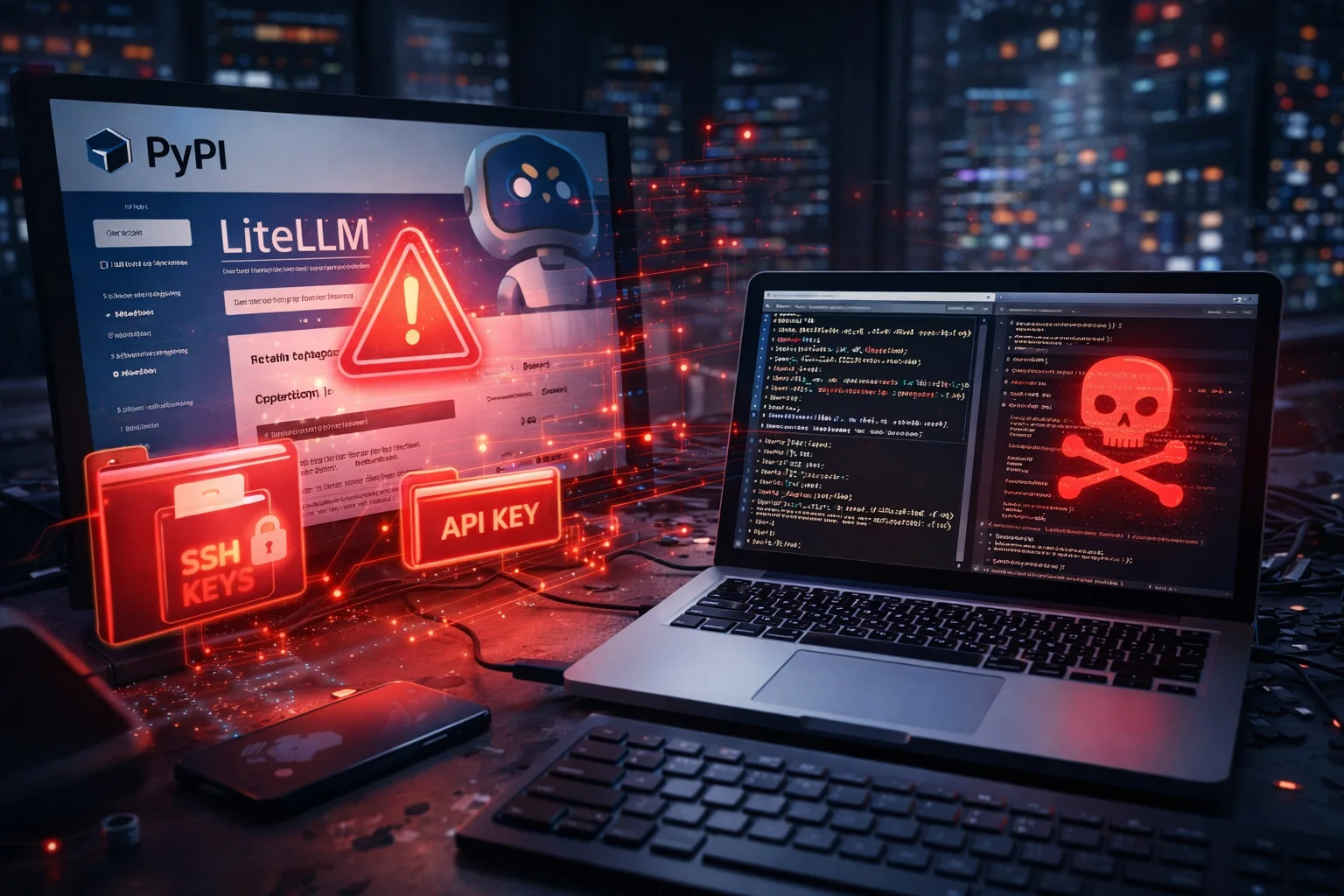
The LiteLLM supply chain attack has raised concerns across the AI development ecosystem. A widely used library was compromised, turning a trusted dependency into a potential entry point for attackers.
Because the package is integrated into many workflows, the incident highlights how quickly risk can spread through shared components.
Malicious Package Versions Discovered
The incident involved unauthorized modifications to LiteLLM packages distributed through a public repository. These versions appeared legitimate, which increased the likelihood of adoption.
Developers and automated systems could install the compromised packages without immediate signs of tampering. This allowed the threat to reach multiple environments before detection.
Hidden Code Triggered Automatically
The malicious versions included embedded code designed to execute within affected environments. This behavior did not rely on direct user interaction.
Once installed, the code could run as part of normal processes, making it harder to identify. This approach increases exposure because it does not depend on specific user actions.
Focus on Credential Collection
The primary objective of the attack appears to involve gathering sensitive data. This includes credentials, tokens, and environment variables stored on developer systems.
Because LiteLLM often handles connections to multiple services, affected environments may contain access to several platforms at once. This increases the potential impact of any exposed data.
Impact Extends Across AI Workflows
LiteLLM is used in a range of development and production environments. It connects applications to different AI providers, placing it close to critical infrastructure.
A compromised dependency at this level can affect local development setups, automated pipelines, and shared systems. This makes containment more difficult once the package is in use.
Attack Reflects Supply Chain Risk
The LiteLLM supply chain attack follows a broader pattern in cyber threats. Attackers target trusted components instead of breaking into systems directly.
By inserting malicious code into widely used packages, they can reach multiple organizations at once. This method reduces effort while increasing potential impact.
Conclusion
The LiteLLM supply chain attack shows how dependencies can become high-risk entry points. A single compromised package can expose multiple systems through normal development processes.
As AI adoption continues to expand, stronger control over software dependencies will be essential to reduce similar risks in the future.
0 responses to “LiteLLM supply chain attack exposes risks in AI workflows”