


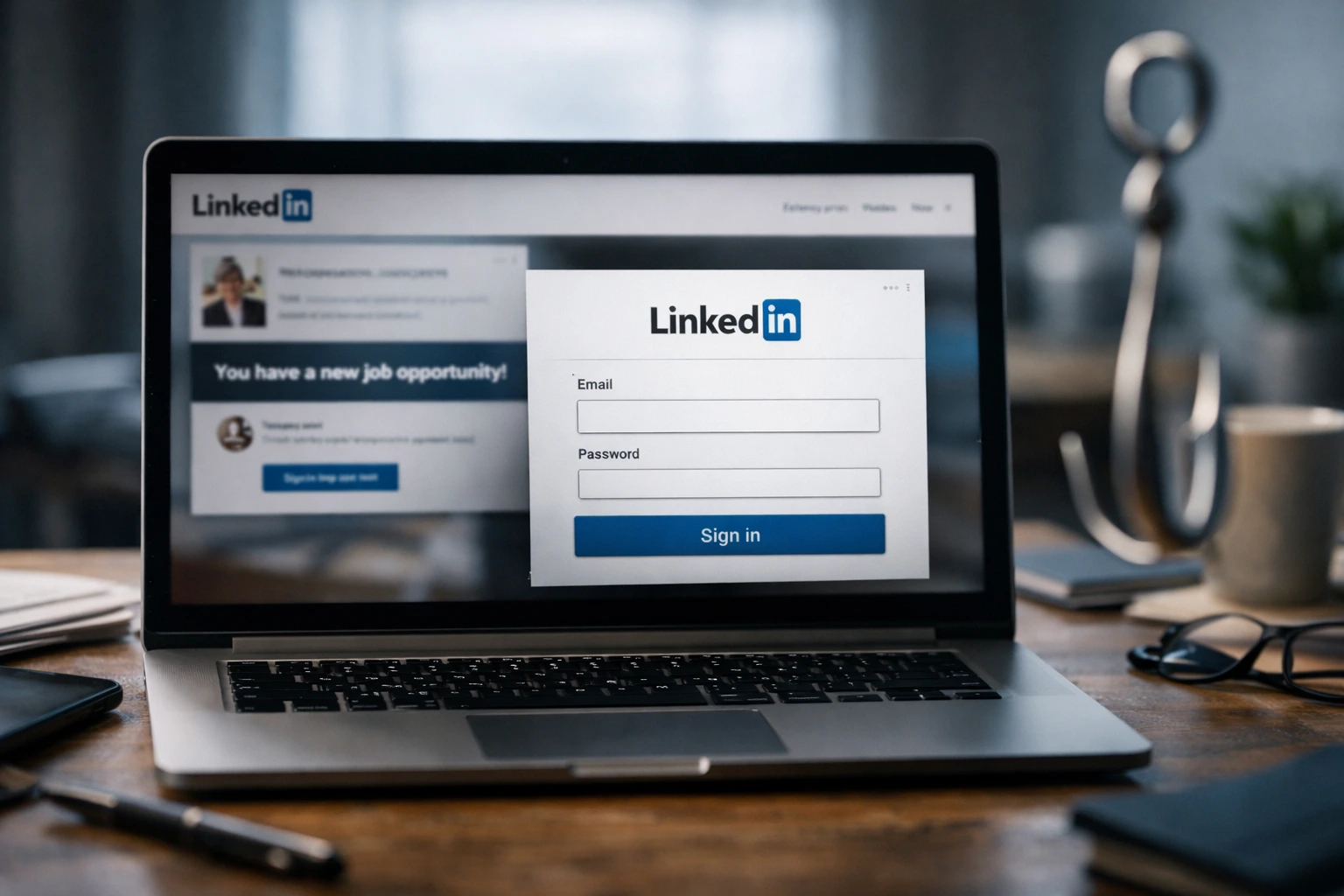
LinkedIn phishing emails are targeting users with convincing fake job offers that lead to credential theft. These messages look authentic and create urgency, which pushes victims to click before verifying the source. Once they interact, attackers move quickly to capture sensitive login details.
This campaign shows how phishing tactics continue to improve. Instead of exploiting software flaws, attackers now focus on manipulating user behavior with realistic communication.
Fake job offers drive engagement
Attackers send emails that closely resemble official LinkedIn notifications. These messages often claim that a recruiter has reached out or that a new job opportunity is waiting.
The emails copy LinkedIn’s design, tone, and formatting. As a result, they feel familiar and trustworthy at first glance. Many messages also include urgency, encouraging users to act quickly before the opportunity disappears.
This pressure reduces hesitation and increases the chance of interaction. Once the user clicks, the attack chain begins.
Fake login pages capture credentials
After clicking the link, victims are redirected to a spoofed LinkedIn login page. The page looks nearly identical to the real platform, which makes it difficult to detect the scam.
When users enter their credentials, the data is sent directly to attackers. This gives them immediate access to the account. From there, they can steal personal information, send more phishing messages, or attempt further compromise.
Because the process looks legitimate, many users do not realize what happened until it is too late.
Realism makes the scam effective
This campaign stands out because of its level of detail. Attackers replicate branding, layout, and even small visual elements to build trust.
The emails do not rely on obvious errors or poor formatting. Instead, they blend in with legitimate notifications, which makes them harder to spot.
This shift highlights a broader trend in phishing. Attackers now prioritize believability and timing over technical complexity.
Job seekers remain a key target
Job-related phishing works well because it taps into emotion and urgency. People are naturally more likely to engage with messages about career opportunities.
Attackers take advantage of this by posing as recruiters or companies offering attractive roles. This approach lowers suspicion and increases click rates.
LinkedIn remains a valuable target because users expect professional communication on the platform. That expectation makes phishing attempts more convincing.
How to protect your account
Users can reduce their risk by staying cautious with unexpected job-related emails. A few simple steps can prevent most phishing attempts:
- Avoid clicking links in unsolicited emails
- Check the sender’s email address carefully
- Visit LinkedIn directly instead of using email links
- Enable multi-factor authentication
- Treat urgent job offers with caution
These habits help block common phishing techniques and protect account access.
Conclusion
LinkedIn phishing emails continue to evolve, using realistic job offers to steal login credentials. The attack does not depend on technical vulnerabilities. Instead, it relies on trust, urgency, and careful imitation.
As these scams become more refined, users need to stay alert. Verifying messages and avoiding rushed decisions can make the difference between staying secure and losing access to an account.
0 responses to “LinkedIn phishing emails use fake job offers to steal logins”