


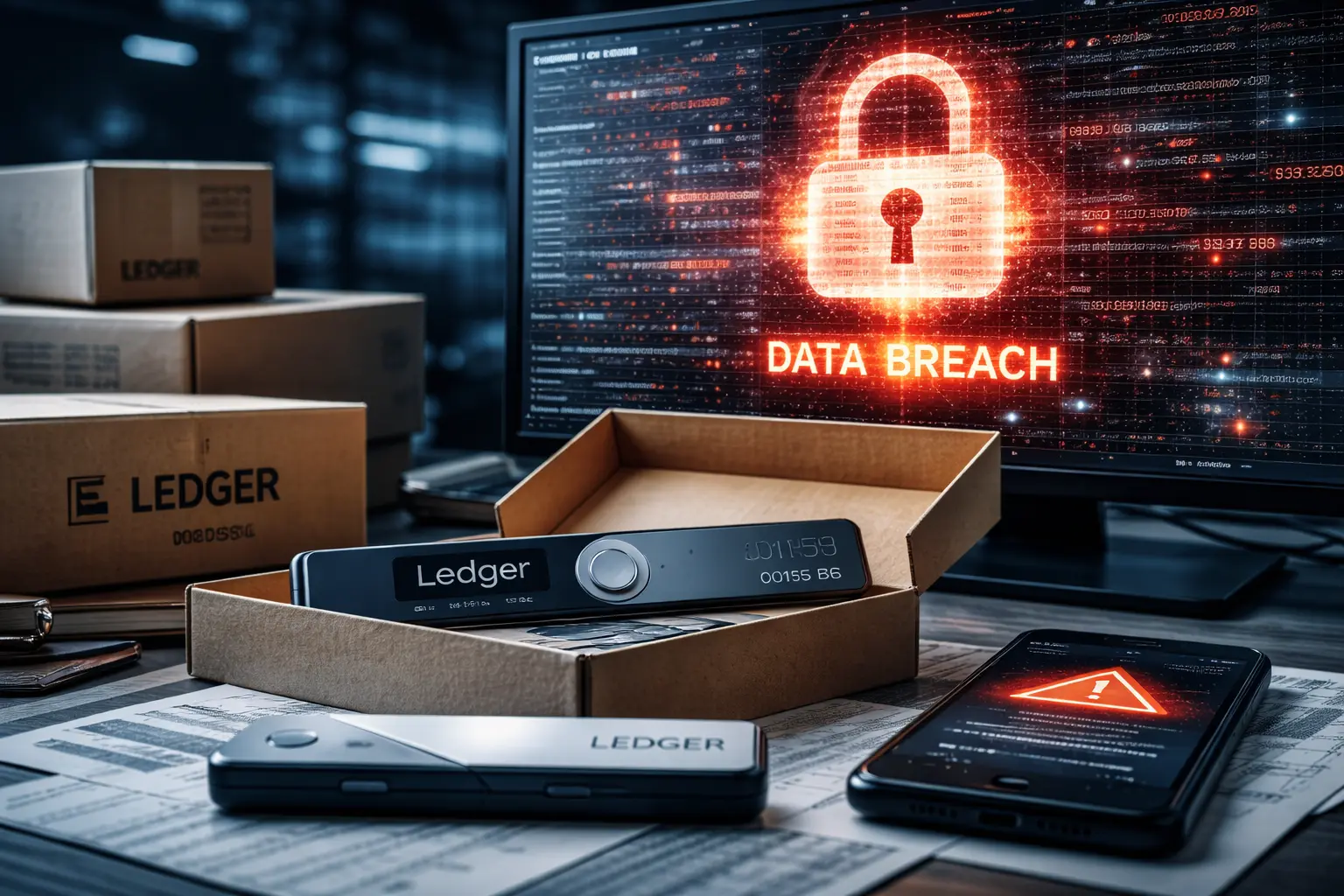
Ledger has warned customers that a data breach at its third-party e-commerce provider, Global-e, exposed personal information linked to past purchases. The incident did not affect Ledger’s internal systems, hardware wallets, or crypto assets. However, customer order data stored by the external service became accessible to unauthorized parties.
The disclosure adds to growing concerns around third-party risk in the cryptocurrency ecosystem, where breaches often occur outside core platforms.
What the Breach Exposed
Attackers gained access to order information processed by Global-e, which acts as the merchant of record for Ledger’s online store in certain regions. As a result, exposed data included customer names and contact details tied to completed purchases.
The breach did not expose payment card information, recovery phrases, private keys, or wallet credentials. Ledger confirmed that attackers never accessed its infrastructure or security-critical systems.
Only customers who placed orders through Global-e’s checkout flow were affected.
Ledger’s Response
Ledger began notifying impacted customers directly after Global-e confirmed the incident. The company emphasized that users should remain alert for phishing attempts that may reference previous orders or impersonate Ledger support.
Ledger reiterated that it will never ask customers to share recovery phrases, private keys, or sensitive authentication details. The company also stated that it continues to monitor the situation while coordinating with Global-e to assess scope and containment.
Why Third-Party Breaches Matter
Although the breach did not compromise crypto assets, exposed customer data can still create serious downstream risk. Attackers frequently use leaked names and contact information to craft targeted phishing campaigns aimed at crypto holders.
In this case, the exposed data could allow scammers to reference legitimate Ledger purchases to increase credibility. That tactic raises the likelihood of successful social-engineering attacks, especially against less experienced users.
Ongoing Risk for Customers
Customers affected by the breach should treat unexpected emails, messages, or phone calls with skepticism. Fraudsters often follow data leaks with delayed phishing waves designed to bypass immediate suspicion.
Ledger urged users to verify all communications through official channels and to avoid clicking links or sharing information in unsolicited messages. Remaining cautious remains the most effective defense against follow-up attacks.
Conclusion
The Global-e data breach highlights how third-party services can expose customer data even when core crypto platforms remain secure. While Ledger protected wallets and digital assets, the exposure of personal information still introduces risk for affected users. As crypto adoption grows, tighter oversight of external service providers will play a critical role in reducing future incidents.
0 responses to “Ledger Customers Impacted by Third-Party Global-e Data Breach”