


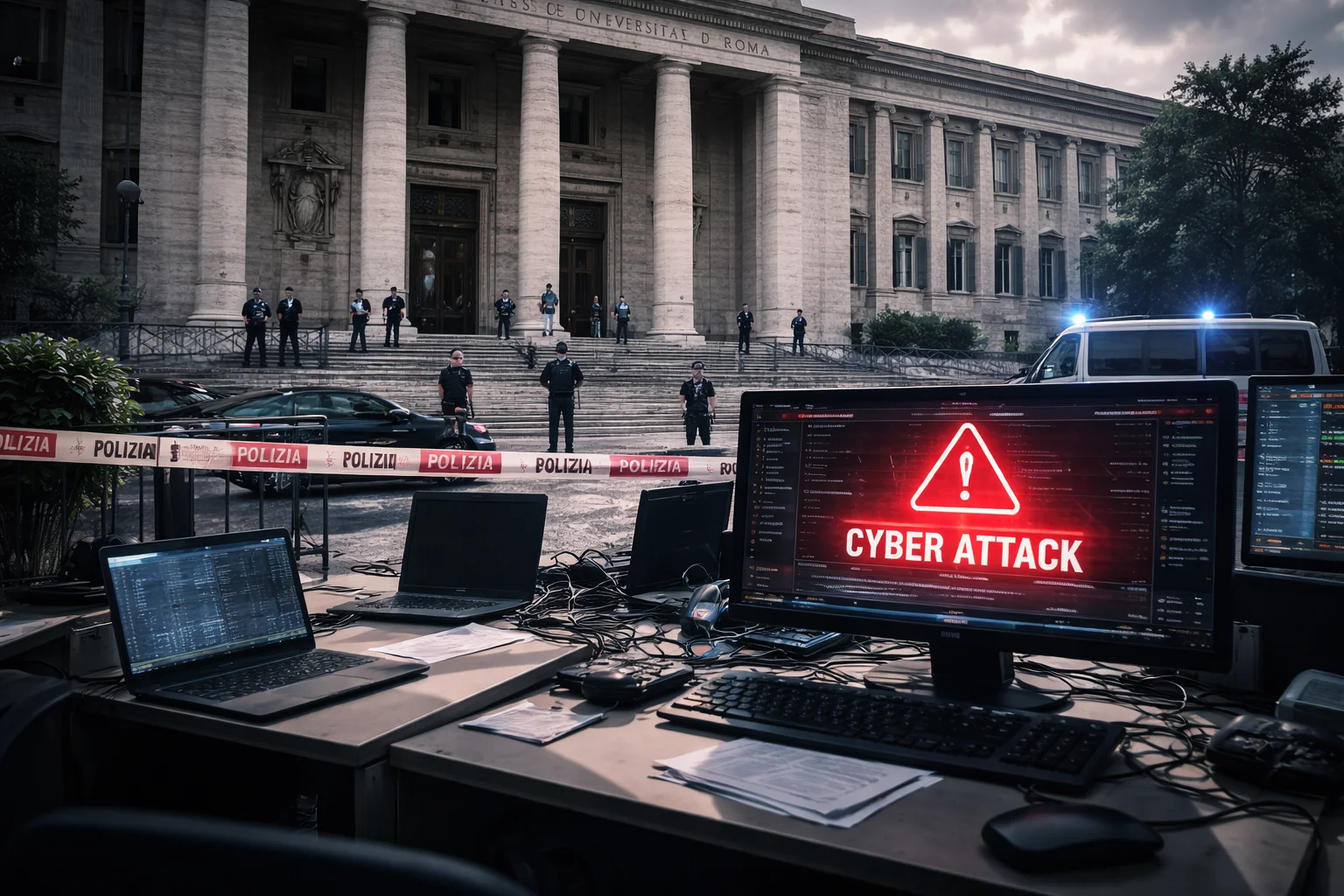
The La Sapienza cyberattack disrupted one of Europe’s largest universities and exposed the growing cybersecurity risks facing higher education institutions. The University of Rome confirmed that a cyber incident forced it to shut down its IT systems to contain potential damage. The decision immediately affected digital services used by students, faculty, and administrative staff.
University leadership moved quickly to isolate systems and prevent further spread of the attack.
What Triggered the Shutdown
La Sapienza detected suspicious activity within its central IT infrastructure and chose to take the network offline as a defensive measure. The shutdown affected internal platforms, academic portals, email systems, and public-facing services.
Technical teams focused on containment and damage assessment. By cutting access early, the university aimed to protect data integrity and preserve clean recovery paths.
Suspected Ransomware Activity
Reports indicate that ransomware likely caused the disruption. Attackers allegedly attempted to extort the university through a ransom demand tied to a countdown mechanism. University officials avoided interacting with the message to prevent escalation.
The institution has not confirmed the identity of the threat actors or the malware strain involved. Investigators continue to analyze forensic evidence to determine how attackers gained access.
Response and Recovery Efforts
Following the La Sapienza cyberattack, the university activated incident response protocols and coordinated with national cybersecurity authorities. Technical teams began restoring services from secure backups while validating system integrity.
Administrators established alternative communication channels to keep students informed. On-campus support points helped mitigate the disruption for those who relied heavily on digital platforms.
Impact on Students and Academic Operations
The shutdown affected tens of thousands of students during an active academic period. Exam scheduling, enrollment systems, and online learning tools became temporarily inaccessible. Faculty members also lost access to teaching and administrative resources.
University leadership assured the academic community that exams and deadlines would not suffer penalties due to the incident.
Broader Context for Universities
The La Sapienza cyberattack reflects a wider trend of ransomware targeting educational institutions. Universities manage complex networks that combine research data, personal information, and legacy systems. These environments often attract attackers seeking leverage through operational disruption.
Even short outages can cause significant academic and administrative strain.
Conclusion
The La Sapienza cyberattack highlights the increasing pressure ransomware places on higher education institutions. By shutting down systems quickly and coordinating with cybersecurity authorities, the university limited immediate damage. As recovery continues, the incident reinforces the need for strong preparedness, tested backups, and clear response strategies across the education sector.
0 responses to “La Sapienza cyberattack: Italian university shuts down systems after breach”