


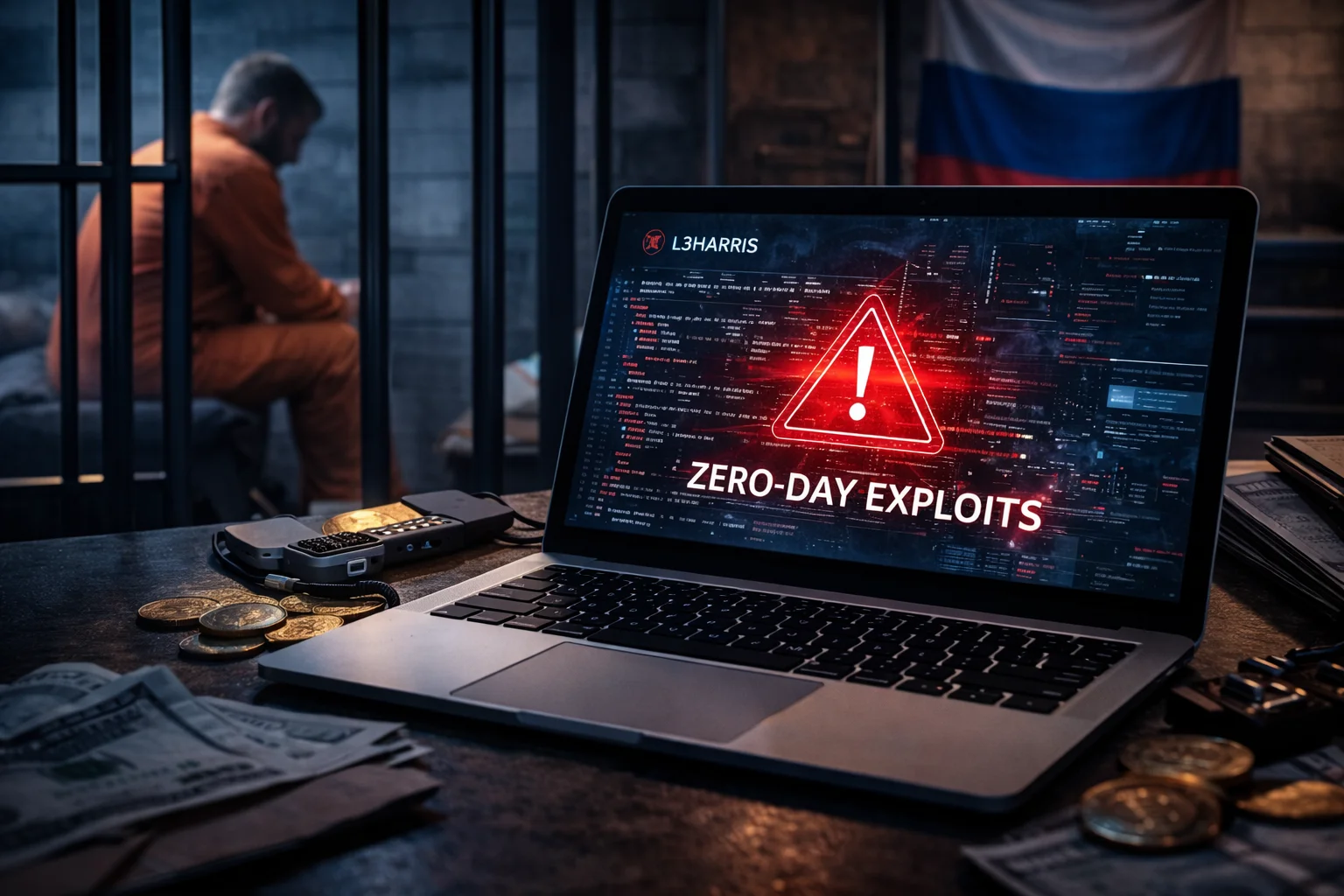
A former L3Harris executive has been sentenced to prison for selling stolen zero-day exploits to a Russian exploit broker. The L3Harris zero-day exploit case underscores the serious national security risks posed by insider threats within defense contractors and cybersecurity divisions.
The court imposed an 87-month prison sentence after determining that the executive illegally removed sensitive cyber tools and transferred them to a foreign intermediary. The case highlights how proprietary exploit capabilities can become strategic assets in the wrong hands.
What Happened
The former executive led a cybersecurity unit responsible for developing advanced exploit tools. These tools were designed for restricted government use and targeted previously unknown software vulnerabilities, commonly referred to as zero-days.
Instead of remaining within authorized channels, several exploit components were stolen and sold over multiple transactions. Prosecutors stated that the individual transferred at least eight separate zero-day exploit components to a Russian exploit broker over several years.
Payments were allegedly made in cryptocurrency, masking the financial trail while generating millions of dollars in illicit gains.
Why Zero-Day Exploits Matter
Zero-day exploits target vulnerabilities that are unknown to software vendors and security teams. Because no patch exists at the time of discovery, these exploits carry significant offensive and defensive value.
Government agencies and defense contractors often develop or acquire such tools for lawful intelligence and security operations. When these capabilities are diverted to unauthorized actors, the balance shifts. Adversarial governments or criminal organizations can use them to compromise networks, steal data, or conduct espionage.
The L3Harris zero-day exploit case illustrates how insider access can bypass traditional perimeter defenses.
Legal Consequences
The defendant pleaded guilty to charges related to theft of trade secrets. During sentencing, the court emphasized the breach of trust and the potential damage caused by transferring sensitive cyber capabilities to foreign interests.
In addition to the prison term, the court ordered forfeiture of cryptocurrency proceeds and other assets connected to the scheme. Authorities also imposed supervised release following incarceration.
The case reflects a broader enforcement trend focused on insider threats and cyber weapon proliferation.
Broader Security Implications
Defense contractors operate at the intersection of national security and advanced cybersecurity research. Protecting sensitive tools requires strict access controls, monitoring mechanisms, and internal auditing.
Insider threats remain among the most difficult risks to mitigate. Individuals with privileged access can remove data or tools without triggering traditional intrusion alerts. Organizations managing classified or proprietary exploit capabilities must continuously review internal safeguards.
The exposure of zero-day tools to foreign brokers demonstrates how digital assets can become geopolitical leverage.
Conclusion
The L3Harris zero-day exploit case serves as a stark reminder that insider threats can undermine even the most advanced cybersecurity environments. When trusted personnel divert sensitive exploit tools for personal gain, the consequences extend beyond corporate losses to national security risks.
Strengthening internal controls, monitoring privileged access, and enforcing strict accountability remain critical as governments and contractors continue developing advanced cyber capabilities.
0 responses to “L3Harris Zero-Day Exploit Case Ends in Prison Sentence”