


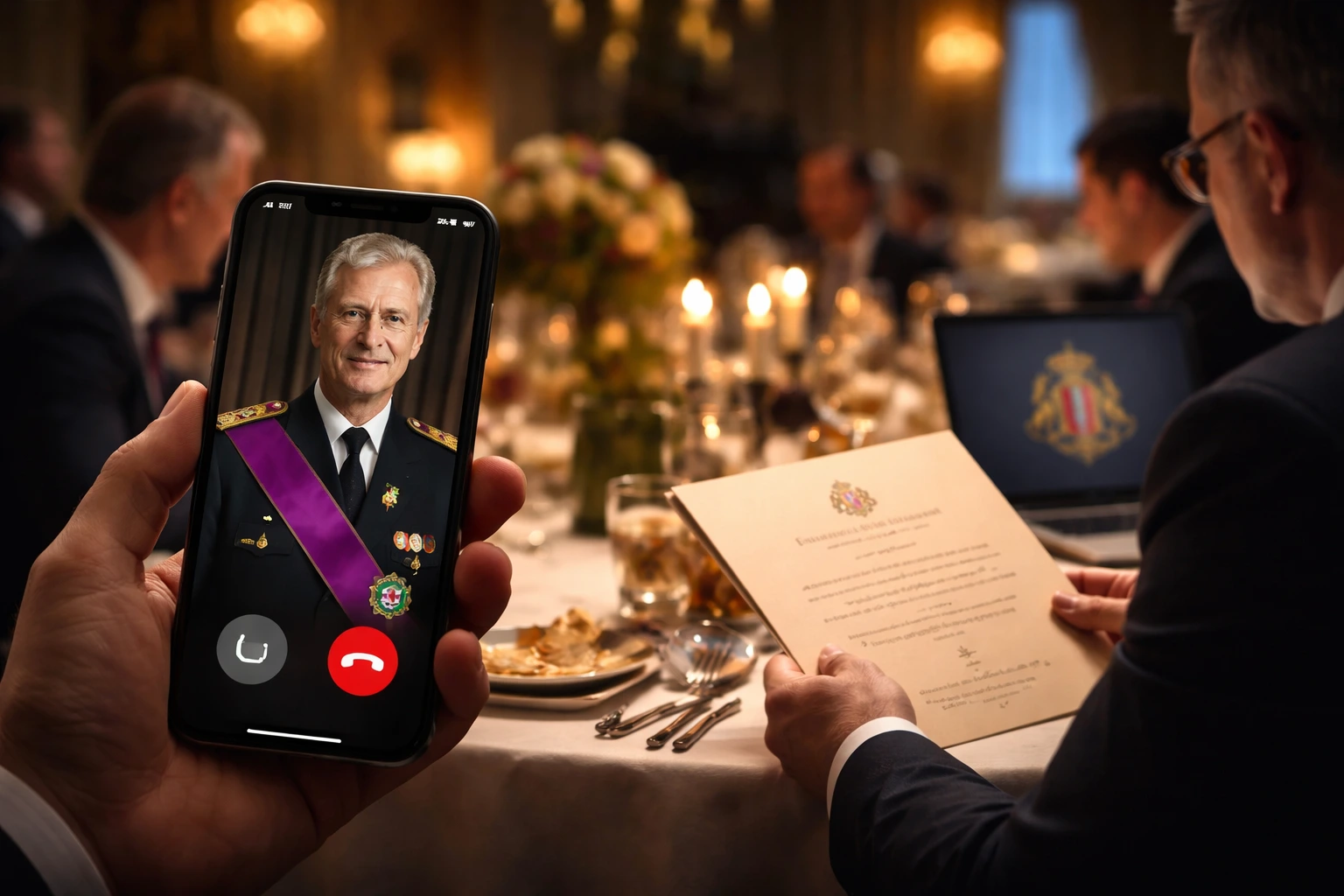
The King Philippe AI scam shows how criminals now use artificial intelligence to power highly targeted fraud. Attackers impersonate Belgium’s king to gain instant credibility and pressure victims into sending money. Belgian authorities have confirmed that scammers actively contact executives and donors using deepfake technology.
Instead of mass phishing, the attackers focus on carefully chosen individuals. This strategy increases trust and reduces suspicion during early contact.
How the King Philippe AI scam works
Scammers contact victims through phone calls, emails, and messaging apps. They claim to act on behalf of the Belgian Royal Palace or respected institutions linked to the monarchy.
Attackers use AI-generated voice clips that closely mimic King Philippe. In some cases, they also host video calls featuring a convincing deepfake image. These tactics establish authority quickly and discourage skepticism.
Once trust forms, the scammers introduce a financial request. They ask victims to sponsor an event, provide donations, or fund an urgent diplomatic effort. The attackers frame each request as confidential and time-sensitive.
Fake gala invitations target executives and donors
One recent variation of the King Philippe AI scam centers on fake gala dinner invitations. The messages claim that the King Baudouin Foundation is hosting an exclusive event for select guests.
Scammers send polished invitations that use formal language and realistic formatting. They reference legitimate organizations to strengthen credibility. The gala itself does not exist.
The attackers encourage recipients to confirm attendance or sponsorship through private payment channels. Belgian authorities confirmed that at least one victim transferred money before identifying the fraud.
AI deepfakes increase the risk of deception
Artificial intelligence has dramatically raised the effectiveness of impersonation scams. Criminals can now replicate voices, faces, and communication styles with high accuracy. High-profile figures provide instant legitimacy that traditional scams lack.
These AI-driven tactics remove common warning signs. Victims hesitate less when a request appears to come directly from a head of state or trusted institution.
Security officials warn that similar scams will likely target other governments, charities, and international organizations.
Belgian authorities respond to the scam
Belgium’s Federal Prosecutor’s Office has launched an active investigation into the King Philippe AI scam. The Federal Computer Crime Unit and national cybersecurity agencies are supporting the effort.
Officials urge businesses and individuals to remain cautious. Legitimate royal or government institutions do not request money through private calls, messaging apps, or informal payment channels.
Authorities recommend verifying invitations through official websites and confirmed contacts before responding to high-level requests.
Conclusion
The King Philippe AI scam highlights how artificial intelligence is reshaping modern fraud. Deepfake voices and videos allow criminals to exploit trust at the highest levels.
As AI tools become more accessible, similar scams will spread across borders and industries. Awareness, verification, and skepticism remain the most effective defenses against increasingly realistic deception.
0 responses to “King Philippe AI Scam Targets Business Leaders With Fake Gala Invitations”