


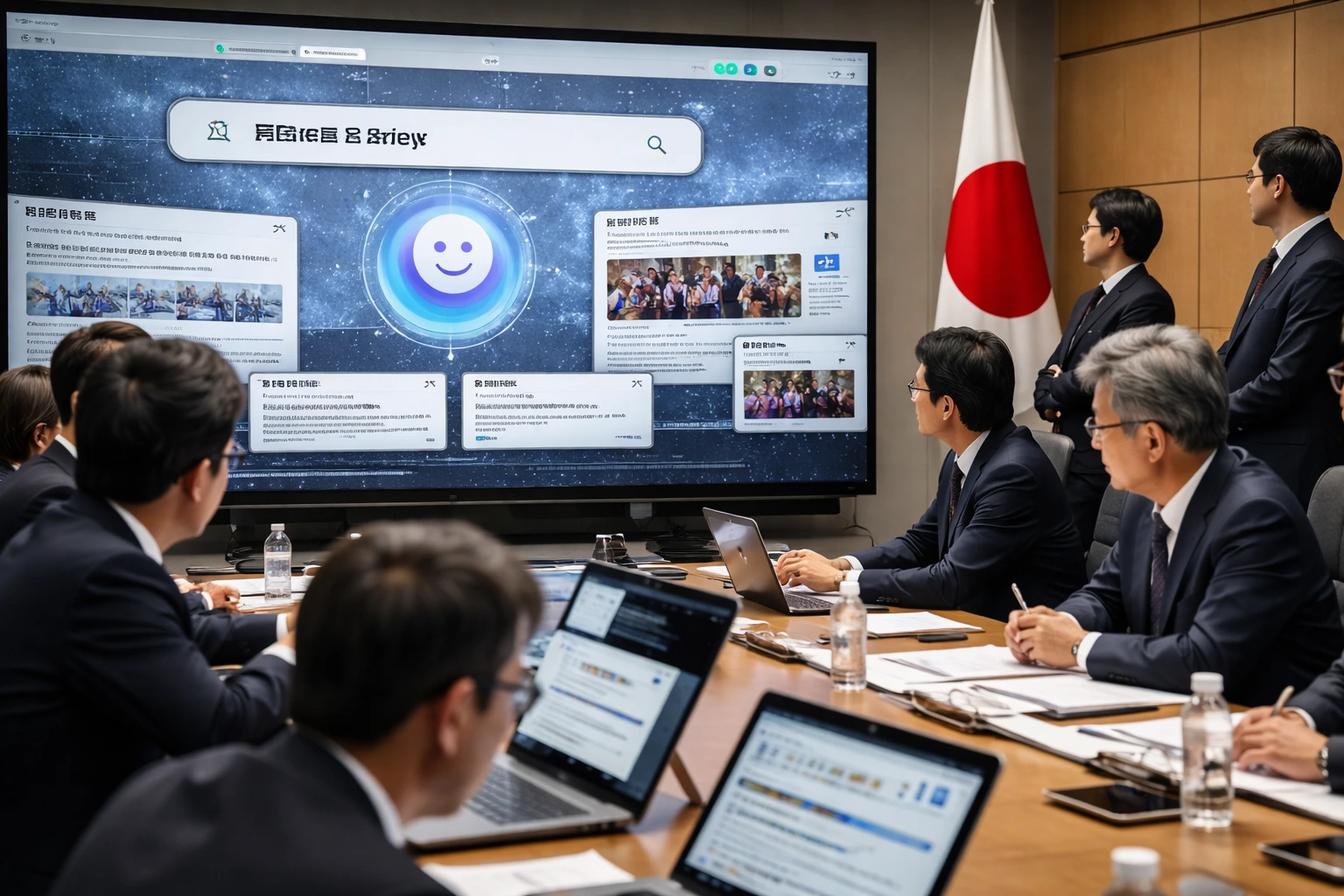
Japan AI news probe efforts are intensifying as regulators move to examine how AI-powered search services use news content. The country’s competition watchdog has announced plans to investigate whether AI systems summarising news articles undermine publishers and distort fair competition. The move places Japan among a growing number of governments questioning how generative AI reshapes the media landscape.
Japan Launches Regulatory Review
Japan’s Fair Trade Commission has confirmed it will investigate AI-driven search services that generate answers based on news reporting. Regulators want to determine whether these tools rely on news articles without proper consent or compensation. The probe focuses on potential breaches of Japan’s antimonopoly rules rather than copyright law alone.
Officials are especially concerned about whether large technology companies hold an unfair advantage when they integrate news content into AI responses. By controlling both search distribution and AI-generated summaries, companies could weaken the bargaining power of news publishers.
Concerns Over News Usage and Competition
The Japan AI news probe centers on how AI summaries may reduce traffic to original news sites. When users receive answers directly from AI systems, they may no longer click through to publisher websites. This shift threatens advertising revenue and subscription growth, both critical to sustaining journalism.
Regulators are examining whether AI services exploit their market position by extracting value from news organizations without negotiation. The issue goes beyond simple content reuse and touches on whether AI search tools reshape competition in ways that disadvantage smaller media outlets.
Domestic and Global Companies in Scope
The investigation is expected to cover both Japanese and foreign technology firms. Authorities have indicated that companies offering AI-powered search, answer engines, or news summaries could fall within the probe’s scope. This includes services that blend traditional search with generative AI responses.
By casting a wide net, Japan signals that the issue affects the entire AI search ecosystem. Regulators want to understand how different business models handle news content and whether common practices violate competition standards.
Global Context and Rising Scrutiny
Japan AI news probe developments reflect a broader global trend. Regulators worldwide are examining how AI systems interact with copyrighted content and market dominance. Concerns about “zero-click” AI answers have already prompted debates in Europe, the United States, and other regions.
Japan’s approach stands out by framing the issue as a competition problem rather than a purely intellectual property dispute. This strategy could influence how other countries regulate AI search services in the future.
Potential Outcomes and Industry Impact
The probe could lead to new guidance, enforcement actions, or voluntary changes by AI providers. Companies may need to adjust how their systems summarise news or negotiate clearer terms with publishers. In more serious cases, regulators could impose penalties or behavioral remedies.
For news organizations, the investigation offers hope that regulators will address power imbalances created by AI-driven distribution. For AI developers, it highlights the growing need to balance innovation with fair market practices.
Conclusion
Japan AI news probe efforts mark a critical moment in the global debate over AI and journalism. By scrutinizing how AI search services use news articles, Japan is testing whether existing competition laws can protect publishers in an AI-driven economy. The outcome could reshape how AI systems interact with news content and influence regulatory approaches far beyond Japan.
0 responses to “Japan AI News Probe Targets Search Services”