


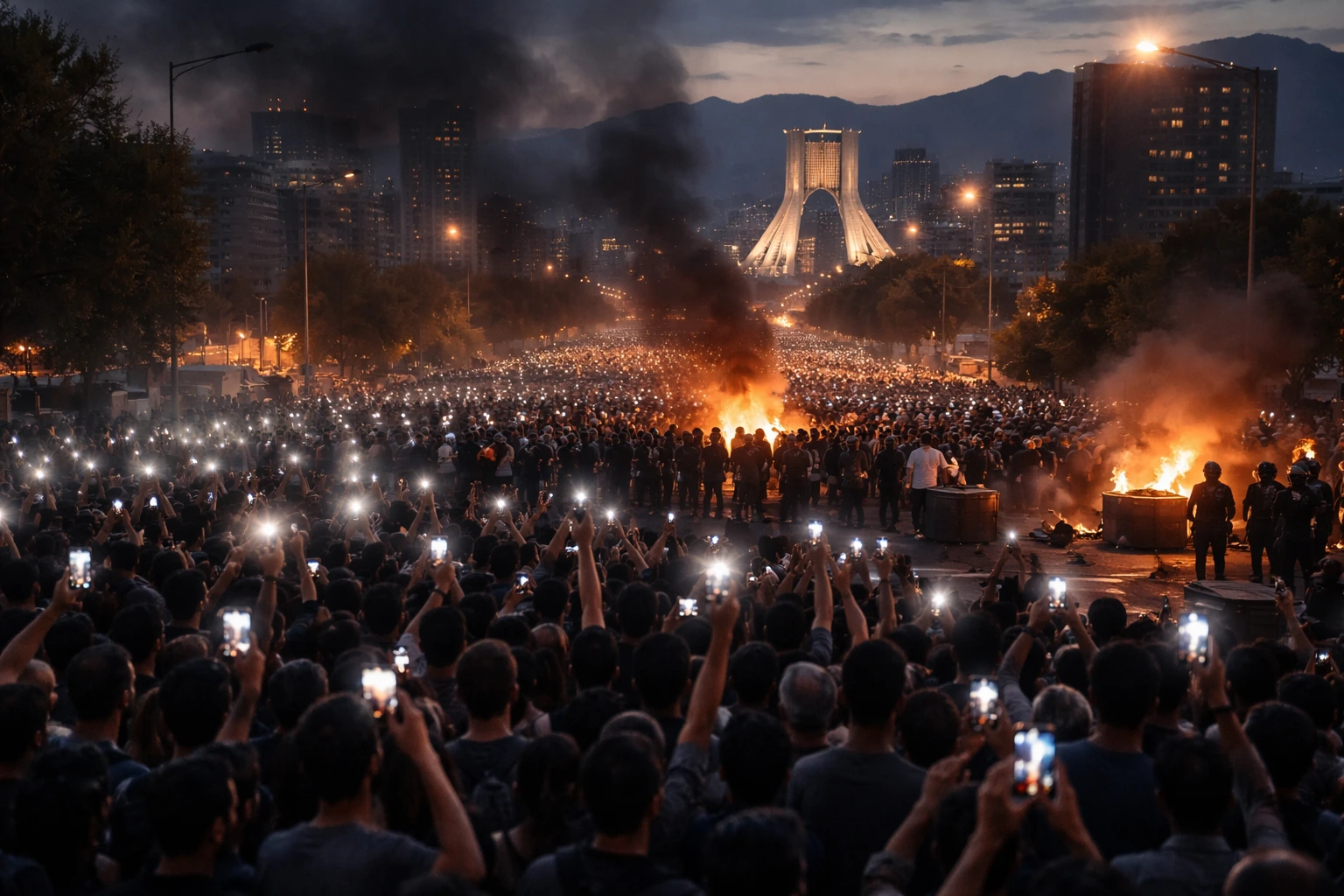
Iran’s internet shutdown has once again become a defining feature of nationwide unrest. As protests spread across cities and provinces, authorities moved quickly to restrict access to the global internet, leaving large parts of the population unable to communicate or access information. The disruption coincided with growing demonstrations driven by economic pressure, political frustration, and declining living conditions.
The shutdown affects far more than protest coordination. It isolates civilians, disrupts businesses, and prevents journalists from documenting events in real time. By limiting digital communication, the government reduces visibility into the scale of the unrest while tightening control over the flow of information inside and outside the country.
How the Nationwide Internet Shutdown Unfolded
The restrictions rolled out rapidly and affected multiple regions at once. Mobile networks, home broadband connections, and messaging platforms became inaccessible within hours. Network monitoring data showed national connectivity dropping to extremely low levels, pointing to a centrally coordinated shutdown rather than isolated technical failures.
Unlike targeted censorship that blocks individual platforms, this approach removes access at the infrastructure level. Service providers appear to have been instructed to disable international gateways, effectively cutting the country off from the wider internet. In many areas, even basic mobile services stopped functioning, leaving residents without reliable means of contact.
Why Authorities Turn to Internet Blackouts
Internet shutdowns have become a recurring response during periods of unrest in Iran. Officials view digital platforms as a threat because they allow rapid organization, information sharing, and international attention. By removing access, authorities slow coordination between protest groups and limit the spread of images, videos, and firsthand accounts.
The strategy also reduces external pressure. When communication channels disappear, verifying reports of arrests, injuries, or fatalities becomes significantly harder. This lack of visibility allows security forces to operate with fewer immediate consequences while state media maintains tighter control over public narratives.
Impact on Civilians and the Economy
The shutdown carries severe consequences for ordinary citizens. Families struggle to stay in contact, medical appointments are disrupted, and digital payment systems become unreliable. Small businesses that depend on online sales or communication lose revenue almost immediately, adding economic strain to an already fragile situation.
Students and remote workers also face sudden disconnection from education platforms and employers. For many Iranians, internet access is not a luxury but a core utility tied to daily life. Cutting it off amplifies uncertainty and frustration at a moment when public trust is already strained.
Attempts to Bypass Restrictions
Some residents attempt to rely on alternative tools such as virtual private networks or satellite-based services. However, these options remain limited, expensive, or actively targeted by authorities. Signal interference, legal restrictions, and technical barriers prevent widespread adoption, leaving most people unable to reconnect.
The uneven availability of these workarounds creates information gaps. A small number of users may regain limited access, while the majority remain offline. This imbalance further complicates efforts to understand the full scope of events unfolding across the country.
Conclusion
Iran’s internet shutdown underscores how digital infrastructure has become a powerful instrument of political control. By cutting nationwide connectivity during protests, authorities restrict organization, limit scrutiny, and deepen isolation for millions of people. While the blackout may slow information flow in the short term, it also intensifies public frustration and economic damage.
As protests continue, the shutdown highlights the growing tension between state control and the population’s reliance on digital communication. The long-term consequences of repeated blackouts extend beyond politics, reshaping how citizens experience daily life in an increasingly connected world.
0 responses to “Iran internet shutdown during nationwide protests”