


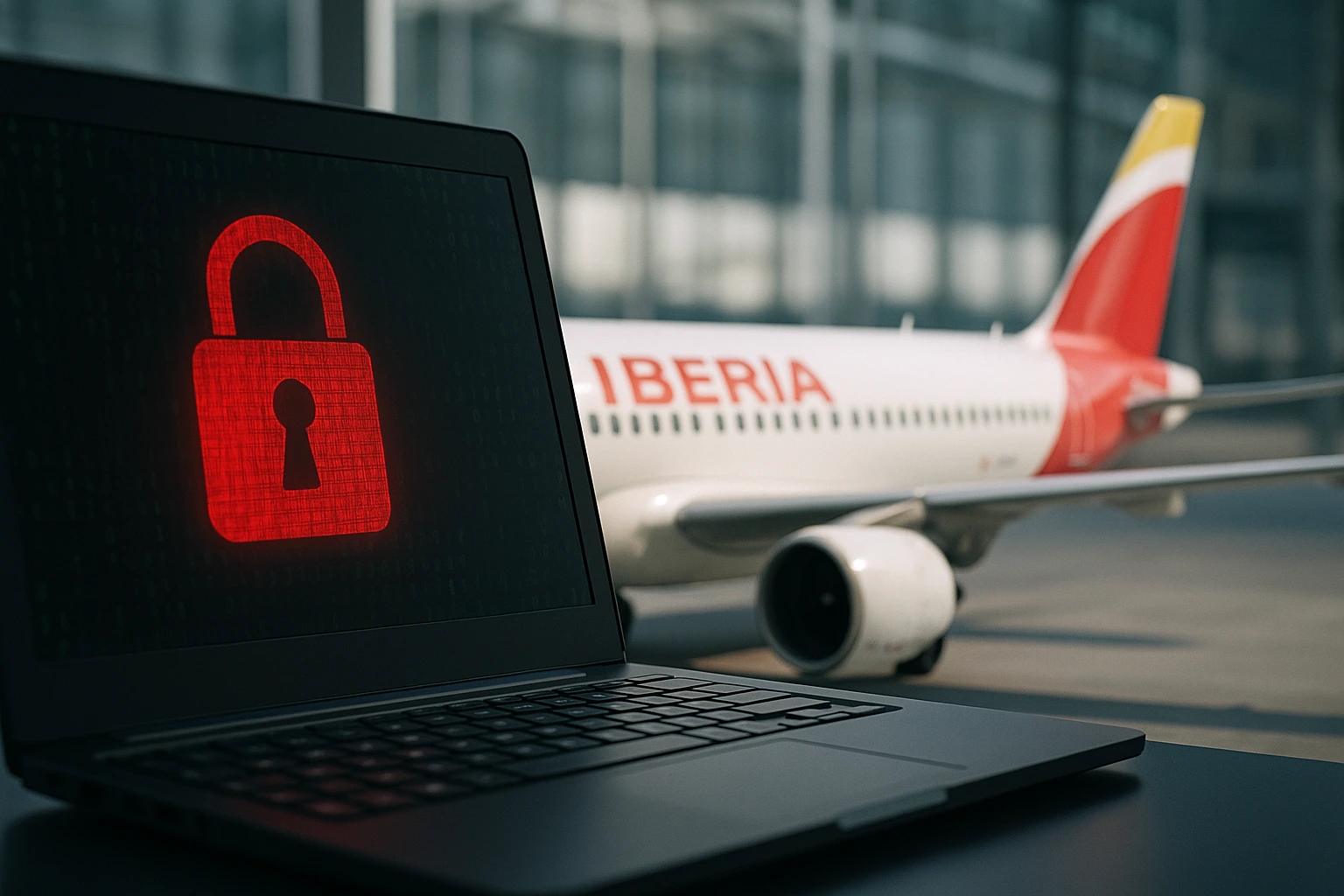
Iberia faces new security concerns after a supplier error exposed customer details linked to its loyalty program. The Iberia data breach highlights weaknesses in vendor security and raises questions about how third-party providers handle aviation-related information. The airline now investigates the event to assess the impact and prevent similar incidents.
How the Iberia data breach happened
The breach originated at a technology provider responsible for customer-support services. A misconfigured system allowed unauthorized access to stored records. Iberia confirmed that attackers viewed personal information connected to its loyalty accounts. The airline reported that affected fields included names, email addresses and basic contact details. No payment information appeared in the exposed dataset.
Iberia acted quickly after receiving the supplier notification. The airline isolated impacted systems and requested a detailed timeline from the provider. Technical teams examined access logs to determine how long the information remained visible. Early results suggest that the incident lasted for a limited period, but the investigation continues.
Impact on Iberia customers
The Iberia data breach affected members of the airline’s loyalty program. Exposed data may increase the risk of targeted phishing attempts. Security teams warn customers to monitor inboxes for unusual messages. They also advise against sharing personal details with unverified senders. The incident did not affect flight operations, ticketing platforms or payment gateways.
Iberia emphasised that no passwords, travel records or passport data were involved. The company maintains that the breach remains limited to identification details. Cybersecurity analysts note that even basic personal information can support social-engineering attacks. They recommend stronger customer-verification steps following incidents of this type.
Iberia’s response and ongoing investigation
Iberia cooperates with external specialists to review the supplier’s environment. The investigation includes a full audit of internal and third-party security measures. The airline aims to understand how the misconfiguration occurred and why standard protections did not block the exposure. Iberia also evaluates contractual requirements to ensure that partner companies follow strict cybersecurity controls.
The company plans to strengthen oversight of all technology vendors. Recent aviation incidents show that attackers commonly target indirect access points. Iberia intends to introduce new checks for configuration management, data retention and access control. The goal is to prevent another Iberia data breach and reduce the risk linked to outsourced services.
Industry concerns
Airline suppliers manage large amounts of customer data. Security specialists warn that weak points often appear in support systems rather than core aviation networks. The Iberia data breach adds to a growing list of events tied to external service providers. Analysts expect regulators to push for clearer standards across the sector. They argue that airlines must demand better compliance from their partners.
Aviation companies face increasing pressure to validate how vendors store and process sensitive information. They must also review incident-response procedures to ensure that suppliers notify them promptly. Delays in reporting can increase exposure time and complicate recovery.
Conclusion
The Iberia data breach shows how third-party weaknesses can create risks for major airlines. Iberia now investigates the incident and prepares stronger controls for vendor oversight. Customers should remain cautious of phishing attempts while the review continues. The airline aims to restore confidence by improving transparency and reinforcing cybersecurity across its support ecosystem.
0 responses to “Iberia Data Breach Exposes Customer Information After Supplier Incident”