


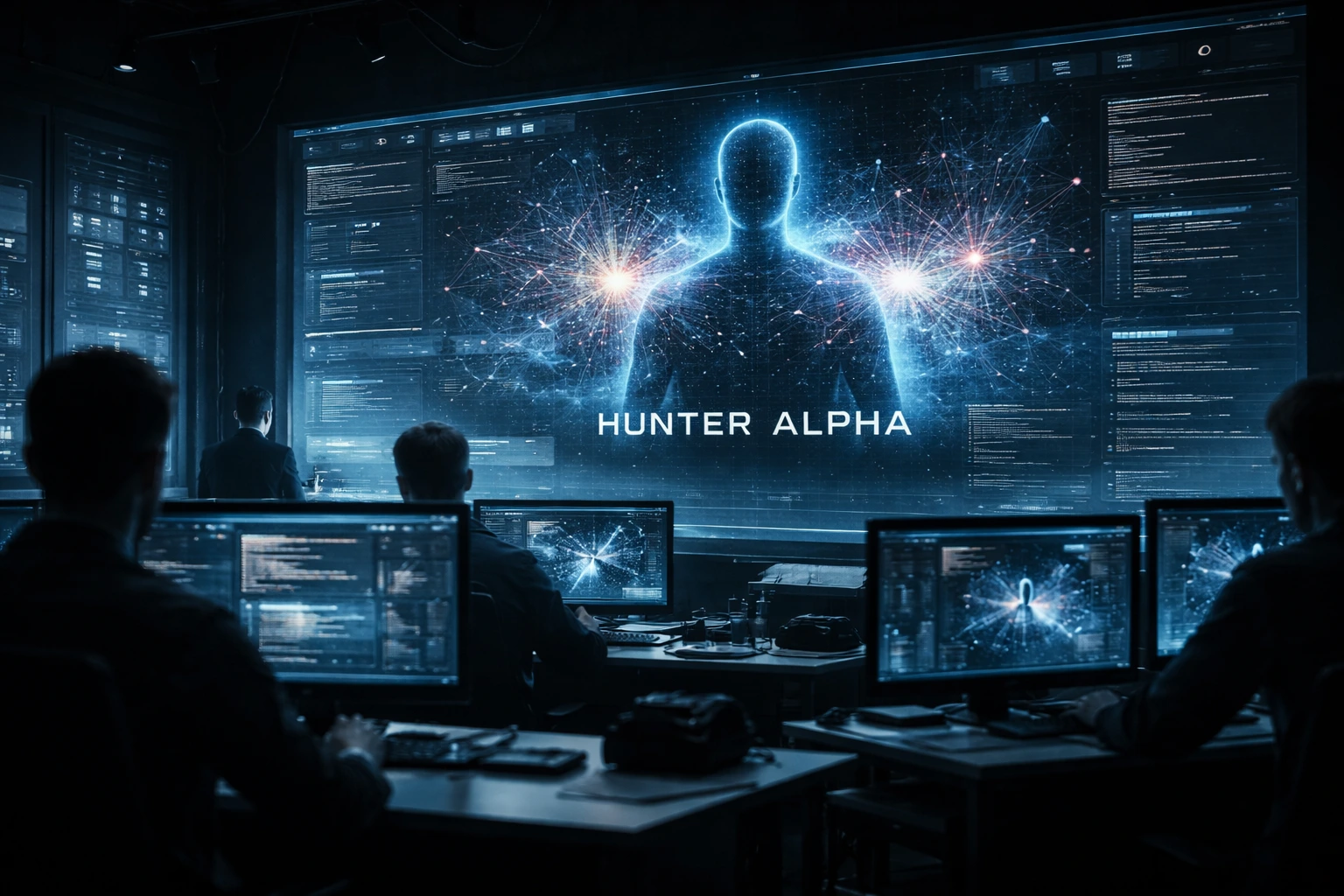
A new AI model called Hunter Alpha has appeared online without any clear origin, drawing immediate attention from developers. The Hunter Alpha AI quickly gained traction due to its strong performance and unusual release method. Its sudden arrival has triggered speculation about a possible link to DeepSeek.
Anonymous Model Appears on Developer Platform
Hunter Alpha surfaced on OpenRouter as a “stealth” model with no listed developer. This type of release allows creators to test systems in real-world conditions without formal announcements.
The model provided limited self-description, including details about its training and knowledge range. These hints led developers to compare it with known DeepSeek models.
The lack of official attribution has made verification difficult. As a result, most conclusions remain based on observed behavior rather than confirmed data.
Performance Drives DeepSeek Comparisons
Developers began testing Hunter Alpha immediately after its release. Early results showed strong reasoning capabilities and stable output across complex tasks.
These traits match expectations for advanced large-scale models. Some users noted similarities to DeepSeek’s known architecture and training style.
However, differences in responses and behavior suggest that the model may not be directly linked. It could be a separate system designed with similar methods.
Rapid Adoption Highlights Developer Demand
Hunter Alpha spread quickly across developer tools and workflows. Users integrated the model into testing environments to evaluate performance in practical scenarios.
This rapid adoption reflects strong demand for high-capability AI systems. It also shows how quickly new models can gain traction when made publicly accessible.
Developer platforms now act as early testing grounds where experimental models can reach wide audiences.
Stealth Releases Raise Transparency Concerns
The Hunter Alpha AI release highlights a growing trend in the industry. Developers increasingly use anonymous or low-profile launches to test models before official announcements.
This strategy helps gather feedback and refine performance without external pressure. However, it also introduces uncertainty for users.
Without clear ownership, it becomes difficult to assess how the model was trained or how data is handled. This lack of transparency raises questions about trust and accountability.
Industry Shift Toward Experimental Deployment
The appearance of Hunter Alpha reflects a broader shift in how AI systems are introduced. Instead of controlled rollouts, developers now release models directly into active environments.
This approach accelerates development cycles but increases risk. Users may interact with systems that have not undergone full validation.
As competition intensifies, this method is likely to become more common across the industry.
Conclusion
The Hunter Alpha AI has drawn attention through a mix of strong performance and complete anonymity. While speculation links it to DeepSeek, no confirmed connection exists.
The case highlights how AI development is evolving toward faster and less transparent release cycles. This creates new opportunities but also introduces new risks.
As more models appear under similar conditions, developers and organizations will need to approach them with caution and critical evaluation.
0 responses to “Hunter Alpha AI Triggers DeepSeek Speculation”