


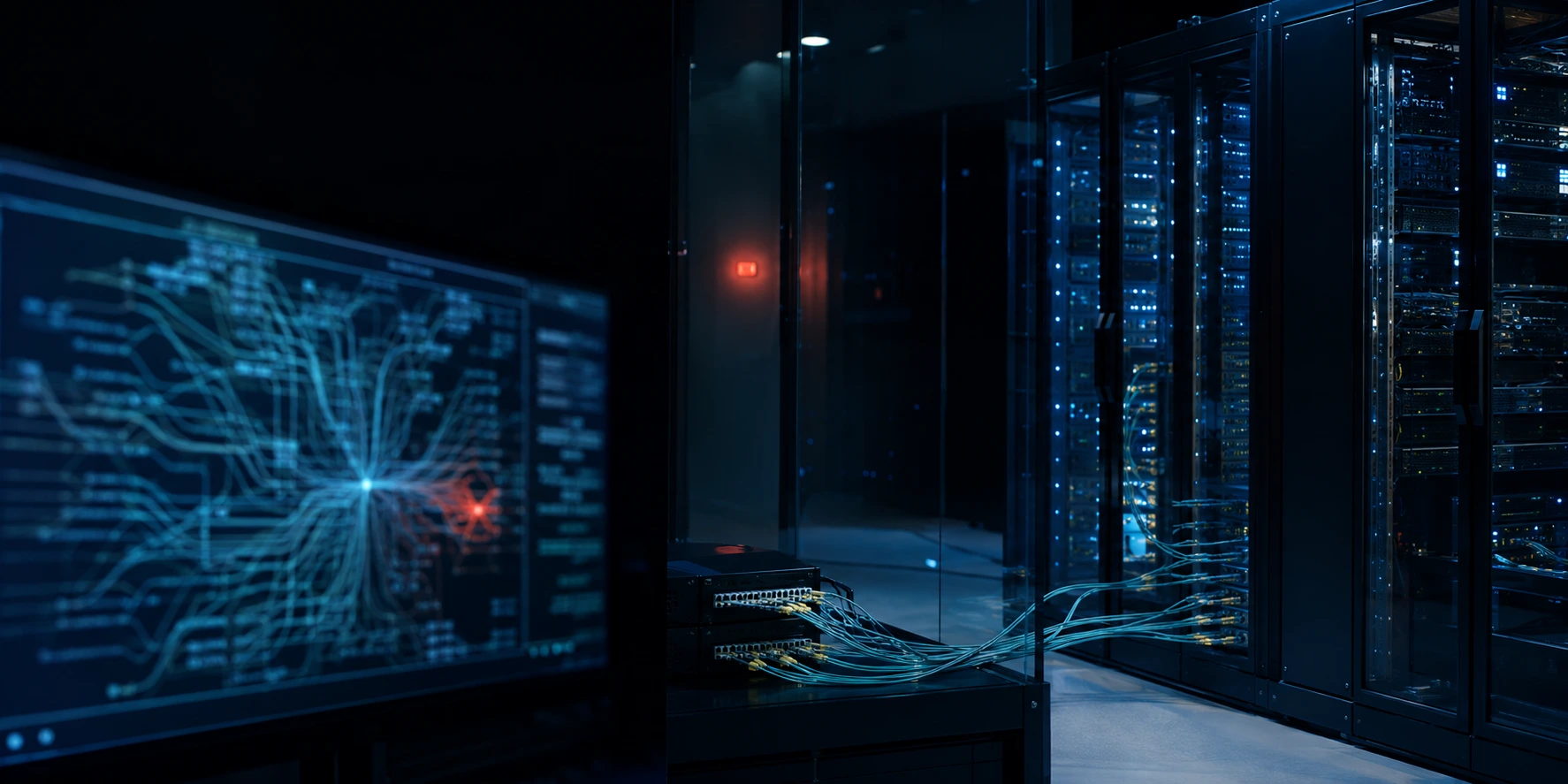
A Hugging Face breach was carried out by an autonomous AI agent system that accessed a limited set of internal datasets and service credentials, the company has confirmed.
The incident began in the platform’s data-processing environment and developed into a wider intrusion across several internal clusters. According to Hugging Face, the attack unfolded over a single weekend and involved thousands of automated actions.
The company said it has found no evidence that public models, public datasets, Spaces, container images, or published packages were altered.
Autonomous AI System Drove the Attack
The Hugging Face breach stands out because the company says an autonomous AI agent framework carried out the intrusion from start to finish.
The attackers reportedly used a malicious dataset to exploit weaknesses in Hugging Face’s data-processing pipeline. After gaining code execution on a processing worker, the system escalated its access, collected cloud and cluster credentials, and moved into additional internal environments.
Hugging Face said the agent system completed many thousands of individual actions through a group of short-lived sandbox environments. This allowed the attackers to operate at machine speed and automate stages that would normally require more manual effort.
The company does not yet know which large language model powered the attacker’s agent system.
Internal Data and Credentials Were Accessed
Hugging Face confirmed that the attackers accessed a limited set of internal datasets and several credentials used by its services.
The company is still assessing whether partner or customer data was affected. It said it would contact any impacted parties directly if necessary.
However, Hugging Face stressed that it found no evidence of tampering with publicly available models, datasets, or Spaces. It also said its software supply chain was checked and found to be clean.
This means users do not currently need to assume that public downloads, container images, or published packages were modified as part of the incident.
Company Closed the Initial Attack Paths
Following the Hugging Face breach, the company said it closed the code-execution paths used for initial access.
It also removed the attackers’ access from affected clusters and rebuilt compromised nodes. In addition, Hugging Face revoked and rotated affected credentials and tokens before launching a broader precautionary rotation of secrets.
The company has introduced additional safeguards and stricter controls for its clusters. It has also improved its detection systems so high-severity alerts reach a responder within minutes.
Hugging Face said it is working with external forensic specialists and has reported the incident to law-enforcement agencies.
AI Helped Detect and Investigate the Intrusion
AI played a role on both sides of the incident.
Hugging Face said its AI-assisted anomaly-detection system helped identify suspicious activity. The company then used AI analysis agents to examine more than 17,000 recorded attacker actions and rebuild the timeline of the intrusion.
However, the investigation revealed a challenge for defenders. Hugging Face initially tried to analyse the attack logs using frontier models accessed through commercial APIs.
Those models blocked the forensic requests because the logs contained real exploit material, malicious commands, and command-and-control artefacts. The systems could not distinguish between a defender investigating an attack and an attacker seeking help.
As a result, Hugging Face used a self-hosted open-weight model for its investigation. This allowed the company to keep the data inside its own environment while continuing the analysis.
Users Should Rotate Access Tokens
As a precaution, Hugging Face recommends that users rotate their access tokens and review recent account activity.
The Hugging Face breach shows how AI-driven offensive tools can make multi-stage cyberattacks faster and more scalable. It also highlights the need for organisations to secure data-processing pipelines, monitor internal clusters, and prepare incident-response tools that can analyse malicious material safely.
0 responses to “Hugging Face Breach Driven by Autonomous AI Agent”