


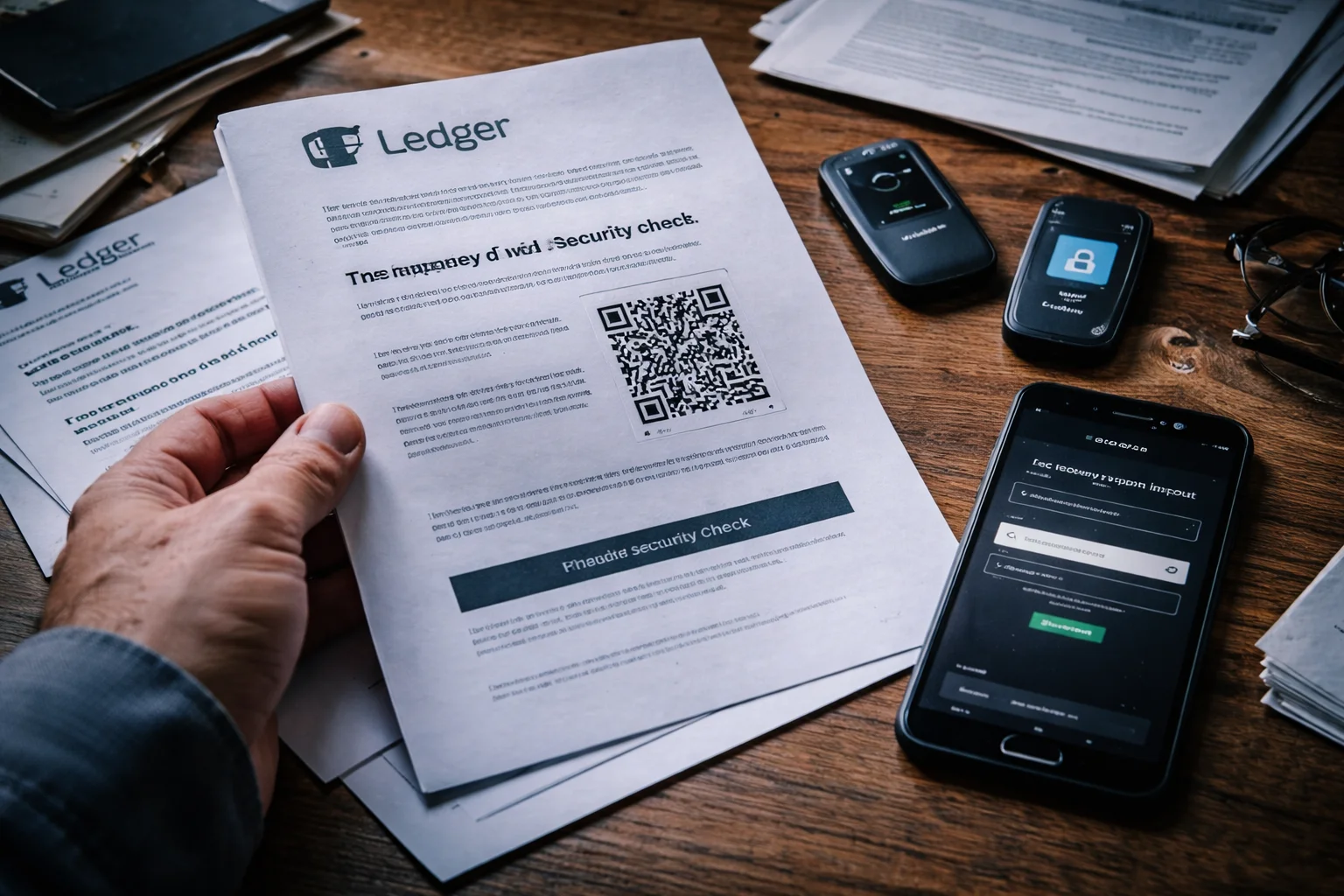
Cybercriminals are expanding phishing beyond inboxes. The hardware wallet phishing letters campaign targets cryptocurrency holders using printed mail that appears official and urgent.
Instead of malicious links in emails, victims receive physical documents claiming a critical security update is required. The realistic presentation lowers suspicion and encourages immediate action.
How the scam reaches victims
Recipients receive a professionally printed letter styled as a support notification. The message warns about a security issue affecting hardware wallet devices and instructs the user to complete a verification process.
To begin the procedure, the letter asks the reader to scan a QR code. Because printed communication feels more trustworthy than digital messages, many users assume the request is legitimate.
The urgency of a potential wallet restriction pushes victims to act quickly rather than verify the source.
The fake verification process
Scanning the QR code opens a website designed to imitate official wallet onboarding pages. The interface includes familiar wording and setup steps to maintain credibility.
During the process, the page requests the wallet recovery phrase. The form accepts multiple phrase lengths and mimics real restoration procedures.
Once submitted, the attackers obtain full control of the wallet. They can import it into another device and immediately transfer all funds.
Why attackers use physical mail
This method bypasses spam filters, phishing detection systems, and common email awareness habits. Users often distrust suspicious emails but rarely question printed notices.
The attackers likely relied on previously leaked customer contact information to identify targets. By contacting victims directly, they increase success rates and reach high-value cryptocurrency holders.
The critical mistake users make
Hardware wallet recovery phrases should never be entered into websites, QR pages, or support forms. The phrase is only meant for manual device recovery performed offline.
Any request for it, regardless of format or delivery method, indicates a theft attempt.
Conclusion
The hardware wallet phishing letters campaign shows how scams continue evolving beyond digital channels. By combining traditional mail with modern phishing techniques, attackers exploit trust in official-looking documents.
As cryptocurrency ownership grows, users must treat physical communications with the same skepticism as suspicious emails. Protecting the recovery phrase remains the most important defense against complete asset loss.
0 responses to “Hardware wallet phishing letters target crypto holders”