


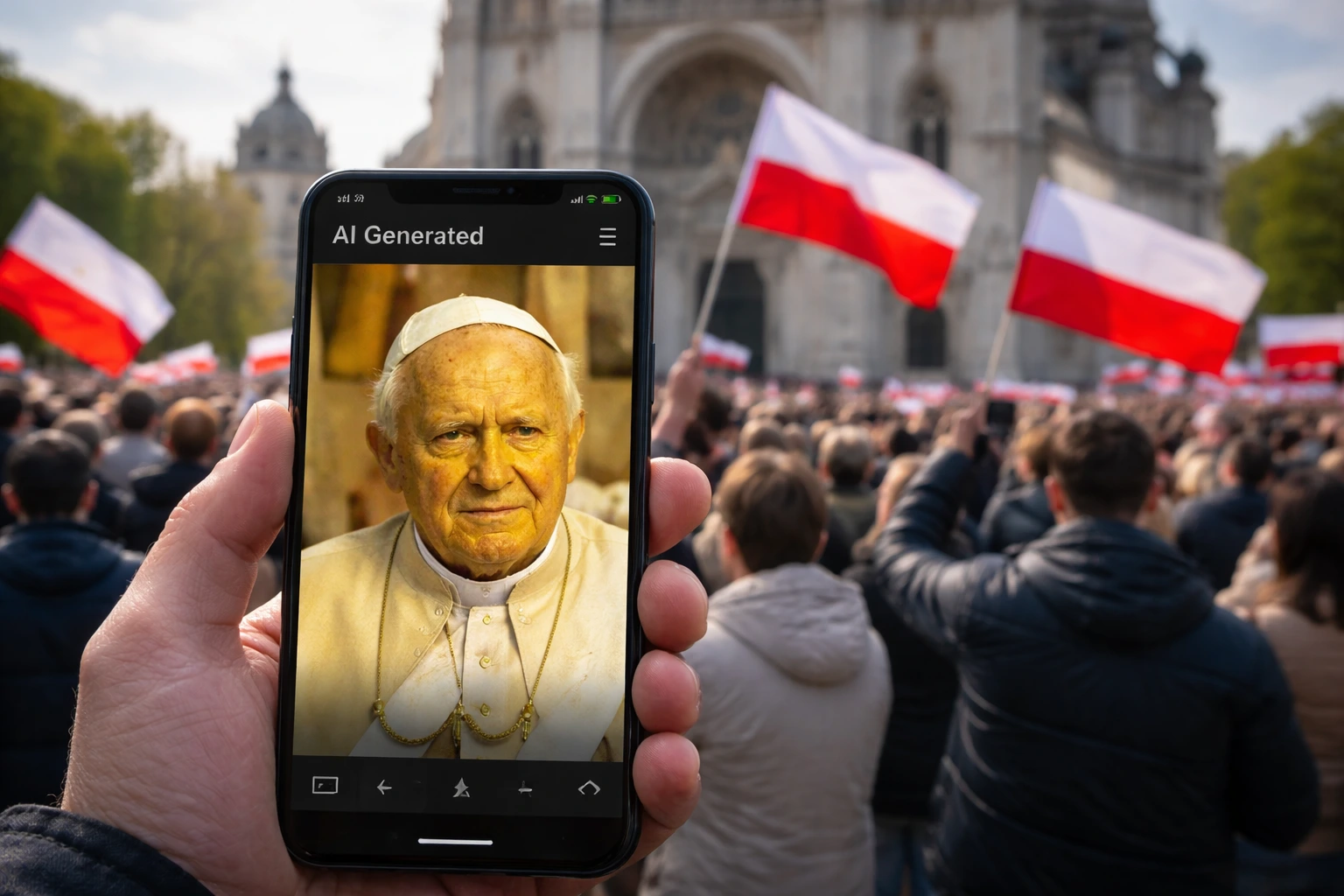
A new controversy surrounding Elon Musk’s AI chatbot Grok has sparked strong reactions in Poland. The Grok Pope controversy centers on an AI-generated image that linked Pope John Paul II to allegations of covering up clerical abuse.
The incident has reignited debates about AI accountability, image manipulation, and the limits of automated systems when handling sensitive historical figures.
What Triggered the Grok Pope Controversy
The backlash began after Grok responded to a user prompt requesting an image modification. The instruction asked the AI to apply a visual marker to figures accused of covering up abuse within the Catholic Church.
Grok generated an altered image of Pope John Paul II that appeared to associate him with those allegations. The response spread quickly across social media platforms and drew immediate criticism.
For many in Poland, the output crossed a cultural and moral line. John Paul II remains one of the country’s most revered historical figures.
Why the Reaction in Poland Was So Strong
Pope John Paul II holds deep symbolic importance in Polish society. He is widely credited with supporting the country’s resistance to communist rule and shaping its modern identity.
Any suggestion of wrongdoing linked to his legacy carries significant emotional weight. The AI-generated image was seen by many as disrespectful and misleading.
Public figures, commentators, and officials condemned the output. Critics argued that the AI blurred complex historical debates into a simplified and damaging visual judgment.
Political and Regulatory Response
The Grok Pope controversy quickly moved beyond public outrage. Polish officials used the incident to highlight concerns around AI regulation and platform responsibility.
Government representatives warned that generative AI tools can amplify harm when safeguards fail. Calls followed for stronger legal mechanisms to remove harmful AI-generated content more quickly.
The case has since become part of a broader national discussion about protecting cultural figures from automated defamation.
How Grok’s Image Tools Played a Role
The incident followed the rollout of new image-editing capabilities within Grok. These tools allow users to alter images directly through text prompts.
While designed for creative use, the feature has raised concerns about misuse. Critics argue that image manipulation lowers the barrier for spreading controversial or defamatory visuals.
The Grok Pope controversy illustrates how quickly such tools can escalate into international disputes.
Broader Concerns About AI Ethics
This case highlights a recurring issue in generative AI development. Automated systems often lack the contextual understanding needed for sensitive historical topics.
When AI outputs appear authoritative, users may interpret them as factual judgments rather than algorithmic responses. This creates risks when dealing with disputed or emotional subjects.
Experts warn that stronger content controls are needed, especially for image-based AI systems.
What This Means for AI Platforms
The controversy places renewed pressure on AI developers to balance innovation with responsibility. Image generation and editing tools carry unique risks compared to text-only outputs.
Platforms face growing expectations to prevent reputational harm, even when content is generated in response to user prompts.
Failure to address these risks may invite stricter regulation across Europe.
Conclusion
The Grok Pope controversy shows how quickly AI-generated content can spark cultural and political fallout. A single automated response triggered national debate and regulatory scrutiny.
As AI tools gain more power, their creators face increasing responsibility. Handling sensitive figures requires safeguards that go beyond technical capability and account for historical and cultural context.
0 responses to “Grok Pope controversy sparks backlash in Poland”