


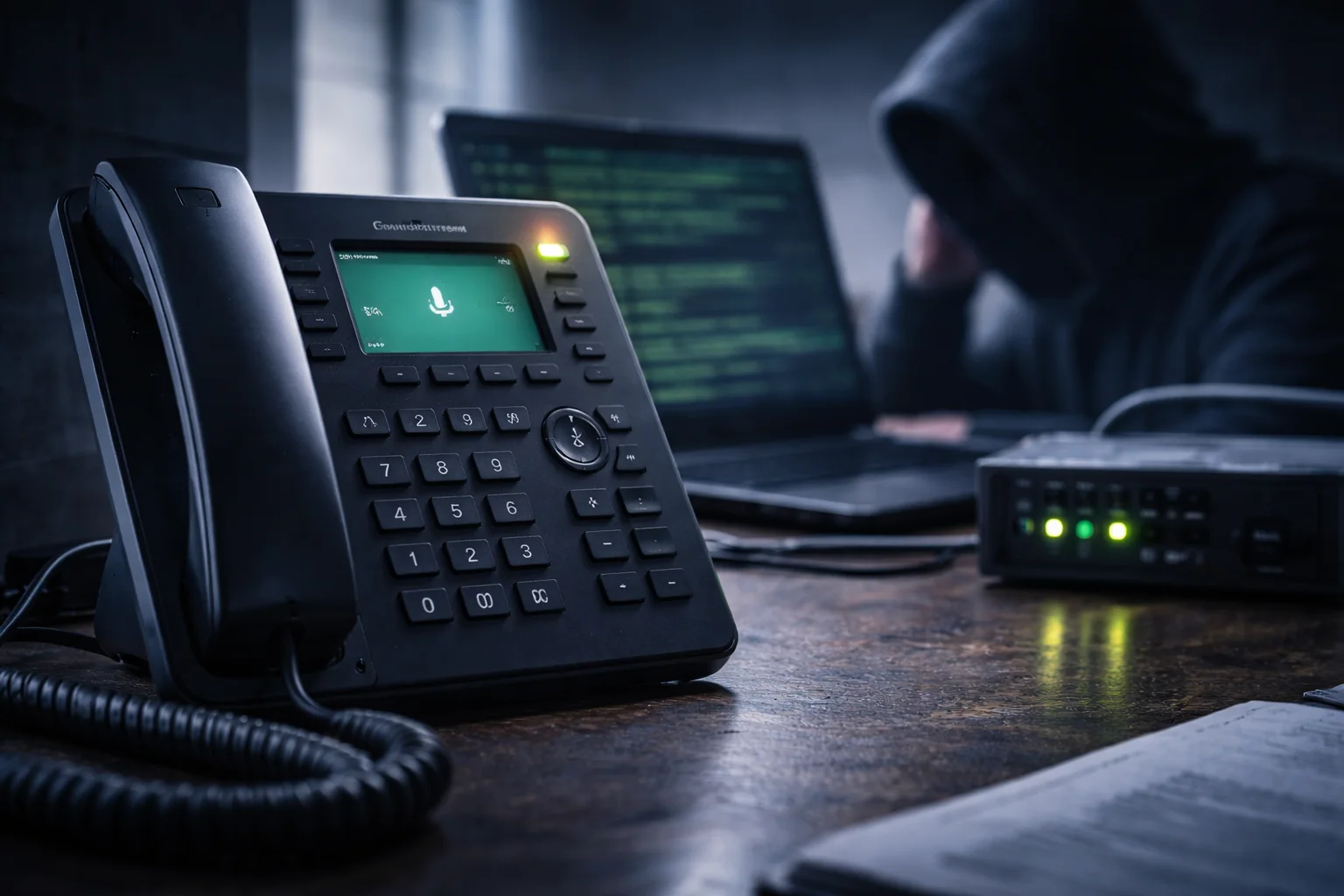
Office desk phones are usually trusted devices inside company networks. That trust becomes dangerous when a serious flaw appears. The Grandstream VoIP vulnerability allows attackers to silently monitor conversations without interrupting normal operation.
What devices are affected
The issue impacts multiple models in the GXP1600 series running outdated firmware. Security researchers rated the flaw as critical because it enables remote compromise with high privileges.
Affected models include:
- GXP1610
- GXP1615
- GXP1620
- GXP1625
- GXP1628
- GXP1630
These phones are widely used by small businesses, hotels, and offices.
How the attack works
The vulnerability exists in a web management interface enabled by default. The system improperly validates input length and accepts unauthenticated requests.
An attacker can send a specially crafted request that triggers a buffer overflow. This allows execution of commands as the system administrator.
After compromise, attackers can:
- Gain root privileges
- Extract stored credentials
- Modify configuration settings
- Redirect calls through another server
The device continues functioning normally while being controlled remotely.
Silent call interception risk
Once attackers modify the SIP configuration, calls route through infrastructure they control. Employees still hear normal conversations, but a third party can listen in real time.
Because nothing appears broken, organizations may not notice the compromise for long periods.
Internal network exposure
Internet exposure increases risk, but internal systems remain vulnerable. Attackers who breach another device in the network can move laterally and compromise phones from inside.
Voice devices often lack monitoring, making them attractive surveillance targets.
Patch and mitigation
The vendor released updated firmware to fix the issue. Organizations should update affected phones immediately.
Additional precautions include:
- Restrict management interface access
- Segment voice networks
- Monitor configuration changes
- Disable unnecessary services
Conclusion
The Grandstream VoIP vulnerability turns trusted office phones into covert listening tools. Attackers do not need to disrupt service to cause harm. Prompt updates and stronger network controls are essential to prevent long-term surveillance inside business communications.
0 responses to “Grandstream VoIP Vulnerability Enables Silent Eavesdropping”