


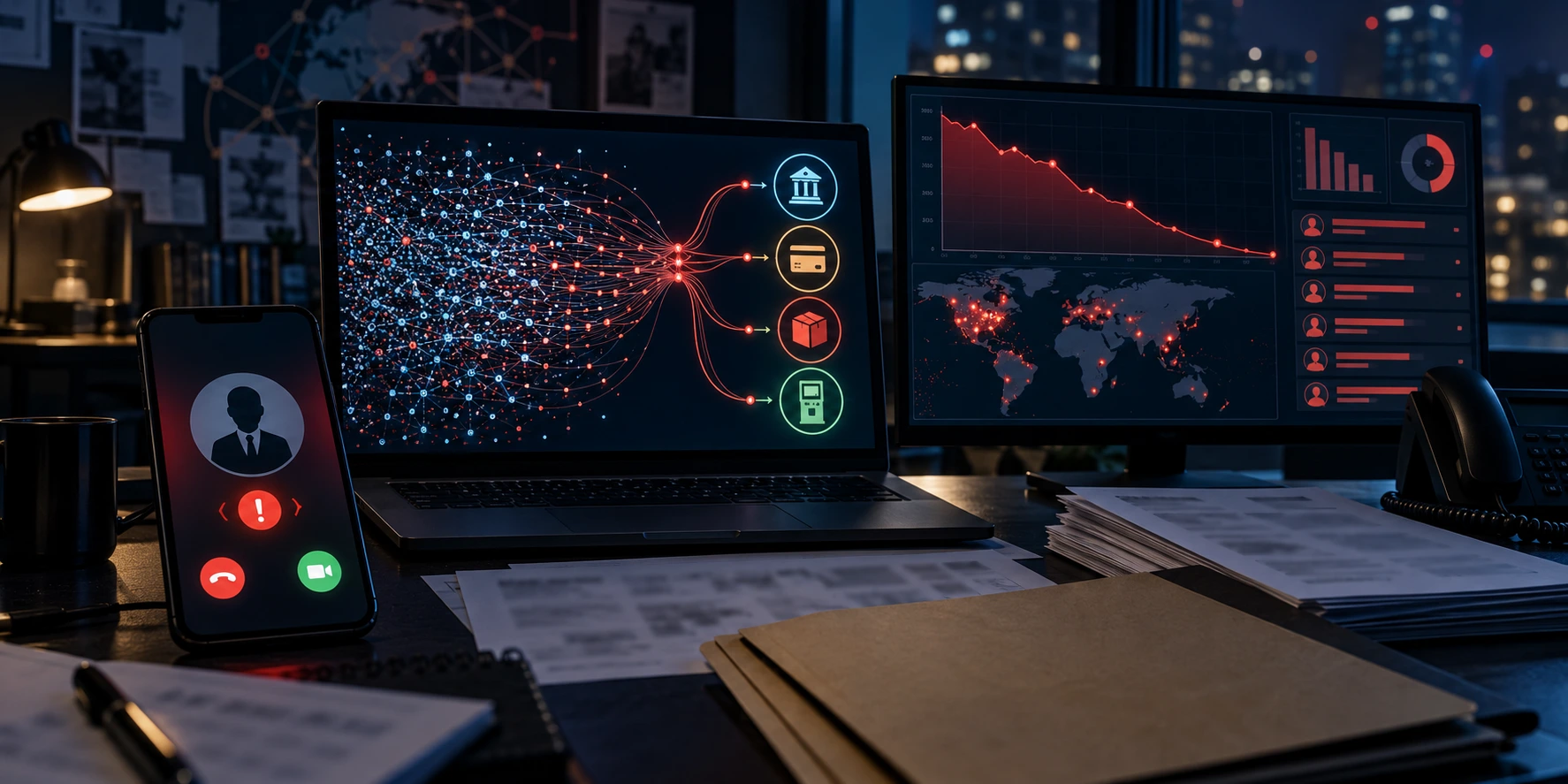
The FBI says government impersonation scams caused more than $1.6 billion in reported losses in 19 months. Criminals pose as officials, threaten victims with arrest or professional consequences and demand immediate payment.
FBI Receives 61,000 Scam Complaints
The FBI’s Internet Crime Complaint Center received around 61,000 reports involving government or law enforcement impersonation.
Victims submitted the complaints between January 2025 and July 2026. Together, the reported cases produced losses exceeding $1.6 billion.
The scammers impersonate officials from both US and foreign government agencies. They aim to steal money or collect personally identifiable information.
Although their stories vary, the criminals generally follow a similar process. First, they contact a potential victim unexpectedly by phone, email or text message.
They then create urgency and try to prevent the person from checking their claims.
Scammers Spoof Official Contact Details
Fraudsters often manipulate caller identification systems to display authentic government phone numbers.
They may also use forged email addresses, official-looking credentials or copied agency branding. Consequently, the message can appear to come from a legitimate authority.
Some criminals know personal details about their targets before making contact. They may use names, addresses or employment information to make the story more convincing.
Once the victim accepts the false identity, the scammer introduces a supposed legal or administrative problem.
The caller may claim that the victim faces an investigation, an outstanding warrant or another serious consequence.
Victims Face Aggressive Payment Demands
The criminals use an urgent or hostile tone to pressure their targets.
They commonly demand payment through prepaid cards, bank transfers, cryptocurrency or cash. Some scams also involve couriers who collect money directly from the victim.
In other cases, the criminals tell victims to deposit cash into cryptocurrency kiosks. This method quickly converts the money into digital assets that can prove difficult to recover.
A demand for cryptocurrency to avoid arrest or legal action represents a major warning sign. Legitimate authorities do not resolve criminal cases through payments to cryptocurrency wallets.
Moreover, government agencies do not demand gift cards or send couriers to collect fines.
Scammers Order Victims to Remain Silent
Secrecy forms a central part of many government impersonation scams.
Criminals tell victims not to discuss the situation with family members, friends or colleagues. They may claim that sharing information would interfere with an investigation.
Scammers also discourage victims from contacting their bank or local police. In some cases, they warn that seeking advice will result in immediate arrest.
These instructions help isolate the victim from anyone who might recognise the fraud.
The pressure also limits the time available for rational decisions. Therefore, victims may transfer money before independently checking the caller’s identity.
Fake Jury Duty Claims Cost $36 Million
Some scammers tell victims that they failed to attend jury duty or missed a court appearance.
The criminals then claim that a judge has issued an arrest warrant. However, they offer to cancel or suspend the warrant if the victim pays immediately.
Between January 2025 and July 2026, the FBI received 6,883 complaints involving this type of scam.
Those cases caused approximately $36 million in reported losses.
A court or law enforcement agency will not demand an immediate cryptocurrency payment to cancel an arrest warrant. Anyone who receives such a request should end the conversation and contact the relevant institution directly.
Criminals Target Medical Professionals
Fraudsters also adapt their stories to specific professions.
For example, scammers have contacted medical practitioners and claimed that their professional licences were about to expire. They then demanded money to prevent suspension or disciplinary action.
This approach creates pressure because losing a licence could threaten the victim’s income and career.
The criminals may already know details about the practitioner’s workplace, registration or speciality. Public professional databases can provide much of this information.
As a result, the scam may initially appear credible. However, an urgent demand for unusual payment methods exposes the fraud.
Fake Uniforms and Offices Add Credibility
Some impersonators go beyond phone calls and forged emails.
The FBI says criminals have appeared on video while wearing fake police uniforms. Others have created mock government offices to make the setting appear official.
These visual elements can make victims less likely to challenge the caller.
However, a uniform, badge or government-style background does not prove someone’s identity. Criminals can purchase convincing props or create artificial backgrounds.
Victims should verify the contact through an independently sourced phone number. They should never use contact information supplied by the suspected scammer.
AI Makes Impersonation More Convincing
Artificial intelligence has made government impersonation scams more sophisticated.
Criminals can use AI tools to imitate officials during video calls. The technology may generate convincing faces, voices and government-style environments.
AI can also help scammers write polished messages without obvious spelling or grammar mistakes. Therefore, older warning signs may no longer appear.
Voice-cloning technology creates another risk. A criminal may imitate a known official or another trusted person to strengthen the payment demand.
Despite these advances, the underlying tactics remain familiar. Scammers still rely on fear, urgency, secrecy and unusual payment methods.
How to Recognise the Warning Signs
People should treat unsolicited messages from supposed authorities with caution.
Major warning signs include demands for cryptocurrency, prepaid cards, cash deliveries or immediate bank transfers.
Threats of arrest or professional punishment for refusing to pay also indicate fraud. Likewise, legitimate authorities will not order someone to hide the conversation from relatives, banks or police.
Recipients should end the call and contact the relevant agency independently. They should find the official phone number themselves instead of calling a number supplied in the message.
People should also inspect website addresses carefully. A fraudulent page may copy an agency’s design while using a slightly altered domain.
Never Share Information Before Verification
Victims should not provide personal or financial information until they confirm the caller’s identity.
This information includes account numbers, passwords, identification details and cryptocurrency wallet credentials.
Anyone who has already sent money should contact their bank or payment provider immediately. Fast action may help stop or trace a transfer.
Victims should also preserve emails, text messages, phone numbers, transaction records and cryptocurrency addresses. These details can support an investigation.
Ultimately, government impersonation scams succeed by preventing victims from slowing down. Taking time to verify the claim remains one of the strongest forms of protection.
0 responses to “FBI Warns Impersonation Scams Caused $1.6 Billion in Losses”