


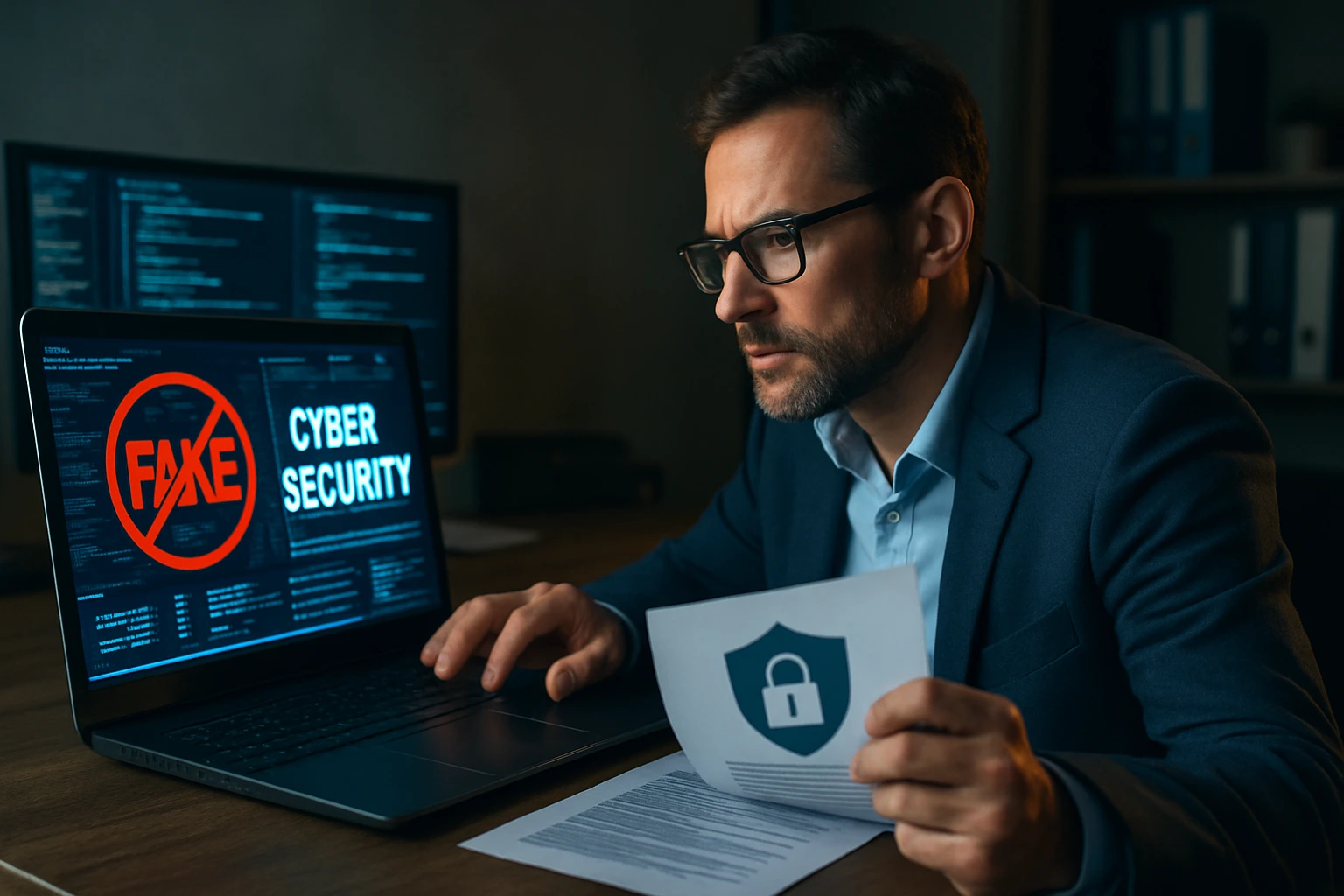
Scammers are reviving the business of bogus cybersecurity firms, and this time they’re smarter. These fake companies now use AI, sophisticated marketing tactics, and professional-looking credentials to trick organizations into paying for services that don’t exist.
How the scam works
First, fraudsters set up legitimate-looking companies with registrations, polished websites, and active blogs. They create fake LinkedIn identities, issue “research reports,” and claim to discover vulnerabilities in target organizations. Thanks to AI, they generate convincing content that mimics real consulting operations.
Next, they approach potential clients with tailored “findings” like exposed data, weak systems, or insider leaks. The companies then convince victims to pay for remediation, audits, or monitoring services. In some cases, the scam operators may even install malware or ransomware under the guise of “security tools.”
Why the threat is growing
Awareness of cybersecurity issues is high among businesses — but ironically, that makes the fake firms more effective. Organizations expect help, see credible-looking offers, and let guard down. Because these fraud firms use AI to mimic expert behaviour, they build trust quickly.
Experts warn the scale of the problem is increasing. These scams exploit gaps in vendor vetting, cause reputational and financial damage, and undermine trust in legitimate cybersecurity services.
What companies must do
To defend against this rising threat, businesses should apply the same scrutiny to cybersecurity vendors as they do to any supplier: Check registrations, verify credentials, ask for proof of work, and seek references. They should also conduct independent audits and review contracts carefully.
Monitoring vendor performance and tracking deliverables is key. If a “security report” appears suspicious or lacks depth, red flags should be raised. Vendors who demand upfront large payments, especially for vague or generic findings, may be part of a scam.
Conclusion
The rise of fake cybersecurity companies using AI and marketing tactics is a clear warning for organizations. Even in a world focused on defending digital assets, the attackers have learned to impersonate the defenders. Robust vendor management, thorough verification, and vigilant procurement practices are now crucial to avoid being the next victim.
0 responses to “Fake cybersecurity companies are back and smarter than ever”